
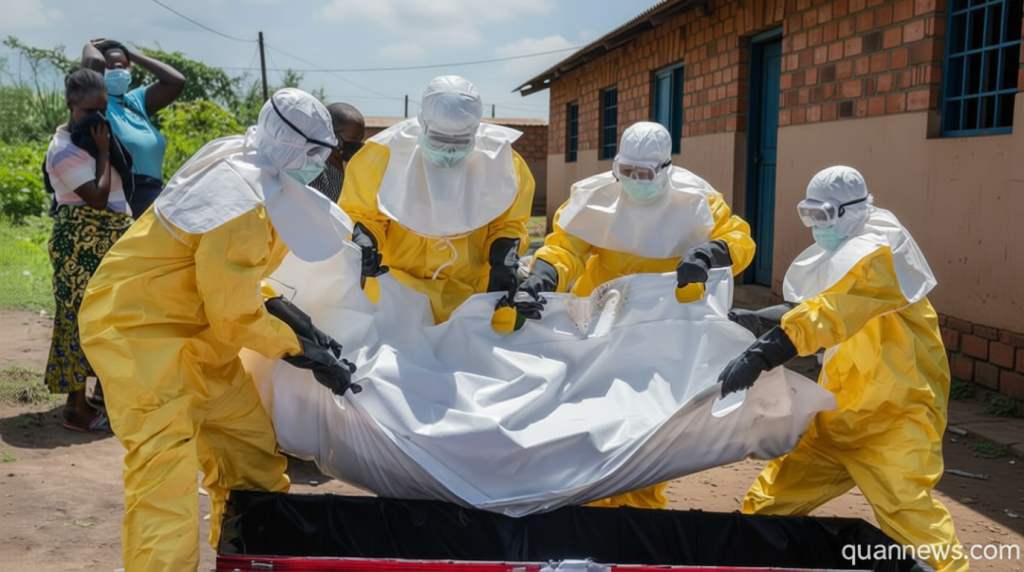
DRC’s Ebola outbreak may be worst ever, Africa CDC says
Qwenews.com – The Democratic Republic of the Congo (DRC) is facing what the Africa CDC’s Director-General has warned could be the worst Ebola outbreak in history. During a virtual summit of African health leaders in Burundi, the official issued a stark assessment, highlighting the alarming pace of the virus’s spread and the potential for a more severe crisis than any recorded before. With tens of thousands of individuals exposed to the disease still untraced, the situation has raised urgent concerns about containment efforts and the broader implications for public health in the region. The DRC’s health authorities, supported by international partners, are now racing against time to expand tracing initiatives and accelerate vaccination campaigns to prevent the outbreak from spiraling further.
Historical context of past outbreaks
Comparing the current outbreak to historical precedents, Africa CDC officials emphasize that while the 2014-2016 West Africa epidemic—spanning Guinea, Liberia, and Sierra Leone—claimed over 11,000 lives, the DRC’s 2018 outbreak was contained more swiftly. However, the latest strain of the virus has shown a faster transmission rate, particularly in densely populated urban areas, which has complicated containment. The 2014-2016 epidemic, often cited as the largest in modern history, exposed vulnerabilities in regional healthcare systems and highlighted the need for coordinated international action. Now, as the DRC’s outbreak reaches critical levels, experts are warning that the current scenario could surpass even those past records if immediate interventions are not scaled up.
“If we don’t halt the spread quickly, this outbreak could exceed the devastation seen in West Africa and eastern DRC,” said Jean Kaseya, Africa CDC’s Director-General, during the summit.
Current Spread and Challenges
The DRC’s Ebola outbreak is now spreading across multiple provinces, with hotspots in urban centers like Kinshasa and surrounding areas. Public health officials have reported a significant increase in confirmed cases, particularly in regions with limited healthcare infrastructure and high population density. The virus’s rapid transmission has been attributed to factors such as community resistance to vaccination, delayed reporting of cases, and the movement of people within and between affected areas. Additionally, the outbreak has been compounded by ongoing political instability and logistical challenges, which have hindered the timely delivery of medical supplies and personnel to the hardest-hit zones.
Tracing efforts have struggled to keep pace with the virus’s spread, leaving many cases undetected and untreated. Health workers are working under immense pressure, often with insufficient personal protective equipment (PPE) and resources to manage the growing number of infections. The situation has also sparked fear among local communities, leading to instances of mistrust and reluctance to engage with health authorities. These challenges underscore the complexity of controlling the outbreak, which has now become a global concern. The Africa CDC’s warning serves as a call to action for both national and international stakeholders to prioritize resources and strategies aimed at curbing the epidemic’s trajectory.
Global Response and Collaboration
International health organizations, including the World Health Organization (WHO) and the Centers for Disease Control and Prevention (CDC), have intensified their support for the DRC’s efforts to combat the outbreak. Teams from these agencies are deploying to the region to assist in setting up treatment centers, training local healthcare workers, and distributing vaccines. The Global Health Security Initiative (GHSI) has also pledged funding to bolster the DRC’s response, recognizing the outbreak as a potential threat to global health security. Collaboration with neighboring countries has been crucial, as the virus has shown signs of crossing borders, necessitating a unified approach to containment and surveillance.
“The DRC’s outbreak is not just a local challenge; it has implications for the entire continent,” noted a WHO representative in a recent statement.
The international community’s rapid response has been a lifeline for the DRC, which has long grappled with resource limitations. However, experts caution that sustained investment and coordination are essential to prevent the outbreak from becoming a prolonged crisis. The Africa CDC has urged countries to share best practices, strengthen cross-border health alerts, and invest in research to develop more effective treatments and vaccines. These steps are seen as vital to mitigating the impact of the outbreak and ensuring a faster recovery.
Implications for the Future
As the DRC’s Ebola outbreak escalates, its potential to become the worst in history has forced a reevaluation of global preparedness for emerging infectious diseases. The outbreak has exposed gaps in regional health systems, particularly in areas with weak surveillance networks and limited access to medical care. If containment efforts fall short, the virus could spread to neighboring countries, increasing the risk of a larger epidemic. The DRC’s experience has also highlighted the importance of community engagement in public health campaigns, as trust between health workers and local populations is critical to the success of vaccination and tracing programs.
Despite the grim outlook, there is optimism that the current interventions can curb the outbreak. The Africa CDC’s warning has galvanized international partners to increase funding and support for the DRC’s health initiatives. However, the success of these efforts will depend on the speed and scale of response, as well as the ability to adapt strategies to the evolving nature of the virus. The DRC’s outbreak may be worst ever, but with coordinated action and sustained commitment, there is still hope to turn the tide and prevent a more devastating outcome.