
Iran’s Man in Charge: The Key Negotiator in U.S. Talks
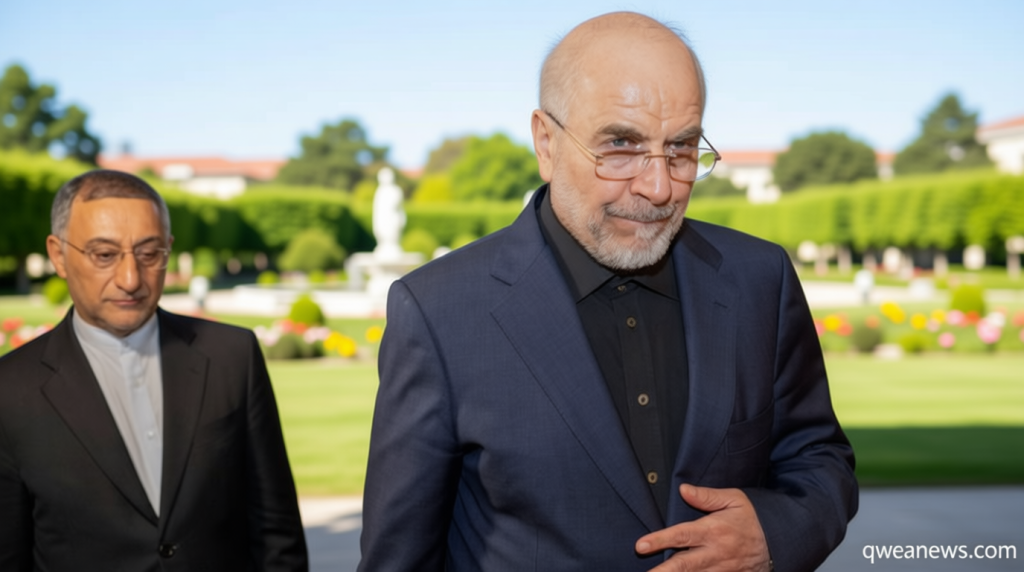
Qwenews.com – As Iran’s most senior negotiator, Mohammad Bagher Ghalibaf plays a pivotal role in the country’s ongoing discussions with the United States. His prominence was underscored when he stepped off the plane during the Iranian delegation’s arrival in Zurich, Switzerland, carrying the symbolic weight of the Iranian flag. Ghalibaf, who recently shared a poignant post on X, referenced the US strike that killed 168 children at an elementary school in southern Iran, using the hashtag “#Mindab168” to highlight the human cost of the conflict. His message, “I consider the innocent children of Mindab and all martyrs of dear Iran to be watching over my every action,” reflects his commitment to representing Iran’s interests with both resolve and sensitivity.
The Rise of Iran’s Man in Charge
Ghalibaf’s ascension to leadership follows a series of high-stakes events in the US-Iran conflict. Nearly four months of intense clashes saw key Iranian figures targeted in US-Israeli airstrikes, including Supreme Leader Ali Khamenei and Ali Larijani, a central strategist in Iran’s military and diplomatic operations. The IRGC’s growing authority in the aftermath of these strikes has further solidified Ghalibaf’s position as Iran’s man in charge. With a reputation as a conservative pragmatist, his role as speaker of Iran’s parliament has made him a key figure in bridging the gap between the nation’s leadership and its international counterparts. This strategic placement underscores the importance of his role in shaping Iran’s approach to negotiations.
Ghalibaf’s background as a former air force commander and his early career in law enforcement have shaped his leadership style. His history of aligning with hardline policies, including personal responsibility for beating protesters in a 2013 audio recording, has positioned him as a leader who values national resilience. This trait is critical in a context where trust between Iran and the US remains fragile. Analysts note that his appointment signals a deliberate effort to balance ideological firmness with practical diplomacy, ensuring that Iran’s core interests are protected while maintaining a channel for dialogue.
Recent U.S.-Iran Negotiation Dynamics
Recent talks between Iran’s man in charge and the United States have been marked by both tension and hope. During a high-profile call with Fox News, former President Donald Trump hinted at potential threats against Iran, including its negotiators, if the Strait of Hormuz remained closed. “You close it and you won’t have a country,” Trump reportedly said, emphasizing the stakes of the maritime corridor. Ghalibaf’s response, however, was equally forceful. He questioned whether Trump’s threats had truly been effective, stating, “Don’t they ever think to themselves that if their threats had actually worked, they wouldn’t have reached this level of desperation today?” This exchange highlights the complex interplay of hardline rhetoric and diplomatic maneuvering in the current phase of negotiations.
The recent high-level meeting between Ghalibaf and Vice President JD Vance in Islamabad, Pakistan, marked a significant milestone in the U.S.-Iran dialogue. It was the first direct engagement between Iranian and American officials since the 1979 Islamic Revolution, a testament to the shifting dynamics of the conflict. Ghalibaf, speaking to Iran’s state broadcaster, described the negotiations as a “test of wills,” emphasizing the challenges of rebuilding trust. Despite the initial skepticism, the talks have provided a platform for addressing critical issues such as sanctions, regional security, and Iran’s nuclear program, offering a glimmer of potential progress in a deeply polarized relationship.
Ghalibaf’s position as Iran’s man in charge is not just a title but a mandate rooted in the nation’s political landscape. The IRGC’s strengthened role in foreign policy has allowed him to leverage his experience and authority in navigating the delicate negotiations. His leadership is further supported by Iran’s domestic political climate, which prioritizes resilience in the face of external pressure. As the talks continue, Ghalibaf’s ability to balance these demands will be crucial in determining the outcome of the U.S.-Iran dialogue. His background in both military and political affairs positions him uniquely to address the multifaceted challenges of the current negotiations.