
Venezuela’s Deadly ‘Doublet’ Earthquakes: One or Two Quakes?
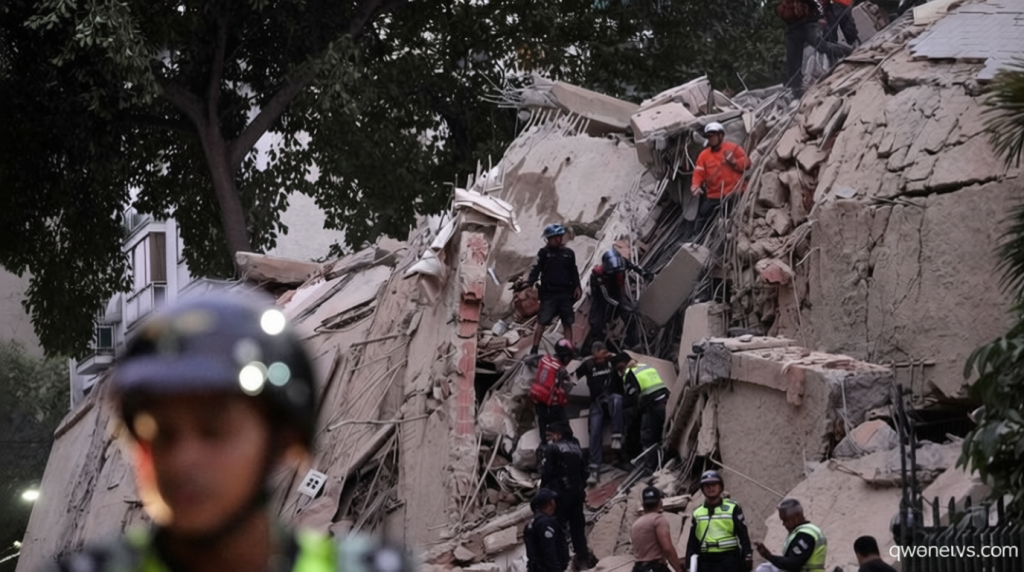
Qwenews.com – On Wednesday evening, Venezuela endured its most powerful tremors in over a century. The quakes devastated structures and resulted in more than 500 fatalities, as reported by authorities on Friday. According to the US Geological Survey, the event might have been a rare “doublet”—a sequence of two major earthquakes occurring in rapid succession. Such phenomena can amplify destruction compared to a single tremor.
What Is a Doublet?
Doublets are defined by the USGS as two quakes of similar strength happening closely together. In this case, a 7.2-magnitude quake rattled northern Venezuela, followed 39 seconds later by a 7.5-magnitude tremor. “Double earthquakes are exceptionally damaging,” noted Raul Perez-Lopez, a geologist at Spain’s Institute of Geological and Mining Sciences. “The key distinction lies in their energy levels: doublets share similar intensity, while single quakes and smaller aftershocks are less formidable.”
Uncertainty in Classification
“It may take days or longer for seismologists to fully unravel what happened,” said Judith Hubbard, a Cornell University geophysicist analyzing the recent seismic activity. “They might not definitively determine if this was one quake or two.”
Some experts suggest that additional data could reveal the event as a single, larger rupture rather than two distinct quakes. While the difference between one quake and a doublet may not drastically alter human impact, it could offer critical insights into seismic patterns and predictive models.
Tectonic Context
Wednesday’s tremors occurred at the boundary between the Caribbean and South American tectonic plates, which shift at approximately 20 millimeters annually. Northern Venezuela is prone to significant earthquakes, but over the last century, it has only experienced seven events with a magnitude of 6 or higher. The quick succession of the quakes complicates initial analysis, as preliminary data may not capture the full sequence.
Challenges in Seismic Analysis
Hubbard explained that a 7.5-magnitude quake typically unfolds over 30 to 40 seconds, with energy released in stages. In this case, the second quake’s pulse might have been triggered by the first, making it challenging to distinguish as separate events. If the quakes were part of a single rupture, the event could equate to a magnitude-7.6 quake. However, the USGS initially identified two distinct quakes, separated by 5 to 10 kilometers, possibly indicating a fault slip with opposing motion.
Aftermath and Ongoing Research
Following the quakes, weaker tremors have been recorded near Caracas. Hubbard highlighted that these aftershocks could help clarify whether the initial quakes were a doublet or a single rupture. Meanwhile, damage in the region complicates ground assessments, as underground sediments may have amplified seismic waves and worsened structural impacts. Power outages in key areas also hinder data collection efforts, leaving satellite observations as a potential aid in resolving the mystery.