
The website where crypto promoters pay people to tattoo ads on themselves
A case of crypto-driven body art
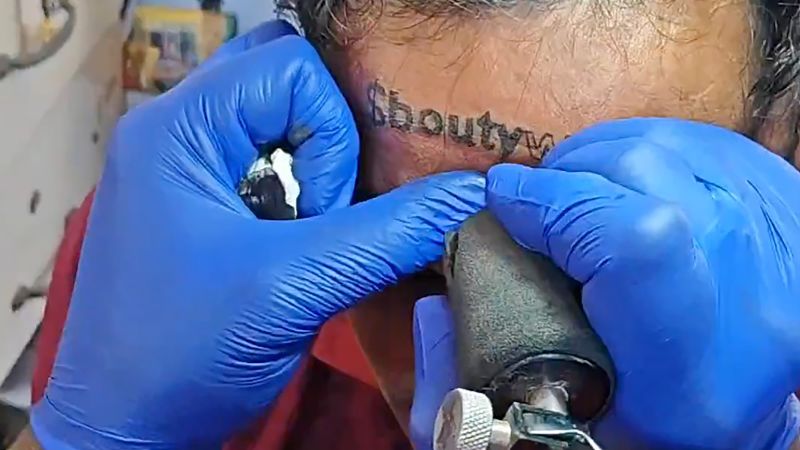
Qwenews.com – On June 6, a man with a slightly receding hairline visited a tattoo parlor in Chennai, India, and agreed to have a line of text inked across his forehead. The transaction was arranged via a message on a cryptocurrency platform, with the participant, identified as Arivu, recording the process on video. He was compensated in crypto worth approximately $3,000 for the act.
Pump.fun’s bounty initiative
Pump.fun, a crypto platform known for its memecoin ecosystem, launched a feature called Pump.fun GO last week. This allows users to post public bounties, paid in cryptocurrency, for completing specific tasks. The company described the initiative as a way to “leverage the power of humans & money across the globe.”
Testimonials and incentives
A 21-year-old Florida resident, Ayush, reportedly organized the tattoo task through Pump.fun. He shared that the reward was equivalent to the salary of a local worker for five years. Similarly, Jordan, a Toronto-based artist (using a pseudonym), accepted a $3,000 bounty for tattooing a cryptocurrency casino ad on his leg. “It was easier for me because my girlfriend is a tattoo artist,” Jordan explained.
Bounty creators demand proof of completion, often requiring social media posts as evidence. This includes video clips, as seen with Arivu’s recording. While some bounties appear harmless—such as earning $300 to visit McDonald’s and share proof—others have taken darker turns. For instance, a user offered 10,000 Solana ($690,000) to someone willing to film their own suicide. The listing has since disappeared.
Controversy and regulation
Experts argue that Pump.fun’s model exploits vulnerable populations. Vetle Lunde, a researcher at K33, noted that the platform thrives at the intersection of internet attention and financial incentives. “During the 2024 memecoin boom, livestreams became infamous for encouraging extreme behavior,” Lunde said.
The site suspended live streaming after criticism, citing the need for better moderation. New policies now ban violent or sexual content, yet the bounty system has evolved into a platform for unusual rewards. Nicholas Vrousalis, a philosopher from Rotterdam, called the system “predictable” given the precariousness of certain labor groups. “Predatory instincts grow stronger when people are desperate,” he observed.
Alon Cohen, a co-founder of Pump.fun, has not responded to requests for comment. Social media and email inquiries to the platform remain unanswered, leaving questions about its accountability.