
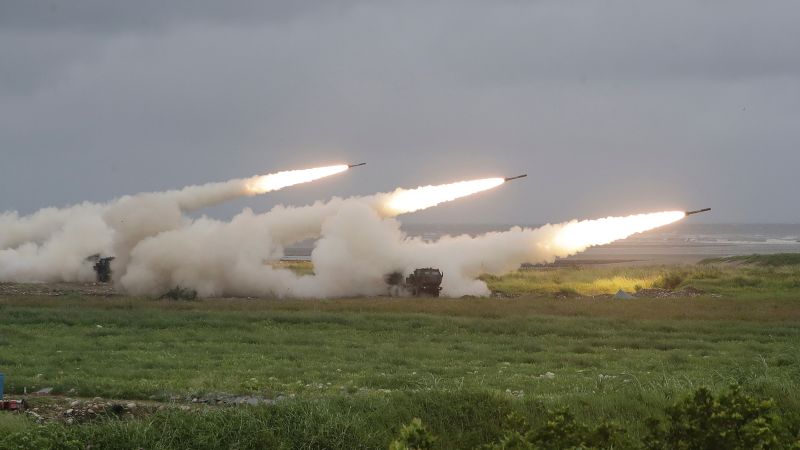
Taiwan Test-Fires Rockets Toward China Using US Mobile System
Qwenews.com – On Wednesday, June 10, 2026, Taiwan’s military launched a series of rockets toward China from a mobile US-supplied High Mobility Artillery Rocket System (HIMARS) platform, signaling a heightened readiness to defend its territory against potential threats. The exercise, conducted in the Taiwan Strait, marked a significant demonstration of the island’s asymmetric warfare capabilities and underscored the strategic role of American military support in its defense posture. This move has intensified discussions about Taiwan’s preparedness to counter Chinese military advances, especially as tensions along the disputed border continue to rise.
Strategic Deployment of HIMARS
The HIMARS system, a mobile artillery platform equipped with a truck-mounted pod, has become a cornerstone of Taiwan’s modern defense strategy. Its ability to rapidly deploy and fire missiles from concealed positions gives the island a tactical edge, enabling it to strike key targets while evading immediate retaliation. The system’s mobility and precision have been critical in recent exercises, allowing Taiwan to simulate scenarios where it could disrupt Chinese operations in the strait. Analysts note that the HIMARS deployment also serves as a deterrent, showcasing Taiwan’s capability to project force independently or in coordination with US allies. By using this advanced technology, the island’s military aims to counter the growing Chinese presence in the region, particularly its naval and air assets.
During the exercise, multiple HIMARS units demonstrated their operational efficiency by relocating and launching rockets within minutes. This swift maneuverability is a hallmark of the system’s design, which prioritizes speed and flexibility over traditional fixed-position artillery. The drills included simulated attacks on Chinese coastal defenses, highlighting how the system could be used to strike at critical infrastructure in the event of a conflict. The US has long emphasized the HIMARS as a vital tool for Taiwan, enabling it to conduct precision strikes and reduce the risk of prolonged engagements. This capability is especially relevant in a region where China maintains a dominant military presence.
Geopolitical Context and China’s Response
China’s longstanding claim over Taiwan, which it refers to as a “renegade province,” has been a central theme in its military operations in recent years. The country regularly conducts large-scale exercises near the island, often involving warships and aircraft, to assert its dominance and pressure Taiwan into unification. The recent rocket test, however, has shifted the narrative, with Beijing now responding to Taiwan’s aggressive displays. Chinese officials criticized the move, calling it a provocation that could escalate the situation. They reiterated their commitment to eventual unification, warning that any “independent” military actions by Taiwan would be met with a robust response.
The exercise also reflects the broader geopolitical dynamics at play. While the US has not formally recognized Taiwan as a sovereign state, it maintains a strong defense relationship with the island, providing advanced weapons systems and intelligence support. The recent deployment of HIMARS is part of a larger arms deal announced in December 2025, which aimed to bolster Taiwan