
States Sue to Block Paramount’s Warner Bros. Discovery Takeover
Qwenews.com – Twelve U.S. states have initiated a high-profile antitrust lawsuit to prevent Paramount Global from acquiring Warner Bros. Discovery, the parent company of CNN. The legal challenge, filed in the Northern District of California on Monday, seeks to halt the merger under the claim that it will stifle competition, inflate prices, and reduce the diversity of content available to American audiences. California Attorney General Rob Bonta, who spearheaded the lawsuit, has repeatedly stressed that the deal threatens to “eliminate the voices of independent creators and consolidate power in the hands of a few major conglomerates.” This move underscores the growing concern among state officials that the merger could reshape the media landscape in ways that favor large corporations over smaller competitors.
Americans’ Right to Diverse Voices
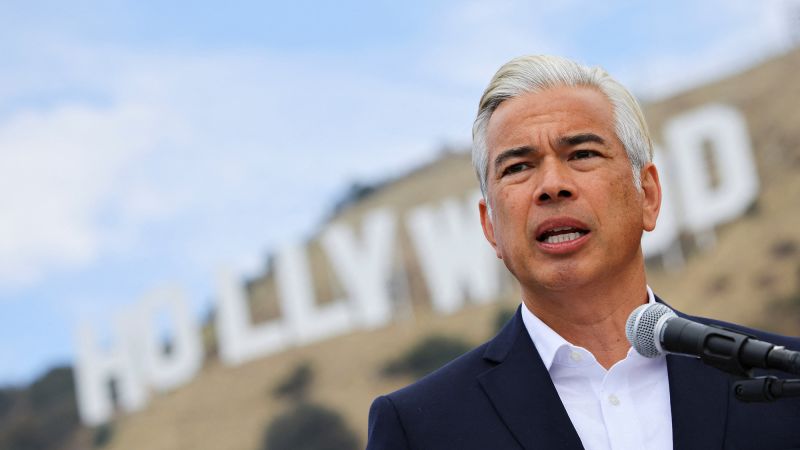
“This merger will mean fewer journalists informing the electorate. It will mean fewer opportunities for Americans to hear the full breadth of information and opinions on a subject, and then come to their own conclusions,” Bonta stated during a press conference near the Hollywood sign. The lawsuit argues that the combined entity of Paramount and Warner Bros. Discovery will dominate the entertainment sector, leading to reduced innovation and higher costs for consumers. Bonta’s office emphasized that the states’ actions are not merely about market control but also about safeguarding the public’s right to access a wide range of perspectives through news and entertainment content.
The states’ legal strategy hinges on the claim that the merger will create a monopoly in key areas such as film distribution, movie scheduling, and cable channel licensing. They argue that the merged company will have unchecked power to dictate pricing, limit content variety, and control the flow of information. This comes at a time when the federal government, particularly the Department of Justice, has approved the deal, prompting state attorneys general to take independent action. Critics of the federal approval have accused it of being influenced by political considerations, with some highlighting Paramount’s strong ties to former President Trump’s administration.
Legal Strategy and Financial Terms
The lawsuit requests a temporary restraining order to pause the merger, giving the courts time to assess its impact on market competition. If granted, the order would delay the transaction until a full review is conducted, though Paramount has already signaled its intention to challenge the decision in court. The legal battle is expected to be complex, with analysts suggesting that the states will need to demonstrate how the merger directly harms consumers and smaller studios. Despite this, Bonta remains confident, stating that the “ticking fee” provisions in the merger agreement—designed to incentivize timely completion—will be a critical point of contention.
Paramount’s acquisition of Warner Bros. Discovery, valued at over $20 billion, is seen as a strategic move to consolidate media power and create a dominant global entertainment empire. The company’s CEO, David Ellison, has defended the merger, asserting that it will “strengthen the creative pipeline” and “expand the reach of American storytelling worldwide.” However, state officials counter that the deal will create a single entity with disproportionate influence over content creation and distribution, particularly in the streaming and film industries. The Ellisons, whose family owns Oracle, have been instrumental in financing the bid, but this has raised questions about the potential for conflicts of interest in the approval process.
Similar to this case, a coalition of states previously thwarted a merger between Nexstar and Tegna, citing concerns over market dominance in local television. That precedent has emboldened state attorneys general to take a more active role in antitrust enforcement, especially as federal regulators appear to prioritize industry consolidation. The current lawsuit could set a new standard for state intervention in media mergers, with legal experts noting that the outcome may influence future deals in the entertainment sector. As the case progresses, the states will face the challenge of proving that the merger will result in significant harm to competition, a task that requires both legal rigor and public support.
The broader implications of the lawsuit extend beyond the immediate merger. If successful, it could signal a shift in antitrust priorities, with state officials stepping in to protect smaller players in an increasingly consolidated market. The legal battle also highlights the tension between federal and state regulatory approaches, as California and its allies push back against what they see as a biased federal decision. As the hearing approaches, the states are rallying public opinion, emphasizing the importance of diverse content and free market competition. Whether this effort will block the merger or simply delay it remains to be seen, but the case has already sparked a critical conversation about the future of media in America.