
Protests Over a US Ebola Facility in Kenya Signal Growing African Resistance to Trump Deals
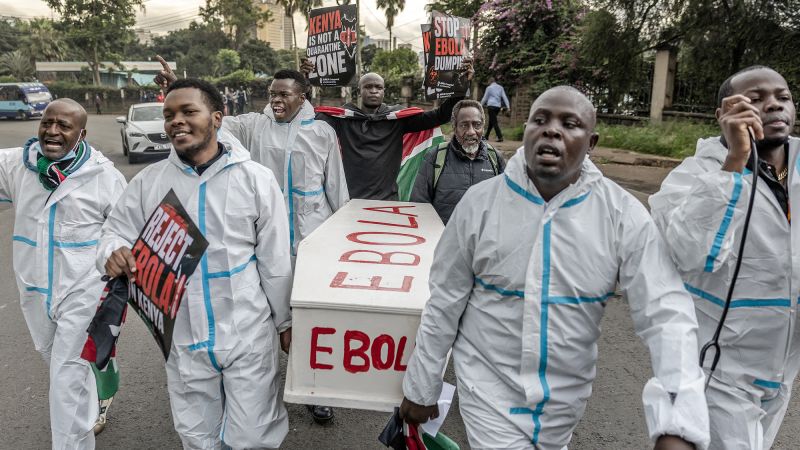
Qwenews.com – Protests over a US Ebola facility in Kenya have erupted, drawing national and international attention to a U.S.-funded project that aims to establish an isolation unit for Americans infected with the Ebola virus. Demonstrations in Nairobi and other major cities have centered on fears that the facility could expose the country to a potential outbreak, despite Kenya’s long-standing status as Ebola-free. Protesters have rallied under slogans like “Kenya is not an American colony,” emphasizing concerns that the project represents a new phase of U.S. dominance in African health initiatives. The facility, part of a broader Trump-era strategy, has sparked debates about the balance between American interests and local sovereignty in global health agreements.
The U.S.-Kenya Health Pact and Public Backlash
The controversy has intensified after Kenya’s government, which signed a $1.6 billion health pact with the U.S. in 2023, approved the construction of the facility despite opposition. President William Ruto argued that the project is essential for public health, stating it would “protect Kenyans from the spread of the Ebola virus” and honor past U.S. commitments. However, critics, including former deputy president Rigathi Gachagua, have accused the administration of prioritizing American needs over Kenyan interests. “We find it unpalatable that if Americans are not willing to take care of their own patients in their own country because it’s risky to the rest of the population, the Americans will decide that that can be done in Kenya,” Gachagua said during a heated public address. His comments reflect a broader sentiment that the facility symbolizes a shift toward conditional aid and resource control by the U.S.
“We find it unfair, we find it a double standard, and we are totally opposed to it,” Gachagua added. The backlash has grown as local communities worry about the facility’s proximity to residential areas and the potential for healthcare disparities. Some activists argue that the project lacks transparency, with limited public consultation on its long-term implications. Meanwhile, the U.S. government has defended the initiative, claiming it aligns with its “America First Global Health Strategy,” which emphasizes targeted partnerships over broad, multilateral aid programs.
Conditional Aid and the Shift in U.S. Health Policy
The protests over a US Ebola facility in Kenya are part of a larger trend of African nations challenging the terms of U.S. health agreements. Under the Trump administration, the U.S. adopted a more assertive approach, often linking aid to specific political or economic goals. This has led to accusations of “transactional diplomacy,” where African countries feel their contributions are undervalued in exchange for American priorities. The Kenya project exemplifies this, as it is framed as a bilateral deal that benefits U.S. interests, such as securing safe quarantine zones for American citizens. Critics say such arrangements ignore the region’s capacity to manage its own health crises and create dependency on foreign aid.
“We need partnerships without strings attached,” stated Ghanaian Health Minister Kwabena Mintah Akandoh, who voiced support for Kenya’s protests. Similarly, Zimbabwe’s government spokesperson Nick Mangwana highlighted objections to agreements that demand long-term biological data sharing, with no guarantee of reciprocal benefits. These concerns have resonated across the continent, where leaders and citizens alike are reevaluating the costs of U.S. health initiatives in the face of rising local advocacy.
Regional Resistance and the Role of African Leadership
African leaders have increasingly spoken out against the U.S. strategy, which they see as favoring American firms and institutions. Zambia’s foreign minister, Mulambo Haimbe, recently raised alarms about a proposed $2 billion health initiative, warning that it could undermine African autonomy by prioritizing U.S. interests. Haimbe’s comments followed concerns from outgoing U.S. ambassador Michael Gonzales, who accused African leaders of not investing adequately in their own healthcare systems. While these critiques highlight the U.S. perspective, they also underscore a growing African resolve to negotiate terms that reflect their priorities, rather than accept one-sided agreements.
The protests over a US Ebola facility in Kenya have galvanized similar movements in other countries, with leaders calling for more equitable global health partnerships. In Uganda, for instance, citizens have demanded that the facility’s construction include provisions for local employment and healthcare infrastructure upgrades. These demands reflect a broader shift in African policy, where nations are seeking to ensure that foreign investments align with their development goals. The Kenya case has become a rallying point for this movement, symbolizing the continent’s increasing assertiveness in global health diplomacy.
Legacy of the Trump Era and African Nationalism
The Trump administration’s emphasis on bilateral deals has left a lasting impact on Africa’s approach to international collaboration. Protests over a US Ebola facility in Kenya are part of a wave of resistance fueled by African nationalism, which questions the fairness of U.S. health initiatives. Many argue that the Trump-era strategy, while efficient in its focus, has overlooked the cultural and political nuances of African nations. This has led to a reevaluation of how the U.S. engages with the continent, with some countries now pushing for more transparent and inclusive frameworks in future agreements.
“The US has shifted from being a partner to being a benefactor, and that’s not acceptable,” said Nigerian Senator Nnamdi Kanem. “We want to be equal players in this collaboration, not just recipients of aid.” This sentiment echoes across Africa, where leaders and citizens alike are demanding a redefinition of the continent’s role in global health. The Kenya protests, while specific, have broader implications for the future of U.S.-Africa relations, signaling a new era of mutual accountability in international partnerships.