
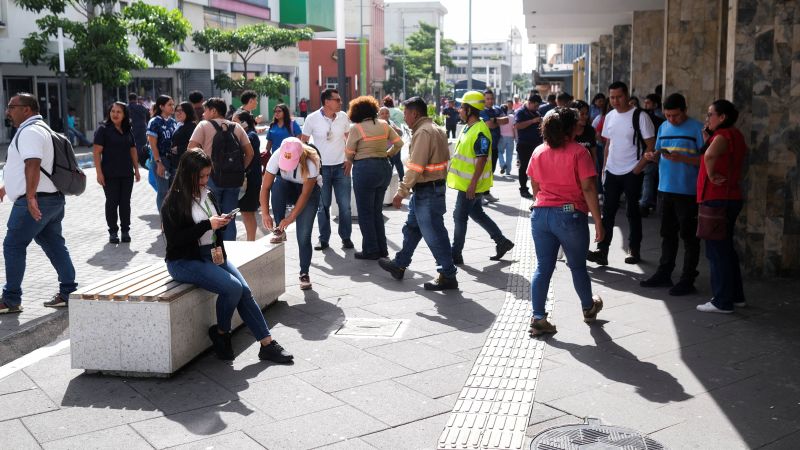
Powerful Earthquake in Mexico Shakes Guatemala and El Salvador
Qwenews.com – A powerful earthquake in Mexico shook the region on July 17, 2026, causing widespread tremors that extended into neighboring countries like Guatemala and El Salvador. The U.S. Geological Survey (USGS) recorded the seismic event as a 7.3-magnitude quake, originating 48 kilometers southwest of Aquiles Serdán in the coastal state of Chiapas. This earthquake in Mexico, though centered within the country, generated enough force to be felt across borders, raising concerns about potential impacts on nearby populations and infrastructure.
Seismic Activity and Regional Impact
The earthquake in Mexico struck at 1:06 p.m. local time, with its epicenter located in a seismically active zone along the Pacific coast. Despite its significant magnitude, the shaking was described as moderate to severe in coastal areas but diminished as distance from the epicenter increased. The Pacific Tsunami Warning Center (PTWC) initially issued a tsunami alert, warning of possible waves within a 300-kilometer radius. However, subsequent observations indicated that the waves reached only a few centimeters above normal tide levels, posing minimal threat to the region.
Authorities in Guatemala reported that the earthquake in Mexico was felt in several regions, including the capital city of Guatemala City and coastal areas like Puerto Barrios. While no major structural damage was reported, minor cracks were noted in some buildings, and local emergency services activated to assess the situation. In El Salvador, the tremor caused a brief disruption in power supplies and triggered a sense of alarm among residents, though no visible damage was observed. The country’s National Civil Protection Agency confirmed that the risk of tsunami waves had subsided, with the PTWC updating its status shortly after the initial alert.
Official Responses and Community Reactions
“The powerful earthquake in Mexico has been felt strongly in our region, but so far, there are no reports of serious damage,” stated Raymundo Pedro Morales Ángeles, the Secretary of the Navy, during a press conference led by President Claudia Sheinbaum. He emphasized that the focus should remain on monitoring aftershocks and ensuring public safety, particularly in coastal zones where water levels temporarily rose by up to half a meter.
In Chiapas, where the earthquake in Mexico originated, officials reported at least four injuries, primarily due to falling objects and minor structural cracks. The state’s civil protection service worked swiftly to address gas leaks and repair damaged buildings. Meanwhile, Oaxaca’s governor, Salomón Jara Cruz, noted that the tremor was felt with moderate intensity in the capital, but no significant damage was observed. Residents described the experience as “startling” but manageable, with many returning to their daily routines shortly after the event.
The earthquake in Mexico also prompted a series of aftershocks, some of which measured up to 6.0 on the Richter scale. These smaller tremors, while not as intense as the main event, added to the overall sense of unease in the region. In Guatemala, local media highlighted the psychological impact of the quake, with some citizens expressing fear of future seismic events. Similarly, in El Salvador, social media platforms saw increased activity as people shared videos and photos of the tremors and their aftermath.
Historical Context and Preparedness Measures
Experts have noted that the earthquake in Mexico aligns with a pattern of tectonic activity in the region, which has experienced several notable quakes in recent years. The fault lines along the Pacific coast are particularly active, making such events more frequent. However, the relatively low death toll and minimal damage suggest that preparedness efforts—such as early warning systems and community drills—have been effective in mitigating risks.
Following the quake in Mexico, authorities across the region activated their emergency protocols, with a focus on inspecting critical infrastructure like bridges, power plants, and transportation networks. In Chiapas, the focus keyword “powerful earthquake in Mexico shakes” was repeated in official statements to underscore its regional significance. Meanwhile, health officials in both Guatemala and El Salvador monitored for any injuries related to the shaking, while geologists analyzed the data to determine the likelihood of further activity.
As of the latest updates, the situation remains stable, with no reports of major damage or casualties. The earthquake in Mexico has served as a reminder of the importance of seismic resilience in the region. While the immediate threat has passed, experts warn that the area may experience additional tremors in the coming days. The focus keyword “powerful earthquake in Mexico shakes” continues to be central to the coverage, as it highlights the cross-border effects of the event and its potential to test the region’s emergency response systems.