
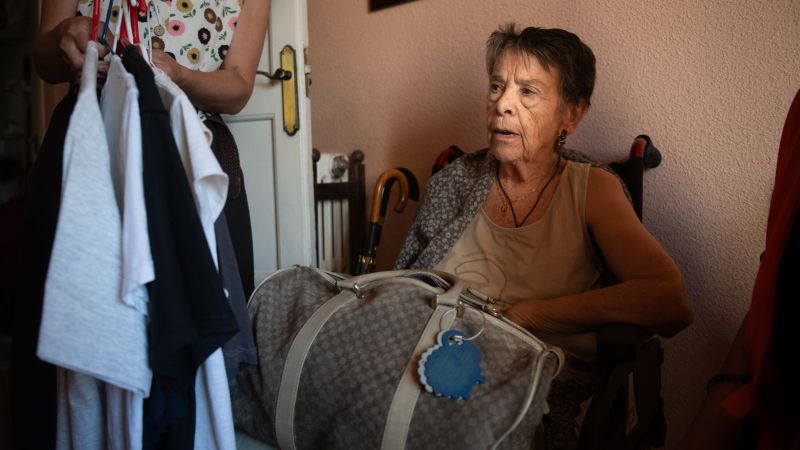
An 87-Year-Old Tenant Becomes a Symbol of Spain’s Housing Struggle
Qwenews.com – The removal of an 87-year-old woman from the Madrid apartment she had called home for more than seven decades has transformed a personal legal battle into a national rallying point over housing access in Spain.
María del Carmen Abascal, widely known as Maricarmen, was evicted last Wednesday from her flat on Alcalde Sainz de Baranda Street in the El Retiro neighborhood. Supporters had gathered outside through the night in an attempt to stop the eviction, but the process went ahead. She was taken away on a stretcher and admitted to Madrid’s Gregorio Marañón Hospital, where she was expected to remain for several days while undergoing medical examinations.
Her case has stirred anger well beyond her neighborhood. Demonstrations took place in Madrid, Barcelona, Seville and Valencia, with participants linking Maricarmen’s experience to broader worries about rents, evictions and the shortage of affordable homes. On Saturday, tens of thousands of people marched in Madrid. Some spent the night in Puerta del Sol, and families from several generations joined the gathering on Sunday.
Among the demands from demonstrators were tougher protections for tenants and a prohibition on evictions when a person has no suitable alternative housing nearby.
A Home Spanning a Lifetime
Abascal had lived in the apartment since 1956. Near El Retiro Park, it was where she grew up with her parents and later remained after inheriting their lease. The arrangement was an older form of tenancy, with rent set at roughly 500 euros per month, or about $568.
Her legal troubles began after Urbagestión Desarrollo e Inversión bought the building in March 2018 for 247,000 euros, approximately $280,787. The company subsequently sought a rent increase that could have raised her payments to as much as four times their previous level. Her monthly pension is 1,300 euros, or about $1,478.
In March 2020, the property company brought a case to end the lease. Abascal initially prevailed in a lower court, but the decision was overturned by the Provincial Court after an appeal. Her attorney, Beatriz Duro, later sought constitutional protection and appealed to the Supreme Court, though both efforts were rejected.
Meanwhile, the company pursued enforcement of the lease termination in order to regain the apartment. The case produced as many as four attempts to carry out the eviction.
Delays, Negotiations and a Final Removal
Abascal’s legal team was able to delay an eviction for four months in October 2025 by using a legal provision applicable when the party seeking eviction is a corporate entity. A further suspension came in June 2026, when her vulnerable circumstances and lack of another place to live resulted in a postponement of nearly a month.
The eviction was then moved to July, and Duro filed another appeal. During the intervening period, Maricarmen’s supporters and legal representatives pursued alternatives intended to let her stay in her home.
One proposal involved mediation through Casa 47, the state housing agency. The idea was for the agency to acquire the apartment and then lease it back to Abascal at a price she could manage. An anonymous person also offered, on the day before the eviction, to cover part of her rent. Duro said the property company did not show interest in the proposed options.
For many people following the case, the significance lies in the contrast between an elderly tenant’s attachment to a longtime home and the financial pressures reshaping housing in major cities. A lease inherited decades ago can offer stability, but it may also become the center of conflict when ownership changes and market expectations rise.
“Please Fight”
After being moved to the hospital, Abascal addressed her supporters in a video on Friday. Her message focused not only on her own loss, but on those facing similar uncertainty over their homes.
“I did not manage to defend my home, but I have fought so that others learn to fight for theirs,” she said.
“My house has been my life. And now I have to leave it behind. But that does not mean I will not keep fighting.”
“Please fight,” she told supporters. “I send you all a very big hug and thank you for everything.”
Her words have helped turn the eviction into a wider public appeal for collective action. The protests were not simply about one address in Madrid; they reflected fears felt by tenants who believe that finding or keeping an affordable home is becoming increasingly difficult.
Maricarmen’s story also illustrates how housing disputes can extend over years, moving through lower courts, appeals, enforcement proceedings, emergency delays and attempted mediation. Legal remedies may slow an eviction, but they do not necessarily create a permanent housing solution for someone without another residence to move into.
As demonstrations continue to draw attention to tenant protections, her case has become a human face for a difficult policy question: how to balance property rights with the security and dignity of people who have spent most of their lives in one home.
Related Reading
Frequently Asked Questions
What is Please fight?
Please fight is the main topic of this guide. The article explains the context, practical details, and next steps readers should understand.
Why does Please fight matter?
Please fight matters because readers are looking for a useful answer, not just a short summary. Good content should match search intent and help them decide what to do next.