
Taxpayer-Funded Trump Video Rekindles Debate Over Political Messaging
Qwenews.com – A 30-second television spot portraying President Donald Trump as an unyielding national defender has triggered fresh questions about the line between public information campaigns and political advertising. The video, shown during NFL programming on Sunday, closes with a message that has become the center of the dispute: “Paid for by the U.S. Government.”
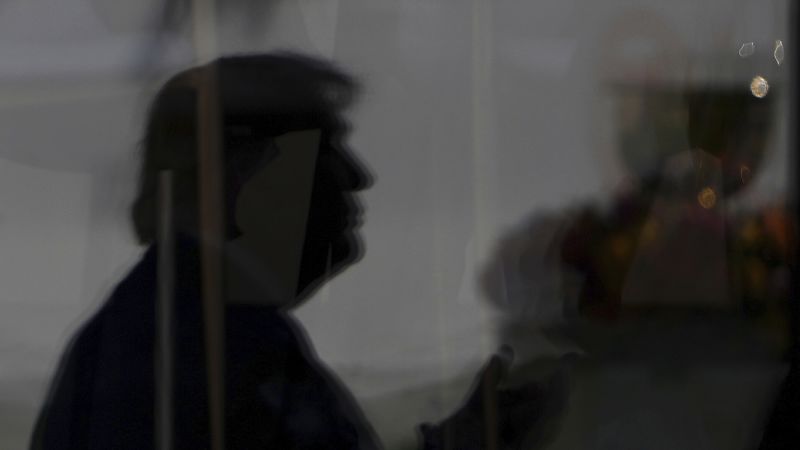
Shot in stark black and white, the ad presents Trump with a deliberately forceful, cinematic image. An amplified voiceover depicts him as fighting a “final battle” against communists, the deep state and the “fake news” media. Its themes resemble material Trump used on social media while campaigning in 2024, but the funding declaration gives the new broadcast a different and more consequential dimension.
The issue is not simply whether the video is patriotic. It is whether taxpayer resources should be used for messaging so closely aligned with a president’s political identity, particularly in the weeks before congressional elections. Public funds come from Americans with sharply differing views of Trump and his agenda, making the spending decision an immediate test of standards meant to separate government communication from partisan promotion.
White House Calls the Video a Public Service Announcement
The White House has defended the campaign as a series of public service announcements intended to encourage national pride and emphasize the country’s security interests. Officials have argued that the message concerns the value of defending the United States domestically, at the border and overseas.
“The ad is educational and unapologetically patriotic. We should be proud of our country.”
The administration also maintains that the spots are not electoral advertising because Trump himself is not a candidate in the midterm contests. White House Communications Director Steven Cheung pushed back against criticism in a post on X, accusing news organizations of spreading false claims about what he described as “epic Public Service Announcements” airing on television.
Supporters of that position could argue that the definition of a political advertisement is not always straightforward. Presidents regularly use government communications to speak about public safety, military affairs, health emergencies and national unity. The White House has cited previous promotional efforts involving presidents George W. Bush, Barack Obama, Joe Biden, Woodrow Wilson and Franklin Roosevelt.
Yet critics say the imagery and language of Trump’s video make it difficult to view as an ordinary government announcement. Rather than focusing on a specific program, service or immediate public-health need, the spot frames the country as being threatened by ideological enemies long central to Trump’s political rhetoric.
Election Timing Intensifies Scrutiny
The controversy arrives five weeks before elections that could determine control of Congress. Republicans are concerned about possible losses in both the House and Senate, and the video’s emphasis on Trump as a singular defender of the nation could energize voters who are especially motivated by his leadership style and political grievances.
Trump has himself encouraged supporters to treat the races as a referendum on him. At a Texas gathering described as a “midterm convention,” he urged attendees to act as though his name appeared on the ballot.
“Pretend that I’m on the ballot.”
That appeal adds weight to arguments that messaging centered on the president can still influence an election even when he is not formally seeking office. Trump also has access to a political operation with hundreds of millions of dollars available, raising the question of why an ad with such personal political resonance would need government financing.
Democrats have objected to other recent taxpayer-supported videos with similar themes. Public Citizen, a consumer advocacy organization, filed a complaint with government ethics watchdogs. Republican Sen. John Kennedy of Louisiana also criticized the idea of public officials using public money for self-promotion during an appearance on CBS News’ “Face the Nation.”
“No public official should spend public money on private ads for themselves.”
A Broader Question About Government Norms
The dispute reflects wider concerns about how the Trump administration approaches institutions intended to remain nonpartisan. Critics point to the president’s removal of inspectors general, ethics personnel and career civil servants as reasons for doubting that traditional limits on political activity inside government will receive serious attention.
For Trump, confrontation with establishment figures has often been politically useful. By provoking opposition from Democratic leaders, the media, watchdog groups and elements of the federal bureaucracy, he can reinforce his long-standing argument that powerful institutions are working against him and his supporters. The video’s references to the deep state and hostile media fit directly into that narrative.
Its strongman presentation also arrives as Trump faces a more difficult political environment. Polling has shown Americans rejecting aspects of his approach to the economy, the war in Iran and his resistance to regulating artificial intelligence. With the prospect of lame-duck status approaching, a message built around personal resolve and constant conflict may be intended to underscore the leadership image he wants voters to retain.
The central comparison will be with earlier presidential public-service efforts. Biden’s pandemic advertising, for example, sought to encourage vaccination during a global health crisis. Roosevelt’s wartime communications addressed threats posed by Nazi Germany and Japanese imperialism. The debate over Trump’s spot will turn on whether warnings about Marxists, globalists and the media represent a similarly concrete national emergency or a political framing of domestic opponents.
Regardless of how regulators or ethics officials assess the matter, the video has exposed a fundamental question for voters: when a president’s public role, campaign message and personal political brand overlap so closely, who decides where government communication ends and political advertising begins?
Related Reading
Frequently Asked Questions
What is Trump stirs new storm by posing?
Trump stirs new storm by posing is the main topic of this guide. The article explains the context, practical details, and next steps readers should understand.
Why does Trump stirs new storm by posing matter?
Trump stirs new storm by posing matters because readers are looking for a useful answer, not just a short summary. Good content should match search intent and help them decide what to do next.