
Israel’s military and tech industry combat Hezbollah drone threat
Escalating Drone Warfare in the Middle East
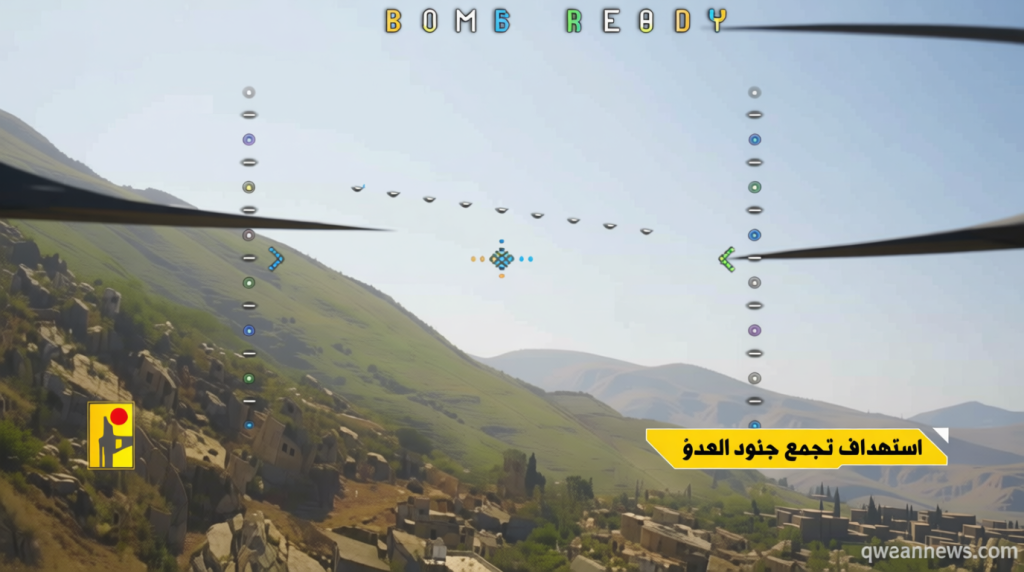
Qwenews.com – Hezbollah’s growing reliance on small, fiber-optic drones has posed a significant challenge to Israel’s military and tech sector, marking a shift in modern warfare dynamics. These compact, silent aircraft—often no larger than a dinner plate—have become a potent tool for the Lebanese militant group, capable of penetrating Israeli defenses with precision. Recent footage from border areas highlights their coordinated attacks, targeting military infrastructure and civilian zones alike, underscoring the need for advanced countermeasures. As tensions rise, the question remains: how effective is Israel’s military and tech industry in addressing this emerging threat?
The conflict intensified in March 2026, with Hezbollah launching multiple drone strikes that have claimed at least 12 Israeli lives. This accounts for one-third of all casualties in the region, raising concerns about the group’s ability to exploit asymmetrical tactics. The IDF’s response has included deploying mesh netting and close-range weapons like shotguns, but these measures often fail to detect drones at critical moments. The threat mirrors tactics observed in the Russia-Ukraine war, where drones transformed battlefield strategies, forcing Israel to adapt rapidly.
Technological Innovation and Military Strategy
Israel’s military and tech industry are now collaborating intensively to counter the drone menace. Companies like Airwayz are developing AI-driven software to monitor low-altitude airspace, offering soldiers more time to react. These systems integrate optical and acoustic sensors, enabling real-time tracking of drones before they strike. The IDF has also tested laser-based interception tools, which can disable drones mid-flight without causing collateral damage. Such innovations reflect a broader push to modernize Israel’s defense capabilities in the face of evolving warfare.
“The key is not just detection, but rapid response,” said Shai Kurianski, co-founder of Airwayz, emphasizing the urgency of equipping troops with actionable intelligence. “With just seconds of warning, the difference between a successful attack and a defensive maneuver is immense.”
Kurianski’s insights highlight the critical role of Israel’s tech sector in bridging the gap between traditional military strategies and cutting-edge counter-drone technologies. Meanwhile, the IDF is refining operational protocols, training personnel to identify drone patterns and coordinate with civilian defense networks.
Lessons from Ukraine and Domestic Challenges
Ukrainian officials had previously warned Israel about the potential of inexpensive, high-impact drones, but the Israeli military’s initial response was slower than expected. Experts argue that a multi-layered defense system—combining radar, satellite surveillance, and ground-based sensors—is essential to neutralize these threats. Despite the urgency, some within Israel’s leadership admit delays in adopting such strategies, leaving troops vulnerable during critical moments.
“We didn’t fully grasp the scale of the drone threat until it was too late,” stated the Ukrainian ambassador, reflecting on how Israel’s military and tech industry could have benefited from earlier collaboration. “Ukraine’s experience showed that drones can be a game-changer, and Israel is now racing to catch up.”
This acknowledgment has spurred renewed efforts to integrate Ukrainian expertise with Israeli innovation. The focus remains on Israel’s military and tech sector, as the nation seeks to leverage its technological prowess to secure its borders.
Global Collaboration and Future Preparedness
Israel’s military and tech industry are also looking beyond domestic solutions, partnering with international allies to enhance counter-drone capabilities. Collaborations with the United States and European defense firms are accelerating the development of automated drone detection systems, which could be deployed in urban areas and military outposts. These partnerships aim to share data on drone trajectories and improve response times, ensuring that Israel’s defense infrastructure keeps pace with Hezbollah’s advancements.
With the threat evolving rapidly, Israel’s military and tech sector are under pressure to innovate faster. Analysts note that the economic and strategic implications of drone warfare are profound, requiring not only technological upgrades but also a shift in military doctrine. As the region braces for further escalation, the success of Israel’s response will depend on its ability to harmonize cutting-edge technology with frontline operations. The next phase of the conflict may hinge on whether these efforts translate into tangible security gains.