
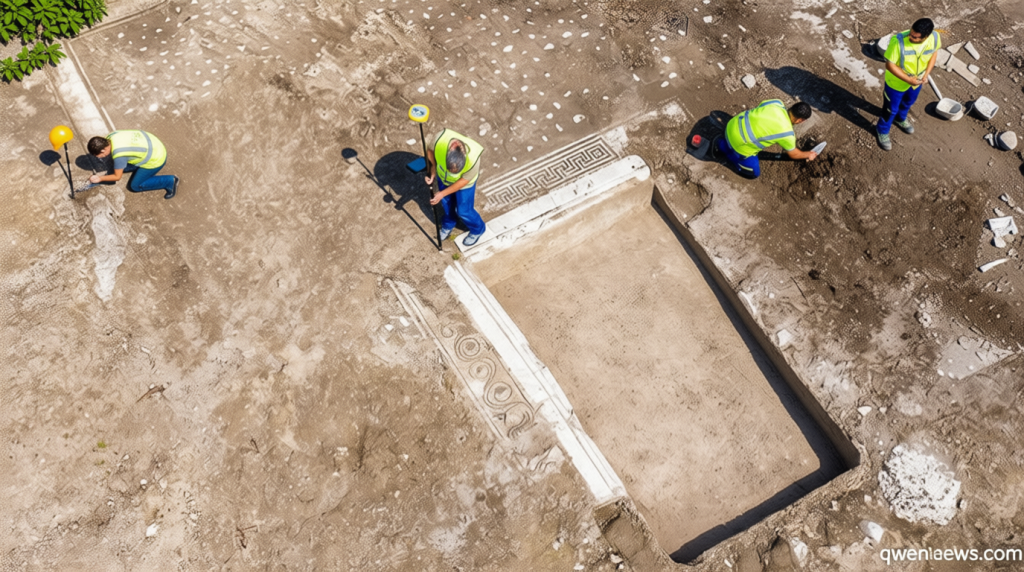
Illegal excavation reveals grand Roman villa with elaborate mosaics
Qwenews.com – A stunning discovery has emerged from an unauthorized dig near Rome, uncovering the remnants of a remarkable Roman villa adorned with intricate mosaics. The site, located in the village of Castel di Guido, was historically known as Lorium during the Roman Imperial era, which lasted from 27 BC to the fifth century AD. This area was once a hub for elite residences, frequented by emperors such as Hadrian, Antoninus Pius, and Marcus Aurelius, as noted by Italy’s Ministry of Culture. The illicit excavation, which came to light in February, has now exposed a wealth of historical treasures, offering a rare glimpse into the opulence and craftsmanship of ancient Roman life.
The Discovery and Immediate Response
Residents of the village noticed unusual activity in February, prompting the Carabinieri Art Police to investigate. This specialized unit, dedicated to combating artifact theft, identified signs of tomb raiders operating under the cover of darkness. Indicators such as scattered dirt and the absence of official markings led to the discovery of a hidden chamber beneath the property, which had been fenced off to conceal its location. Authorities swiftly intervened, halting the illegal operation and securing the site to prevent further damage.
Archaeological Significance of the Site
The excavation has revealed a magnificent entrance hall, featuring an atrium and a sunken basin, or impluvium, surrounded by a mosaic floor. The design of the mosaics showcases botanical and geometric patterns in black and white, reflecting the sophistication of Roman artistry. The villa’s remarkable state of preservation has captivated historians and archaeologists, who see it as a unique opportunity to study the lives of Rome’s elite. Officials emphasize that such findings provide invaluable insights into the architectural and cultural practices of the Imperial era, bridging the gap between historical records and physical evidence.
“In just a few days, officials from the Ministry of Culture, in collaboration with the Carabinieri, stopped a clandestine operation,” said Italian Minister of Culture Alessandro Giuli. “They secured an archaeological area and brought to light the remains of a splendid Imperial-era villa in the Roman countryside where the Imperial residences of the Antonine dynasty were located.”
Despite the disruption caused by the illegal excavation, the site remains a significant archaeological find. While minor damage was inflicted on parts of the structure, no artifacts were confirmed stolen, which is a relief for conservation efforts. Alessia Contino, an archaeologist with the Special Superintendency of Rome, described the villa’s treasures, including lavish mosaics and intricate marble work. Among the uncovered relics is a statue believed to depict Silvanus, the Roman god of the countryside, holding a small animal and a basket adorned with birds, symbolizing the connection between the villa’s inhabitants and the natural world.
The Impact of Looting on Archaeological Sites
Over the years, looters have systematically targeted archaeological sites in the region, often selling thousands of stolen artifacts on the black market. These valuable items, including pottery, sculptures, and mosaics, have found their way into global museums, sometimes with forged documentation or through smuggling networks. The recent recovery of several items, including those returned to American institutions, highlights ongoing efforts to combat illicit trade and restore lost cultural heritage. However, the threat of looting continues to endanger sites like Lorium, making prompt intervention critical for preservation.
While the initial discovery was a result of illegal excavation, the site’s intact condition suggests that the looters may have only partially uncovered its treasures. Archaeologists are now working to document and preserve the remaining structures, which include potential evidence of domestic life, religious practices, and architectural innovations. The villa’s proximity to ancient Roman roads and its strategic location near other imperial estates may also provide clues about its role in the broader network of Roman administrative and social centers.
Ongoing excavations are set to continue, with plans for public access scheduled for Saturday. Visitors will be able to explore the site through guided tours, offering a chance to witness the grandeur of Roman architecture firsthand. The culture ministry has also announced future dates for further exploration, ensuring that the villa’s secrets are gradually revealed to both scholars and the public. This discovery not only enriches our understanding of Roman history but also underscores the importance of protecting archaeological sites from unauthorized interference.