
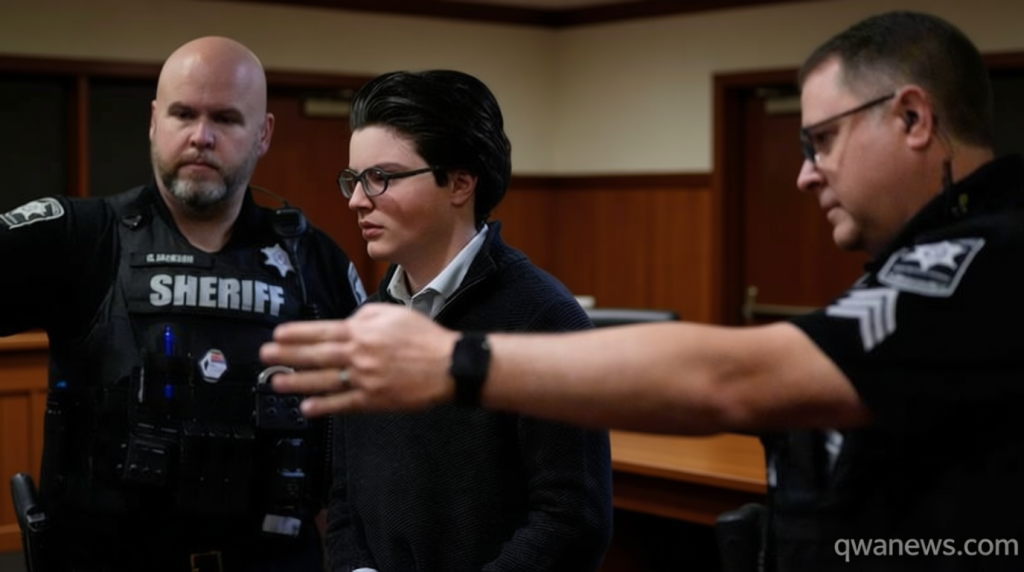
Apalachee High School Shooting: Teen to Change Plea in Court Documents
Qwenews.com – Court documents reveal that a 16-year-old student implicated in the Apalachee High School mass shooting will alter his plea during a critical hearing on July 24. The incident, which took place on September 4, 2024, left two students and two teachers dead, prompting a legal battle that has drawn national attention. The teen faces 55 charges, including felony murder and aggravated assault, with the plea change serving as a pivotal step toward determining his final sentence. Court records highlight the significance of this decision, which could reshape the narrative of the case and provide clarity on the teenager’s intent and responsibility.
Confusion and Consequences
Colt Gray, who was 14 at the time of the attack, had initially pleaded not guilty to the charges. The shooting unfolded in a harrowing sequence of events, as Colt arrived at Apalachee High School armed with an assault-style rifle concealed in his backpack. Investigators noted his troubling remarks to staff and family members that morning, which were later tied to the father’s murder trial earlier this year. This troubling communication added to the scrutiny surrounding the case and underscored the role of mental health in the tragedy.
The confusion during the incident was a defining factor in the chaos that followed. School officials and resource officers mistakenly believed Colt to be another student named Kolton Gray, leading to a critical moment of misidentification. This error allowed Colt to prepare his weapon in a bathroom before slipping into a hallway and opening fire. The mix-up created a surreal and terrifying scenario, with authorities noting that Colt surrendered his gun when confronted, though the damage had already been done.
Among the victims were teachers Richard Aspinwall and Cristina Irimie, as well as students Mason Schermerhorn and Christian Angulo. Colt had only been attending Apalachee High for a short period before the shooting, which raised questions about his integration into the school community and his mental state. Police later discovered a collection of photos in his room featuring the Parkland school shooter, suggesting a potential influence on his actions and highlighting the broader context of school violence in the United States.
Family Dynamics and Legal Implications
Colt’s father, Colin Gray, was recently convicted in March of murder and manslaughter charges, with sentencing expected later this month. Prosecutors argued that Colin exhibited criminal negligence by providing his son with an AR-15 rifle and failing to secure it, despite prior concerns about Colt’s violent tendencies. The defense, however, contended that Colin was unaware of his son’s plans and had actively sought mental health treatment for him. This family dynamic became a central point of debate in the trial, with legal records emphasizing the father’s role in the tragedy.
Colt’s mother, who had previously faced jail time and rehabilitation for drug addiction, testified about the teenager’s behavioral patterns. She described Colt as easily agitated, prone to panic attacks, and having a history of property damage, including breaking TVs and cutting slits into furniture. The family was also under investigation by the Department of Family and Children Services for Colt’s school misconduct and absenteeism, including missing his entire 8th-grade year. These factors contributed to the legal team’s argument that the family’s neglect played a part in the incident.
“Criminal negligence” emerged as a cornerstone of the prosecution’s case, with court records underscoring the father’s responsibility in the tragedy.
The plea change is seen as a strategic move to align the teenager’s actions with the charges, potentially leading to a more lenient sentence. Legal analysts suggest that this decision could also reflect a broader effort to address the psychological and emotional toll of the shooting on both the defendant and the community. The case has become a focal point for discussions on gun safety, school violence, and the role of family support in preventing such incidents.
As the plea change approaches, the legal community and local residents are watching closely. The sentencing hearing, scheduled for after the plea modification, will determine the teenager’s fate and offer insight into the justice system’s response to school shootings. The incident has already sparked debates about the effectiveness of current gun laws and the need for mental health resources in educational settings. With court documents shedding light on the events and the teen’s potential shift in legal stance, the case continues to evolve, leaving a lasting impact on Apalachee High School and its community.