
Millions Rely on US-Funded HIV Programs as Funding Crisis Looms
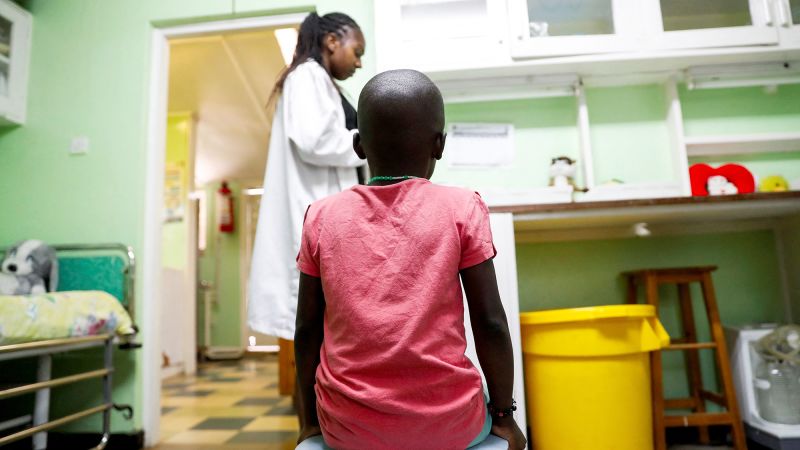
Qwenews.com – Millions who rely on US-funded HIV programs face growing uncertainty as a financial cliff approaches. The Centers for Disease Control and Prevention (CDC) has announced that 120 grants supporting global HIV/AIDS initiatives will expire by September 2026 without a clear replacement strategy. These programs provide critical care to over 8.7 million individuals worldwide, particularly in sub-Saharan Africa, where they have been instrumental in reducing mortality rates and expanding access to life-saving treatments. Without immediate action, the disruption could have lasting consequences for patients and healthcare systems that depend on this funding.
The Shift in PEPFAR Oversight and Its Implications
Since its inception in 2003, the President’s Emergency Plan for AIDS Relief (PEPFAR) has played a pivotal role in the global fight against HIV/AIDS. Funded by the U.S. government, it has contributed to saving over 26 million lives and preventing millions more from contracting the virus. However, recent changes have shifted control of PEPFAR from the CDC to the U.S. State Department, as revealed in internal documents from May 2026. This transition marks a departure from the previous model of collaboration between multiple agencies and could impact the program’s ability to respond effectively to urgent needs.
Risks of a Second Global Health Crisis
Experts warn that the potential loss of funding could trigger a “second global health woodchipper,” a term used to describe the sudden dismantling of vital systems that patients and clinics depend on. The analysis by the Health Security Policy Academy highlights how the abrupt termination of these grants may lead to a decline in service delivery, particularly in regions with fragile healthcare infrastructures. “The result could be a second global health woodchipper: the abrupt destruction of operating systems that patients, clinics, health workers, laboratories, and ministries of health still depend on,”
the authors of the analysis wrote.
Such a scenario could set back decades of progress in HIV prevention and treatment.
Country-Specific Impacts and Service Disruptions
The upcoming funding cuts will affect countries unevenly, with Mozambique, Tanzania, and South Africa facing the most severe challenges. These nations have long relied on U.S.-funded programs to sustain community testing initiatives, distribute antiretroviral medications, and support laboratory operations. Many of these services have operated for decades, with five-year renewal cycles that have ensured continuity in care. The expiration of grants, however, threatens to create gaps in treatment and prevention, especially for marginalized populations who may lose access to essential services.
The “Menu” System and Strategic Reallocation
Under the new framework, partner countries will be allowed to choose specific services from a curated list, paying only for those they prioritize. This approach, outlined in May 2026, aims to streamline the CDC’s role from a direct leader to a service provider, potentially reducing bureaucratic overhead. However, critics argue that this shift could lead to underinvestment in programs that are less visible but equally crucial. For instance, the Trump-era reduction in family planning funding has already strained PEPFAR’s capacity, with some officials indicating that support for systemic work, like health surveillance, is likely to diminish as the program adapts to this new model.
Uncertainty and the Path Forward
With the U.S. adopting a more centralized “America First Global Health Strategy,” the future of HIV programs remains unclear. State Department officials have emphasized the need for direct agreements to manage international aid, but this approach may lack the flexibility required to address diverse regional needs. “It really does feel like the end of PEPFAR,” said a CDC official, who spoke off the record. “In a lot of cases, the State Department mechanism is not set up yet. So, this isn’t handing it from one set of experts to another – this is taking it away from one set of experts and putting it in a big box with a question mark.” The urgency for a solution has never been greater, as millions depend on these programs to maintain their health and well-being.