
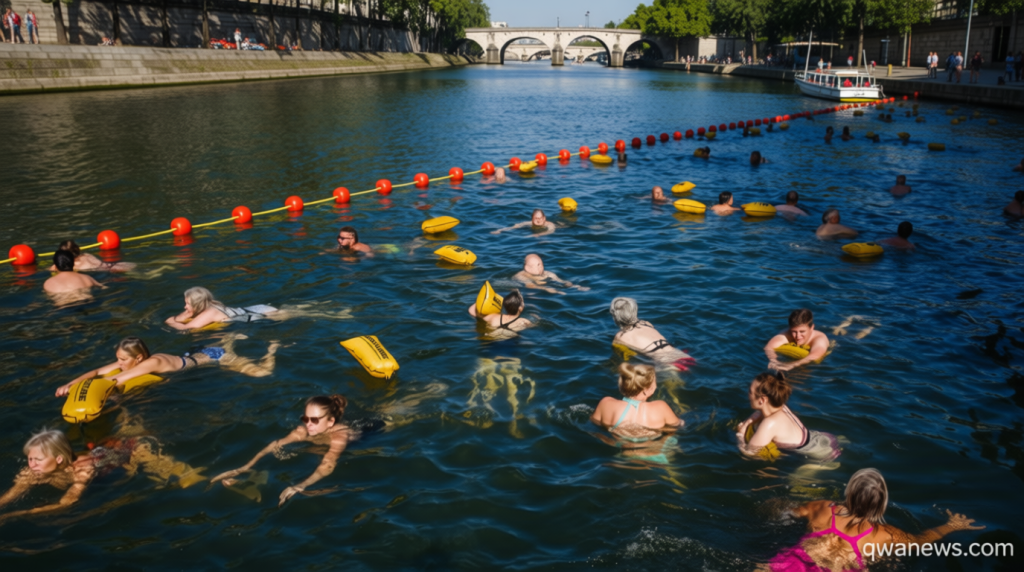
The Seine’s Transformation: From Toxic Waters to Parisian Swimming Hotspot
Qwenews.com – The Seine used to be a symbol of environmental neglect, with its waters often tainted by industrial waste and sewage. Today, however, it has become a beloved summer activity for Parisians and tourists, offering a fresh perspective on the city’s riverside charm. This shift is particularly notable this summer, as three designated swim zones have emerged along the Seine, drawing crowds in a historic comeback for river swimming. The change reflects broader efforts to restore the river’s health and repurpose it as a public space, showcasing how environmental initiatives can revive once-dormant traditions.
A Historic Return to the Seine
Swimming in the Seine’s waters dates back to the 17th century, when it was a popular pastime for the elite. Nude bathing was common, but by 1716, a ban was introduced due to concerns over modesty. Despite this, the practice endured through floating baths in the 18th century, which were small, canvas-covered platforms allowing bathers to enter the river. By the 19th century, the Seine had transformed into a hub of social and sporting activity, with venues like the Piscine Deligny offering amenities such as dining and swimming lessons. The river also hosted the 1900 Paris Olympics, marking a pivotal moment in its cultural significance.
However, the 20th century brought a decline in the Seine’s reputation. By 1923, a ban on open-water swimming was enforced after a spike in drownings and accidents related to river traffic. While some facilities adapted by creating filtered floating pools, others continued informal bathing during heatwaves. A notable exception was the annual long-distance race, which had been held since 1905 and persisted despite the restrictions. For decades, the Seine was a dumping ground for untreated waste, with over half of the region’s wastewater flowing directly into its currents. This pollution led to a collapse in aquatic life, leaving only three fish species by 1970.
“Parisians once viewed the Seine as a place of danger, but now it’s a place of joy and connection.”
Reviving the River: A Decades-Long Effort
The Seine used to be a river that inspired both awe and apprehension. Its transformation began in the 1980s with the launch of the Paris-Saint-Germain River Protection Program, which aimed to reduce pollution and improve water quality. In 1988, Paris Mayor Jacques Chirac made a bold pledge to swim in the Seine, symbolizing a commitment to its revival. Though the promise was later repeated on television in 1990, the actual event never took place, becoming a recurring joke in the city’s media. Nevertheless, the initiative sparked a long-term environmental strategy that would eventually redefine the Seine’s role in Paris.
Significant progress was made in the 2000s, with the introduction of advanced wastewater treatment systems. By 2016, the Seine had reached a critical milestone: it was declared “clean enough” for recreational use, a decision that marked the beginning of its modern-day resurgence. The turning point came with the construction of the Austerlitz basin, an underground structure unveiled in 2024 during the Olympic Games. This engineering feat, 50 meters wide and 30 meters deep, can hold 50,000 cubic meters of water—equivalent to 20 Olympic-sized pools. By capturing stormwater runoff and separating it from sewage, the basin drastically reduced contamination, paving the way for safer swimming conditions.
The recent swim zones, established this summer, are a testament to the Seine’s renewed vitality. These designated areas, located near Notre-Dame Cathedral and the Pont des Arts, are monitored for water quality and temperature, ensuring a safe experience for swimmers. The initiative aligns with the 250th anniversary of Franco-American friendship, offering Americans a unique way to celebrate their shared history. For many, the Seine’s transformation from a polluted river to a recreational hotspot represents more than just a change in its appearance—it symbolizes a city’s commitment to sustainability and community engagement.
Local authorities have emphasized that the Seine’s improvement is a collaborative effort involving government policies, public awareness campaigns, and private sector involvement. Regular water quality checks now show a marked decrease in pollutants, with bacteria levels dropping to meet European standards. This progress has not only restored the river’s ecological balance but also revitalized its cultural appeal. As a result, Paris has seen a surge in riverfront activities, from swimming to kayaking, as residents and visitors alike embrace the Seine’s new identity.
The Seine used to be a river that defined the challenges of urban living, but its recent revival highlights the power of innovation and perseverance. The combination of historical tradition and modern technology has created a unique experience for swimmers, blending the past with the present. With continued investment in infrastructure and environmental conservation, the Seine is poised to become a model for sustainable urban water management. For Paris, this transformation is not just a victory for the environment—it’s a celebration of resilience and the enduring spirit of a city that once feared its own river.