
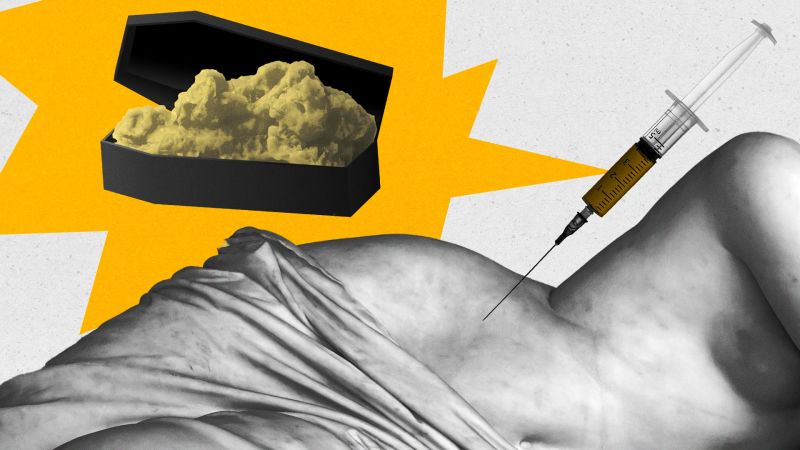
GLP-1s are shrinking bodies. Cadaver fat is plugging the gap
A New Era in Aesthetic Treatments
Qwenews.com – In recent years, the demand for body contouring has evolved beyond traditional methods, with innovative products like alloClae gaining traction. This injectable, derived from donated cadavers, offers a fresh approach to reshaping the body, catering to those seeking minimal disruption in their daily routines. As the line between body modification and maintenance blurs, the procedure has become as routine as routine skincare.
Sandra’s Journey to a Natural Lift
Sandra*, a 43-year-old media lawyer in Los Angeles, has long considered breast augmentation but was deterred by the invasiveness of the process. When she learned about alloClae last summer, the idea of a non-surgical alternative resonated with her. “You hit a certain age and you decide, I’m going to do something for myself at this point,” she said, reflecting on the motivation behind her choice.
“I was fine with that,” Sandra added, referring to the use of cadaver fat. “No synthetic fillers, no implanted sacs, and no required downtime.”
Rapid Administration and Growing Appeal
Known colloquially as the “lunchtime boob-job,” alloClae is designed for quick application, often taking less than an hour to complete. Unlike conventional procedures requiring general anesthesia or a hospital setting, it can be administered in a clinic with minimal preparation. The ease of aftercare, Sandra noted, was “shockingly simple.”
Tiger Aesthetics, the manufacturer, reported over 2,000 patients had received the treatment since May 2025. The product has sparked discussions on platforms like Reddit, where users seek reviews and compare practitioners. The trend signals a shift in societal perception, with once-unconventional modifications now viewed as part of everyday self-care.
Controversy and Curiosity
While some praise alloClae as a “next-generation” advancement, others have dubbed it “zombie filler” or “corpse injections.” This duality raises questions about the boundaries of beauty standards and the cultural acceptance of using postmortem material. “What does it mean if society widely embraces injecting cadaver fat in the service of beauty?” one analyst pondered, highlighting the philosophical angle of the debate.
Comparing AlloClae to Renuva
AlloClae is not the first cadaver-based filler to enter the market. Renuva, a similar product from MTF Biologics, was launched over a decade ago. However, alloClae distinguishes itself through its larger volume capacity—up to 22cc per syringe—compared to Renuva’s 3cc maximum. Dr. Luis Macias, a plastic surgeon in Los Angeles, observed that the product’s bulk allows for more substantial results. “It’s a little chunkier, a little firmer,” he remarked, emphasizing its versatility.
AlloClae was initially available to board-certified plastic surgeons with expertise in fat grafting, but it has since expanded to include mid-level providers such as physician assistants and aesthetic nurses. These professionals undergo specialized training to ensure safe application, particularly for breast injections.
Market Trends and the Future of Beauty
The rise of GLP-1 medications—such as Ozempic and Wegovy—has created a unique opportunity for products like alloClae. Around 11% of Americans are currently using these drugs for weight loss, according to a recent report. For many, the need to add volume back to their bodies has become a priority, with alloClae offering targeted solutions. “We’re seeing a lot of patients on GLP-1s who want to restore fat to specific areas,” Macias explained.
As surgical techniques advance, the appetite for aesthetic enhancements continues to grow. From rib reshaping to facelifts, the pursuit of idealized forms now feels almost automatic. With alloClae, the question is no longer whether to alter one’s appearance—but how to do so with minimal effort and maximum precision.