
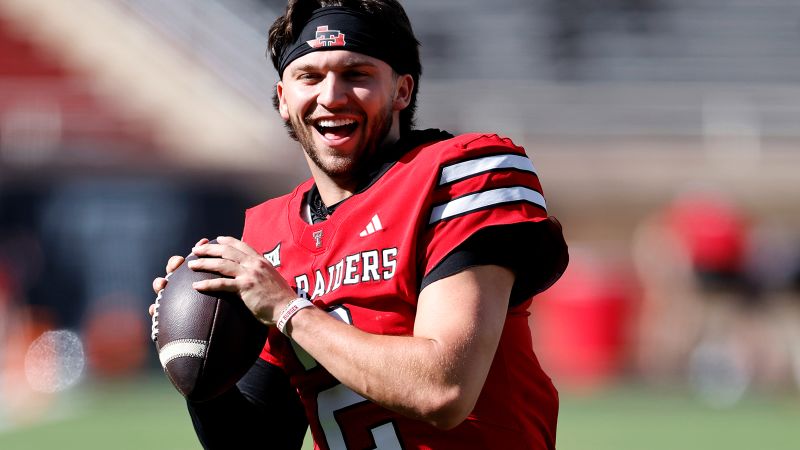
Sorsby Turns to NFL After NCAA Eligibility Battle
Qwenews.com – Brendan Sorsby, a transfer quarterback, has opted to forgo his final season with Texas Tech and instead pursue the NFL supplemental draft, following a protracted legal dispute with the NCAA over his eligibility. The decision marks the culmination of a contentious battle that centered on whether Sorsby, who admitted to placing bets on college and professional sports—including games involving his own team while at Indiana—could maintain his status as a student-athlete. With the June 22nd deadline looming, Sorsby’s move to the NFL after the legal conflict has significant implications for both his career and the NCAA’s evolving policies on athlete financial independence.
Deadline and Institutional Stance
Just one week before the June 22nd cutoff for NFL supplemental draft eligibility, Sorsby’s team at Texas Tech has officially been notified that he will not be part of their roster for the upcoming season. Cody Campbell, a billionaire booster and chairman of the school’s regents, emphasized in an open letter that the decision was made in consultation with Sorsby and his family, prioritizing practical considerations over prolonged legal proceedings. “While Sorsby and Texas Tech have strong legal grounds, there’s no viable way to resolve all pending disputes in time for him to qualify,” Campbell wrote. “This is the only fair path forward for his future and the team’s prospects.”
“Sorsby and Texas Tech stand on solid legal footing, but the NFL supplemental draft deadline forces a resolution. The NCAA’s rules, though strict, are being challenged by this case, which could reshape how athletes balance personal financial decisions with collegiate obligations.”
The injunction granted last week by Judge Ken Curry played a pivotal role in this outcome, preventing the NCAA from blocking Sorsby’s eligibility for his final college season. This season, he will compete for Big 12 supremacy with a team aiming for a return to the College Football Playoff. However, the NCAA’s position remains firm, arguing that Sorsby’s actions—gambling on games while representing his university—violate core principles of amateurism. The dispute highlights growing tensions between institutional control and individual athlete autonomy in college sports.
Legal Actions and Pending Rulings
Two separate lawsuits have been filed, intensifying the conflict over Sorsby’s eligibility. The NCAA sought an emergency stay of the June 8th injunction in the Texas Court of Appeals, claiming the ruling sets a dangerous precedent by allowing athletes to bypass financial restrictions. “The temporary injunction extends beyond Texas law, undermining the NCAA’s regulatory authority and the integrity of college competition,” the NCAA’s legal team stated. Meanwhile, the Big 12 filed its own federal complaint in Dallas, seeking to uphold its bylaws that could sanction Texas Tech for Sorsby’s participation.
The Texas attorney general’s office has weighed in, warning that the league may face countermeasures from the university if its rules are perceived as overly restrictive. This legal battle has now entered the trial phase, scheduled for February, after the current season concludes. The outcome could influence how other athletes navigate similar situations, particularly as more players seek financial freedom through NIL deals and gambling activities.
Sorsby, who transferred to Texas Tech in January from Cincinnati, has already gained substantial experience, having spent two seasons with the Big 12 team. His NIL agreements with Texas Tech remain intact, as the university has not sought to reclaim payments made to him. This decision underscores a broader trend where athletes are leveraging legal avenues to assert control over their financial futures, even as institutions like the NCAA push back against what they see as a threat to collegiate athletics.
Broader Implications for College Sports
The case has sparked a national conversation about the NCAA’s role in regulating athlete behavior and the balance between financial independence and amateurism. Critics argue that the organization’s rigid rules on gambling may be outdated, given the rise of NIL (Name, Image, Likeness) agreements and the increasing commercialization of college sports. Supporters of the NCAA, however, contend that Sorsby’s actions—betting on games while representing his university—undermine the collective spirit of collegiate competition.
For Sorsby, the move to the NFL after the legal fight represents both an opportunity and a risk. He now faces the challenge of proving himself in professional football, where the stakes are higher and the competition stiffer. Yet, his decision also highlights the evolving landscape of college sports, where athletes are increasingly making choices that reflect their personal ambitions and financial needs. The NCAA’s stance on this issue will likely shape the future of student-athlete eligibility and the rules governing gambling activities in collegiate athletics.
As the legal proceedings continue, the case may serve as a landmark moment for the NCAA. The organization has long maintained that athletes must be financially independent, but Sorsby’s actions have tested this principle. With the NFL supplemental draft deadline approaching, the final resolution of this dispute could determine whether the NCAA remains the governing body of college sports or adapts to a new era where athletes have more flexibility in managing their personal finances. Sorsby’s journey from the courtroom to the football field encapsulates the changing dynamics of collegiate athletics in the modern age.