
G7 Leaders Await Clarity on US-Iran Agreement
Qwenews.com – The G7 leaders are closely watching as details of the US-Iran agreement remain unclear, sparking concerns about its implications for global diplomacy. During their gathering in Évian-les-Bains, France, the leaders hoped to gain insight into the terms of the pact, but conflicting interpretations from both sides have left many in the room with lingering questions. With the deal signed in a virtual ceremony on Sunday and set to be finalized by Vice President JD Vance in Switzerland on Friday, the G7’s role in navigating this complex agreement has become central to the discussion.
Secrecy Surrounds the Agreement’s Terms
Despite the agreement being inked just days prior, neither the United States nor Iran has officially shared the document with the public, leading to a haze of speculation. The one-and-a-half page memorandum, which outlines the terms of the deal, has been withheld from media and non-negotiating parties, resulting in divergent narratives. Within Trump’s administration, officials have offered varying explanations, while Iran’s key negotiators, such as Mohammad Bagher Ghalibaf, have remained tight-lipped. This secrecy has raised eyebrows, with some questioning the transparency of the process.
European leaders, including French President Emmanuel Macron and British Prime Minister Keir Starmer, have expressed a desire to review the text before the formal signing ceremony. However, without a published version, their ability to assess the agreement’s impact is limited. The G7’s focus on the deal reflects its growing importance in shaping international relations, especially as the US seeks to stabilize the Middle East amid ongoing tensions.
International Reactions and Strategic Implications
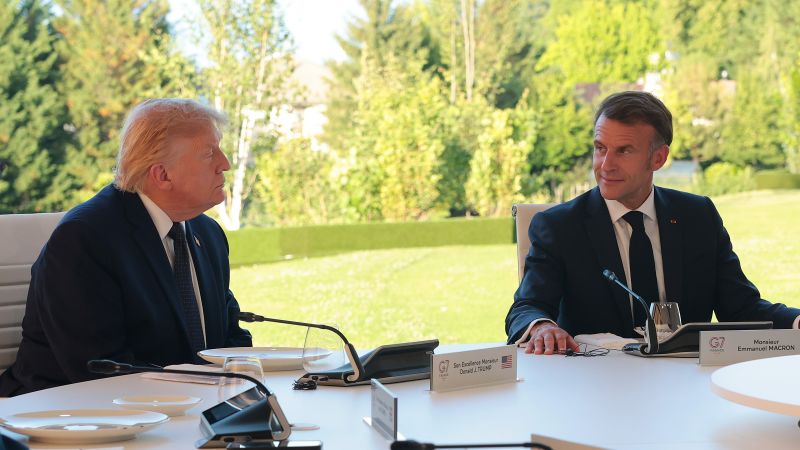
As the G7 leaders deliberated, the absence of concrete details has created uncertainty about the agreement’s goals. Trump, seated beside Macron during the dinner, emphasized the need for the plan to be released “pretty soon,” though the timeline remains fluid. Meanwhile, Macron and other European officials have called for a more thorough review of the terms, particularly regarding the Strait of Hormuz—a key international waterway. The dispute over its control has been a major point of contention, with Trump asserting that it would be “permanently toll-free,” while Iranian officials insist they will retain the right to impose fees when necessary.
The G7’s uncertainty has extended to the broader international community, with many countries waiting to see how the deal will affect trade, security, and regional stability. The inclusion of Gulf states like Egypt, Qatar, and the United Arab Emirates in Tuesday’s meetings signals a coordinated effort to secure support for a $300 billion fund aimed at rebuilding Iran. However, the lack of clarity has left these nations cautious, as they weigh the potential benefits against the risks of committing to an untransparent agreement.
As the summit nears its conclusion, the focus remains on whether the G7 will emerge with a unified stance on the US-Iran pact. The leaders’ ability to clarify the deal’s provisions will determine its acceptance or rejection by the international community. With the final signing scheduled for Friday, the G7 is under pressure to demonstrate leadership and resolve in this pivotal moment.
“I have asked for days, why can’t we, the people, see the damn MOU? Not through people briefed by an anonymous person,” wrote Mark Levin, a conservative commentator, on X. This sentiment underscores the growing frustration with the secrecy surrounding the agreement, even among Trump’s allies. Without a published version, gaps in understanding have widened, complicating the G7’s efforts to present a cohesive narrative to the world.
Ultimately, the G7’s approach to the US-Iran agreement will set a precedent for future diplomatic endeavors. As the leaders prepare for the final signing, their ability to balance domestic interests with international obligations will be tested. The deal’s success hinges not only on its terms but also on the G7’s capacity to foster trust and transparency in a region often marked by volatility.