
Democrats See New Openings in Senate States Long Tilted to Republicans
Qwenews.com – Republicans are entering the fall campaign with President Donald Trump’s weakening approval ratings creating national headwinds, but Democratic optimism rests on more than dissatisfaction with the White House. In a series of Senate contests once viewed as safely Republican, Democrats have recruited candidates who are reshaping the map and challenging the party’s recent struggles with voters outside its traditional coalition.
The party needs a net gain of four Senate seats to take control of the chamber. It is also increasingly well positioned to capture the House next month. Yet a favorable political environment alone may not be enough: Democrats remain broadly unpopular, and voters have expressed limited confidence in what a Democratic congressional majority could accomplish.
A late-July CNN/SSRS survey found Democrats holding an 8-point advantage for the fall election. Still, congressional Democrats and Republicans were viewed with similarly low regard, underscoring the importance of individual candidates who can establish a persuasive identity separate from the national party brand.
A Wider and Less Familiar Battlefield
North Carolina offers one of the clearest examples. Former two-term Gov. Roy Cooper has performed well with independent voters and has shown enough competitiveness in rural parts of the state to threaten Republican margins. His statewide profile contrasts with that of Republican Michael Whatley, the former Republican National Committee chair. Whatley is well known in party circles, but he has struggled to reach Cooper’s level of public recognition.
Iowa has become an even more unexpected test. State legislator Josh Turek calls himself a “common sense prairie populist,” and his campaign has made the Senate race more competitive in a state Trump carried by 13 points just two years earlier. The contest is unfolding as Iowa confronts pressure from Trump’s tariffs and elevated fuel costs, issues that are particularly consequential in an agricultural state.
Republican Rep. Ashley Hinson would ordinarily appear well suited to win the seat being vacated by Joni Ernst. A former television anchor, Hinson is a practiced communicator with strong familiarity with Iowa’s central concerns. But a campaign’s setting can transform the value of even a strong candidate’s advantages, especially when economic strains dominate voter attention.
Populism, Generational Change and Local Appeals
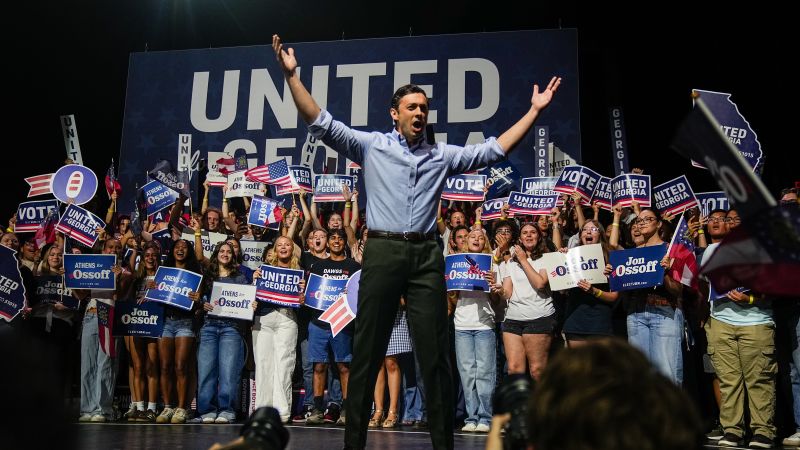
Democratic candidates are taking different routes to appeal beyond their party’s usual constituencies. In Georgia, Sen. Jon Ossoff has developed a recognizable political style that includes sharp criticism of Trump. His success in a closely contested state, combined with his growing national standing, has prompted discussion about whether he could become a leading figure in the party’s 2028 presidential field.
Texas state Rep. James Talarico is pursuing another formula, pairing economic populism with an open embrace of Christian faith. Democrats have repeatedly hoped that Texas could eventually deliver a statewide breakthrough, though the party has not won one there for three decades. Talarico’s candidacy is testing whether that longstanding ambition can finally move closer to reality.
In Ohio, former Sen. Sherrod Brown is returning to the blue-collar economic message that has defined much of his political career. Trump won the state comfortably in 2024, but Brown’s emphasis on working-class concerns may have renewed resonance as the president is seen spending time with billionaires and as voters weigh broader economic uncertainty.
These campaigns are not identical, and that may be their point. Rather than relying exclusively on a uniform national message, Democrats are experimenting with candidates whose language, background and priorities are tailored to their states. The larger challenge is rebuilding trust after years in which the party lost ground with parts of its own former base and struggled to communicate effectively with voters who later supported Trump.
Republican Troubles Add to Democratic Opportunity
Candidate quality has become especially important because several Republican contenders bring liabilities into high-stakes races. In Georgia, MAGA-aligned Rep. Mike Collins has benefited from Trump’s backing despite concerns among more establishment-minded Republicans. Texas Attorney General Ken Paxton, whose campaign has been shadowed by scandal, received Trump’s support as well, over the objections of some GOP leaders.
Such races illustrate how a national political mood can matter less when voters are presented with sharply different individual choices. A well-known Democrat with a locally credible message may have an opening against a Republican whose record, style or public image creates doubts among independents and moderate members of the party.
But political opportunity is not the same as a guarantee. Candidates who appear especially well matched to their states can still be overtaken by events, shifts in turnout or a changing national climate. Electoral success often makes a strategy look inevitable in retrospect; defeat tends to invite equally confident criticism.
Michigan Could Define the Party’s Internal Debate
The Michigan Senate contest may offer the most consequential example of that uncertainty. Abdul El-Sayed, the 41-year-old epidemiologist, is the highest-risk Democratic nominee in a crucial race. A victory would elevate him as a prominent figure from a newer generation of politicians and a major voice for the progressive movement.
If former Republican Rep. Mike Rogers wins instead, the outcome would intensify arguments within Democratic ranks. Progressive voters rejected the more moderate Rep. Haley Stevens, and a Democratic loss could bring accusations that the party surrendered a seat it could not afford to lose — potentially with control of the Senate at stake.
The tension in Michigan reflects a broader Democratic dilemma. The party needs enthusiasm from its progressive base while also requiring candidates who can attract voters across ideological lines. Those who combine political discipline, personal relatability and broad appeal are rare, particularly in a period of fierce polarization.
Timing May Matter as Much as Talent
Skill and campaign strategy are essential, but timing and luck can prove just as decisive. Maine Republican Sen. Susan Collins has repeatedly survived difficult political environments and built a reputation for independence. This election, however, may present her most demanding reelection challenge yet as Republican candidates contend with an unfavorable national atmosphere.
The turbulence of the Trump era has complicated Collins’ balancing act. Her image as an independent has faced sustained pressure, and major votes have forced her to navigate between Republican loyalists and more moderate voters. Her race is another reminder that established political identities can become harder to maintain when national divisions deepen.
For Democrats, the emerging Senate map provides a chance to show that recovery does not depend only on Trump’s vulnerabilities. The party’s strongest prospects are trying to present local, credible answers to economic anxiety and political frustration while reconnecting with voters who have drifted away. Whether those efforts produce a Senate majority will depend on candidate performance, Republican mistakes and the unpredictable forces that shape every election season.
Related Reading
Frequently Asked Questions
What is With a new breed of candidate?
With a new breed of candidate is the main topic of this guide. The article explains the context, practical details, and next steps readers should understand.
Why does With a new breed of candidate matter?
With a new breed of candidate matters because readers are looking for a useful answer, not just a short summary. Good content should match search intent and help them decide what to do next.