
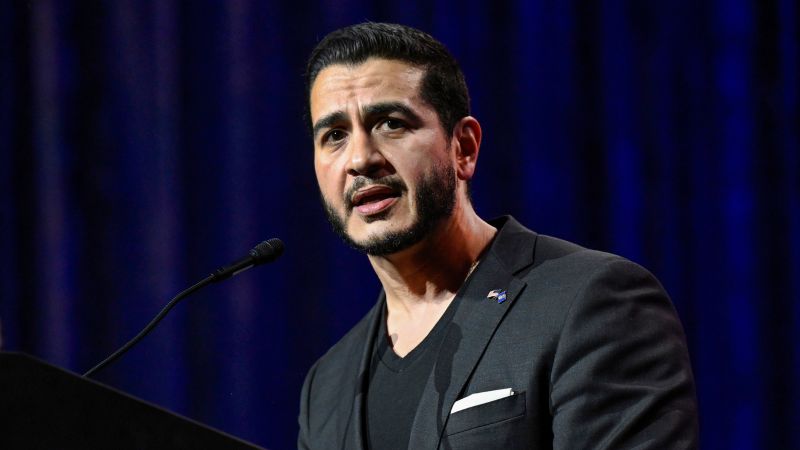
Abdul El-Sayed’s ‘We Do Need to Defund the Police’ Comments Resurface in Michigan Senate Race
Qwenews.com – Abdul El-Sayed, a prominent Democratic candidate for Michigan’s Senate seat, recently reiterated his support for the “We Do Need to Defund the Police” movement, a phrase he has used in past speeches. However, a CNN KFile analysis of his 2020 media appearances reveals that his earlier statements consistently aligned with the core principles of the defund movement. This raises questions about his claim that he never advocated for the movement, as his 2020 interviews and tweets clearly endorsed reallocating police funding to address systemic issues in communities of color.
2020 Statements Reveal Commitment to Defunding Police
El-Sayed’s 2020 rhetoric was marked by a strong emphasis on reducing police budgets and redirecting funds to social programs. In a June 2020 segment on Detroit Public Radio, he acknowledged the movement’s relevance, stating,
“We are in a moment where a lot of our public conversation gets chewed down into 280 characters or less. It’s better to explain the movement’s goals than to rely on hedging behind a hashtag.”
He argued that defunding the police was not about abolishing law enforcement but about investing in education, poverty reduction, and mental health services to tackle the root causes of violence.
Other 2020 interviews further underscored his alignment with defund advocacy. In a July 2020 episode of “The Michigan Report,” El-Sayed stated,
“I believe that we do need to defund the police in so far as defunding the police is disinvesting in the means of incarcerating someone or killing them on the streets. And in investing more in the means of educating and empowering communities to address systemic poverty.”
This perspective highlights his focus on shifting resources from traditional policing to community-based solutions, such as trauma centers and neighborhood watch programs.
Evolution of El-Sayed’s Messaging and Political Strategy
Despite his 2020 support for defunding, El-Sayed’s campaign has since positioned him as a moderate voice on policing reform. His spokesperson, Roxie Richner, noted,
“One simple word has never been enough to fully explain the reforms we need for a challenge as complex as our criminal legal system.”
Richner emphasized that El-Sayed’s current stance prioritizes improving law enforcement recruitment, reducing militarization, and expanding community-driven initiatives like behavioral health programs.
The upcoming August 4 Democratic primary in Michigan will test El-Sayed’s ability to balance his past advocacy with his current platform. As the state’s voting trends have shown a growing concern about police accountability, his defund remarks could either galvanize support or draw criticism from opponents. Meanwhile, Republicans are likely to highlight his historical ties to the movement to question his commitment to public safety, especially in a state where law enforcement often enjoys strong backing.
El-Sayed’s 2020 comments have also sparked discussions about the broader implications of the defund movement. Critics argue that his early support for reducing police funding was more radical than his current messaging, while allies credit him for recognizing the need to address systemic inequities in policing. The phrase “We do need to defund the police” has become a symbol of the movement’s call for reallocating resources to community services, a concept El-Sayed has consistently championed in the past.
In the context of the 2020 protests, El-Sayed’s statements resonated with many activists who demanded police reform. His focus on education and poverty reduction as alternatives to incarceration aligns with the movement’s goals of creating a more equitable justice system. However, his recent defense of the phrase suggests a strategic shift to frame his advocacy as a nuanced approach rather than a sweeping abolitionist stance.
As the Michigan Senate race intensifies, the defund movement’s influence on El-Sayed’s messaging will be a key point of analysis. His ability to reconcile his past support for defunding with his current platform may determine his success in attracting voters who are split on the issue. With the primary approaching, the debate over the movement’s role in shaping policy will continue to dominate headlines and influence public opinion in the state.