
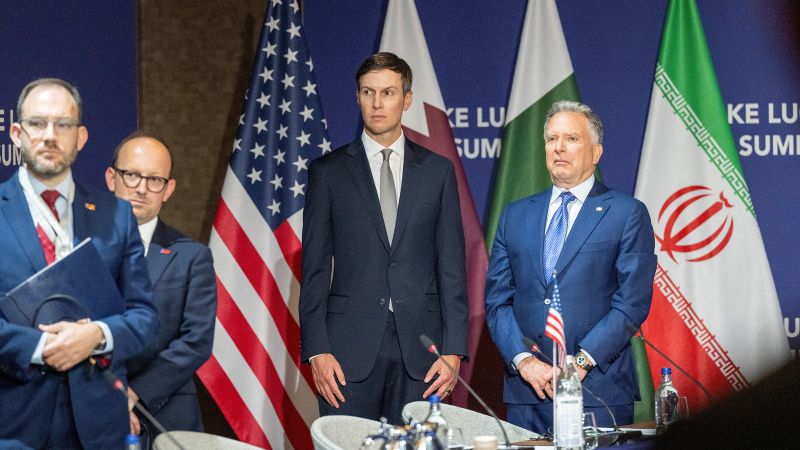
Trump’s Iran Envoys Face Scrutiny as Diplomacy Stalls
Qwenews.com – Trump’s Iran envoys face mounting pressure as the ongoing diplomatic efforts with Tehran lose momentum. Three weeks after the U.S. and Iran signed a 14-point memorandum of understanding (MOU) to initiate nuclear program negotiations, the agreement has drawn sharp criticism from both allies and analysts. The document, which outlines a 60-day period for talks, is seen by many as a framework lacking concrete details, raising questions about the concessions made to Iran and the clarity of American strategic goals. Jared Kushner and Steve Witkoff, the Trump administration’s key figures in the Iran negotiations, have spent months behind the scenes, yet their efforts now face skepticism over whether the deal will hold or collapse under scrutiny.
The MOU’s Ambiguity Sparks Debate
The MOU, drafted with the intent to de-escalate tensions, has been criticized for its vague language and unclear commitments. Officials point to the lack of defined benchmarks for progress, leaving both sides with conflicting interpretations of the deal’s terms. “The MOU didn’t actually resolve anything,” said Nate Swanson, a former senior Iran policy adviser. “It was almost entirely aspirational.” This sentiment is echoed by Richard Nephew, a former National Security Council (NSC) Iran director, who argued that the agreement’s failure to establish a clear process for securing the Strait of Hormuz is a critical flaw. “You could even argue the MOU made things worse,” Nephew added, highlighting the risk of prolonged uncertainty.
Trump’s Iran envoys face the challenge of translating diplomatic rhetoric into actionable outcomes. While the MOU was hailed as a breakthrough, it has not addressed key concerns, such as Iran’s nuclear enrichment activities or its ballistic missile program. Critics argue that the document’s broad language allows Tehran to delay meaningful concessions, while the U.S. remains committed to its own strategic objectives. The delay in progress has led to frustration among lawmakers, who question whether the agreement is a genuine step toward peace or a temporary pause in an otherwise stalled process.
Behind the Scenes: Political Appointees and Strategic Gaps
Throughout the negotiations, Kushner and Witkoff have relied heavily on political appointees, often sidelining seasoned diplomats and nuclear experts. Former officials report that career professionals were consulted sporadically, with limited input on shaping the MOU. This approach has drawn accusations of missteps in the decision-making chain, with some suggesting that the lack of technical expertise contributed to the agreement’s weaknesses. “It’s a clear mistake somewhere in the command structure,” said one insider, who remained uncertain whether the responsibility lay with Kushner, Witkoff, or Vice President JD Vance.
Trump’s Iran envoys face the additional burden of balancing political interests with practical outcomes. The MOU was designed to provide Iran with a temporary reprieve from sanctions while giving the U.S. time to negotiate a more comprehensive deal. However, the agreement’s ambiguity has allowed Iran to continue its nuclear activities with limited constraints, prompting fears that the deal may not prevent a potential resurgence in hostilities. “The envoys are caught in a tight spot,” noted a former State Department official. “They need to appease both the administration’s hardliners and Iran’s negotiators, but the MOU doesn’t offer a clear path forward.”
As the talks drag on, the stakes for Trump’s Iran envoys face intensifying. The agreement’s failure to secure critical waterways like the Strait of Hormuz has raised concerns about its effectiveness in preventing Iranian aggression. With oil prices surging and regional tensions escalating, the urgency for a binding deal has grown. Yet, the MOU’s lack of specifics on how to achieve these goals has left the U.S. and Iran in a deadlock, with no clear indicators of progress. “The envoys are struggling to deliver results,” said a congressional aide. “Every week that passes without a resolution, the credibility of the agreement diminishes.”
Trump’s Iran envoys face a pivotal moment as the 60-day window for negotiations approaches its end. Analysts warn that without a stronger commitment to concrete terms, the deal may collapse entirely, reverting to the status quo of sanctions and hostility. The envoys have been criticized for not securing enough concessions from Iran, particularly on limiting its nuclear program and reducing its regional influence. Meanwhile, Iran’s leaders have been accused of exploiting the MOU to delay more significant compromises. “The envoys need to demonstrate that they can negotiate real outcomes,” said another expert. “Otherwise, the deal will be seen as a hollow gesture.”
As the negotiations stall, the focus remains on whether the MOU can be salvaged or replaced with a more robust framework. Trump’s Iran envoys face the challenge of navigating a complex web of interests, from congressional Republicans who want to see Iran’s nuclear program curbed to Democrats concerned about the deal’s impact on U.S. alliances. “The envoys are trying to keep the talks alive, but the lack of clarity in the MOU makes it hard to build trust,” said a former White House strategist. “Without a clear roadmap, the agreement will remain a political compromise rather than a strategic victory.”
Trump’s Iran envoys face the daunting task of proving that their negotiations are not just symbolic but substantive. With the U.S. and Iran locked in a stalemate, the agreement’s future hinges on whether the envoys can secure the necessary concessions. As the 60-day period draws to a close, the pressure mounts to deliver results, or risk a return to open conflict. The envoys’ ability to navigate these challenges will determine whether the MOU becomes a stepping stone toward lasting peace or a testament to the difficulties of cross-party and cross-ideological diplomacy.