
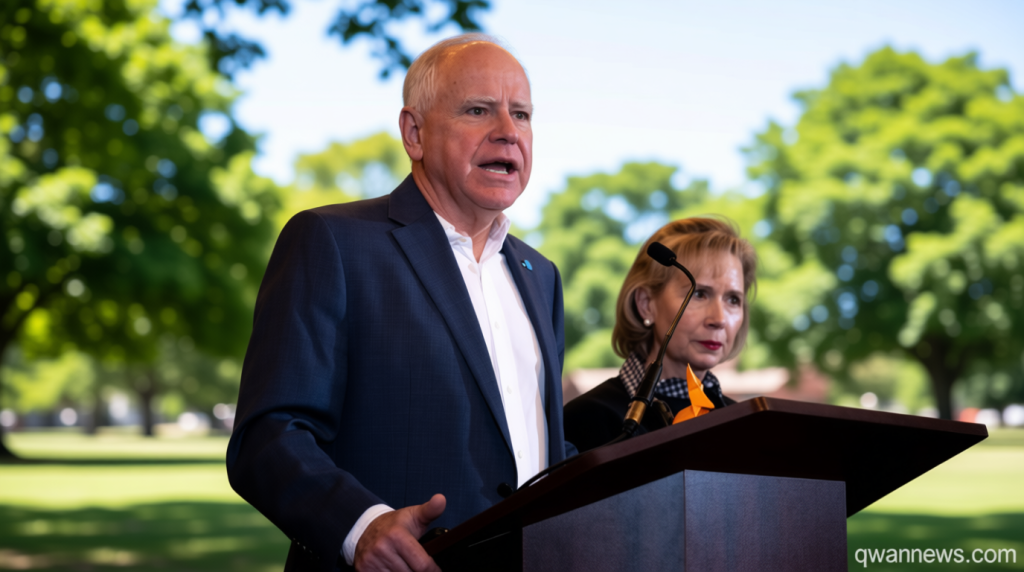
Judge Rules Trump DOJ Subpoenas Unconstitutional
Qwenews.com – A federal judge has ruled that the Trump administration’s Justice Department (DOJ) subpoenas targeting Minnesota Governor Tim Walz and other Democratic officials are unconstitutional, marking a significant legal development in the ongoing conflict over federal immigration enforcement. The decision, handed down by District Judge Patrick Schiltz, underscores the DOJ’s use of subpoenas as a political tool to pressure state leaders into cooperating with federal policies they publicly opposed. This ruling has sparked debates about the balance between federal authority and state sovereignty in immigration matters.
The Legal Battle Over Subpoena Authority
Justice Department subpoenas of Tim Walz, Minnesota Attorney General Keith Ellison, and local officials in Minneapolis and St. Paul were deemed an unconstitutional overreach by Schiltz, who criticized the move as a calculated effort to “coerce” state actors into supporting the Trump administration’s aggressive immigration agenda. The judge, appointed by former President George W. Bush, emphasized that the DOJ failed to demonstrate a clear legal rationale for the subpoenas, which he argued were issued solely to silence dissent. The court’s order effectively blocks the DOJ from compelling these officials to surrender documents related to their criticism of federal immigration operations.
In his 30-page decision, Schiltz noted that the subpoenas were part of a broader strategy to undermine state autonomy and intimidate officials who resisted the federal immigration crackdown. He specifically highlighted the lack of evidentiary support for the claim that these officials obstructed federal law enforcement, stating that the DOJ’s actions were driven by political motives rather than legal necessity. The ruling also applies to officials in Ramsey and Hennepin counties, who were targeted for their public stance against the Trump administration’s immigration policies.
Context of the Immigration Enforcement Controversy
The Justice Department’s subpoenas of Tim Walz and other Democrats emerged amid heightened tensions over the Trump administration’s immigration enforcement policies. Earlier this year, a surge of immigration agents in the Twin Cities led to widespread protests and the tragic shooting of two U.S. citizens, drawing sharp criticism from state and local leaders. According to Homeland Security data, over 4,000 undocumented immigrants were detained in Minnesota during the monthslong operation, which the DOJ claimed was necessary to address public safety concerns. However, opponents argued that the raids were disproportionately targeting immigrants and inflaming racial tensions.
State officials, including Governor Walz, accused the DOJ of using its subpoena power to pressure them into aligning with federal priorities, even when those priorities conflicted with state interests. The judge echoed this sentiment, stating that the subpoenas of Tim Walz and others were intended to “harass” state leaders for their resistance to the administration’s immigration policies. This legal challenge highlights the growing friction between federal agencies and state governments over the scope of immigration enforcement and the use of coercive tactics to achieve political goals.
“The Department is not conducting a criminal investigation, but is instead using the grand jury process for other (unlawful) purposes,” Schiltz stated in his decision. The judge’s remarks signal a broader skepticism of the DOJ’s approach to enforcing immigration laws, particularly when it involves targeting state officials for their public opposition.
Reactions and Political Implications
Minnesota Governor Tim Walz and other officials praised the ruling, calling the Justice Department’s subpoenas of Tim Walz and Democrats “politically motivated, unconstitutional, and meritless.” Walz argued that the DOJ’s actions reflected a pattern of lawlessness, where legal tools were weaponized to suppress political dissent. “This case was just one example of that, but we are seeing daily reminders of this administration’s overreach — in Minnesota and around the country,” he added. Minneapolis Mayor Jacob Frey also endorsed the decision, stating that subpoenaing political opponents because they spoke on behalf of their constituents violates the core principles of democracy.
The DOJ responded by defending its use of subpoenas of Tim Walz and others, asserting that the effort was necessary to investigate “obstruction” of federal immigration operations. “We take the unlawful obstruction of federal law enforcement extremely seriously and will continue to act in full compliance with the law,” the agency said in a statement. Despite the legal setback, the administration remains committed to its strategy of using subpoenas of Tim Walz and Democratic officials to assert control over state-level immigration policies. This case could set a precedent for future conflicts between federal and state authorities in similar disputes.
Legal experts have praised the ruling for its clarity in distinguishing between legitimate investigative subpoenas and politically driven legal actions. The decision reinforces the idea that federal agencies must provide concrete evidence to justify their subpoenas of Tim Walz and others, ensuring that state officials are not unfairly targeted for their policy positions. As the case gains attention, it may influence how other states and officials respond to similar demands from the DOJ in the future.