
Iran War Escalates Hunger Crisis, World Food Program Chief Warns
Mounting Pressure on Global Food Security
Qwenews.com – The ongoing conflict in Iran is creating widespread consequences that threaten to push millions more into severe food shortages, according to Carl Skau, the acting Executive Director of the World Food Program (WFP). He emphasized that the disruption of the Strait of Hormuz has caused fuel prices to soar, increasing the organization’s operational costs dramatically. This surge in fuel prices has also contributed to a global rise in food costs, further straining resources. Additionally, the critical waterway’s blockage has hindered the delivery of essential fertilizers from the Gulf to regions like Sudan, exacerbating agricultural challenges.
Funding Shortfalls Deepen Humanitarian Struggles
Skau highlighted that the WFP is already making tough decisions due to substantial funding cuts. “In many places, we’re already taking from the hungry to give to the starving,” he said, reflecting the difficult choices required to meet urgent needs. The organization, which depends heavily on government donations, has experienced a sharp decline in financial support, including from its primary donor, the United States. As of Monday, the U.S. contributed approximately $731 million in 2026—down from over $4 billion in 2024.
Regional Impacts and Unprecedented Challenges
The humanitarian crisis has intensified in several regions. In March, the WFP warned that 45 million additional people could face acute hunger by July if oil prices remained above $100 per barrel. Now, the effects are visible on the ground in countries such as Sri Lanka, Somalia, and Afghanistan. Even if the Strait of Hormuz were to reopen immediately, Skau noted that the damage would persist for the long term. “It’s going to take time to recover,” he told CNN during a recent interview in Washington, DC.
“We hope this conflict goes away, and that the strait opens tomorrow. But I think it’s clear that we need rich countries to step up and try to mitigate the hit on the most vulnerable from this crisis,” Skau said.
Skau, a former Swedish diplomat who assumed the acting director role after Cindy McCain’s departure, has been serving as chief operating officer since May 2023. Before the Iran war, the WFP was already grappling with rising global needs. Sudan’s population of 20 million faces food insecurity, while Lebanon has seen large-scale displacement. In Ukraine, over 20 incidents have disrupted WFP facilities and assets in the past two years, including a missile strike on a warehouse in Dnipro late last month.
Hard Choices in Crisis Zones
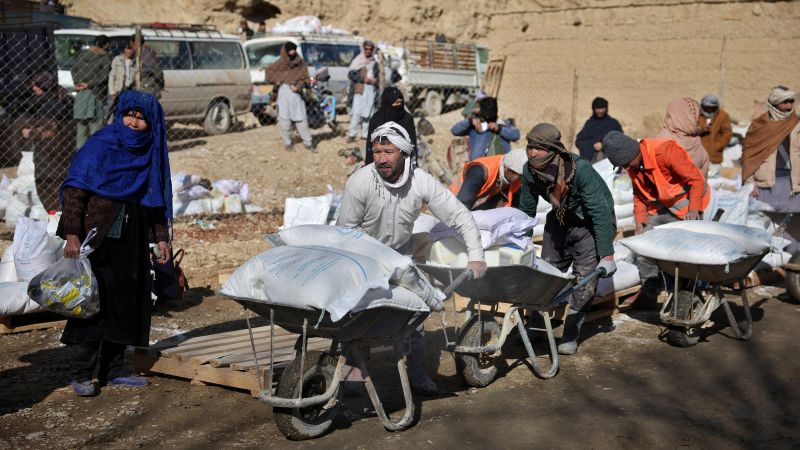
Skau described a section of South Sudan where famine is imminent, but access is limited to air transport—a costly solution that depletes resources. “If we continue this air bridge, it burns a lot of resources, to the point we can’t address other areas in need,” he explained. In Afghanistan, colleagues are struggling to prioritize aid distribution. “We don’t have resources to help all women-headed households with children,” he said. “So, what do we do? Do we focus on those with more than five children? That means four are left without support, and we know it will have massive consequences.”
“Those kinds of choices we haven’t really faced before,” Skau added.
Despite the U.S. being the largest donor to the WFP, funding has declined under recent administrations. Skau expressed gratitude for the current contribution but stressed the need for greater support. “It’s in the U.S. interest to fight global hunger, because a hungry world is an unstable world,” he said. “I think there is agreement and consensus among Americans and beyond that children should not go to bed hungry. Children should not starve.”