
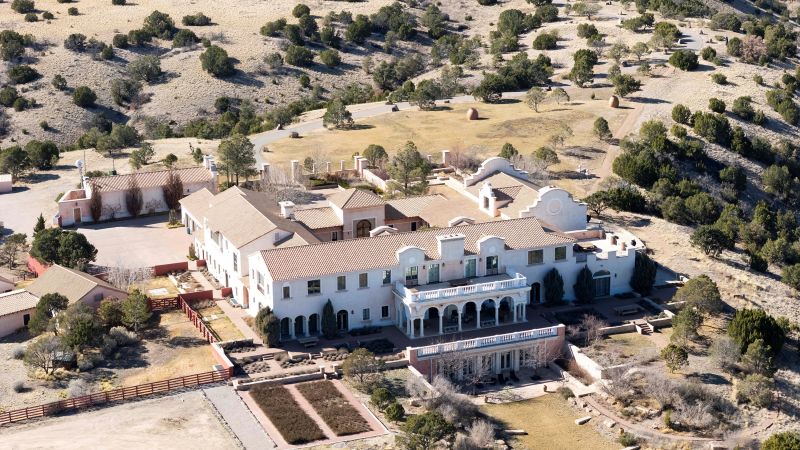
Epstein Ranch Probe Intensifies Justice Department Pressure
Qwenews.com – Investigations into Epstein s mysterious New Mexico property are intensifying, placing mounting pressure on the Justice Department to address allegations at Jeffrey Epstein’s former ranch. Acting Attorney General Todd Blanche faces growing scrutiny over federal handling of matters connected to the late child sex offender.
New Mexico Attorney General Raúl Torrez filed a lawsuit Wednesday, accusing the Justice Department of hiding information about Epstein and his accomplices while blocking the state’s investigation. The legal action coincided with an interim report from the state’s Truth Commission, a four-member panel of House Representatives dedicated to uncovering overlooked facts.
“New Mexico is one of few jurisdictions that still may have an opportunity to hold Epstein’s associates accountable or otherwise provide some sense of justice to survivors,” Torrez wrote in Wednesday’s lawsuit.
He added: “Federal inaction does not merely stall the investigation; it prolongs and compounds the suffering of survivors.”
Commission Calls for Complete Document Release
The Truth Commission’s Wednesday report outlined challenges in using Justice Department records to build an accurate timeline. The panel described creating a verifiable chronology as “extremely tedious and time-consuming,” while demanding full disclosure of all documents currently withheld under the Epstein Files Transparency Act.
These developments fuel mounting criticism of the Justice Department’s approach. This scrutiny arrives at a pivotal moment for Blanche, who serves as the agency’s main liaison on Epstein matters while pursuing Senate confirmation as President Trump’s next attorney general.
Blanche’s nomination advanced significantly Tuesday when it moved from committee for a full Senate vote. He can afford to lose only two Republican votes to secure confirmation.
Transparency Dispute Continues
Responding to Torrez’s lawsuit, the Justice Department maintained it has no obligation to distribute unredacted documents, arguing that victim privacy protection takes priority. A department spokesperson stated: “New Mexico has provided no lawful basis to justify such sweeping disclosures.”
When CNN asked Torrez to respond to that statement in a press conference Wednesday, he said: “To pretend that they cannot modify a protective order or to pretend that they are suddenly concerned with survivors’ rights and interests when they have failed to demonstrate that in the past – I think that that doesn’t have any real credibility.”
Concurrent announcements from both the attorney general’s office and the Truth Commission have raised questions about potential friction between the two organizations. While both ostensibly pursue the same objective of examining activities at Zorro Ranch, their relationship appears strained.
The commission’s interim report indicates ongoing discussions with New Mexico’s Justice Department concerning an information-sharing arrangement. The panel proposed that both entities “coordinate and collaborate when conducting interviews and depositions of victims, witnesses, and other persons.” Nevertheless, the report acknowledges that “At this time, the Commission and NMDOJ have been unable to reach an agreement.”
Epstein survivors have recently voiced confusion to CNN about whether these parallel investigations operate cooperatively or independently.
Redaction Issues Spark Further Debate
Congress mandated Justice Department release of millions of Epstein-related documents following passage of a bipartisan measure late last year. Unfortunately, the released materials contained substantial redactions, some executed poorly, which inadvertently exposed victim identities and intensified criticism from both lawmakers and survivors.
The Justice Department’s internal watchdog is currently examining the redaction methodology. Last month, Torrez issued a sharply worded letter to Blanche, alleging that the department withheld access to unredacted files and arguing that insufficient cooperation hinders efforts to deliver justice to victims.
Among documents released earlier this year was an unconfirmed allegation contained in a 2019 email sent to a local radio broadcaster. The message claimed that “somewhere in the hills outside the Zorro, two foreign girls were buried on orders of Jeffrey and Madam G.”
Additionally, the lawsuit references the case of Roza Gilles, who was an eighteen-year-old model when Epstein allegedly first abused her.
Frequently Asked Questions
What is the Zorro Ranch and why is it significant? The Zorro Ranch is Jeffrey Epstein’s former property in New Mexico that has become central to ongoing investigations into alleged offenses at the site.
Who is leading the New Mexico investigation? New Mexico Attorney General Raúl Torrez initiated legal proceedings, while the state’s Truth Commission—a four-member panel of House Representatives—conducted an interim assessment.
What role does the Justice Department play? The Justice Department faces accusations of concealing details about Epstein and obstructing New Mexico’s inquiry, while also managing federal-level investigations and document releases.
What is the Epstein Files Transparency Act? This legislation requires the Justice Department to release documents related to Epstein, though many remain withheld or heavily redacted.
How does this affect Todd Blanche’s nomination? Blanche, who serves as the agency’s primary liaison on Epstein-related issues, needs to lose only two Republican votes in the Senate to secure confirmation as attorney general.