
Exclusive: Netanyahu Opposes US F-35 Jet Sale to Turkey Amid Trump Divide
Qwenews.com – Israeli Prime Minister Benjamin Netanyahu voiced strong opposition to the United States’ planned sale of F-35 stealth fighter jets to Turkey, highlighting growing tensions with President Donald Trump. The disagreement comes as Netanyahu seeks to reassure allies of his continued support for U.S.-Israel relations, even as he questions the wisdom of a deal that could bolster Turkey’s military capabilities. Despite their differences, Netanyahu stressed that the relationship remains fundamentally aligned on major global issues, underscoring the importance of U.S. backing for Israel’s security in the region.
Netanyahu’s Warning on Turkey’s Allegiances
During an exclusive interview with CNN, Netanyahu expressed concerns that the F-35 sale would not solidify Turkey as a reliable U.S. ally. He described Ankara as a regime influenced by the Muslim Brotherhood, a group he views as antagonistic to American interests. “He’s not exactly a model ally,” Netanyahu said, emphasizing that the sale could undermine Israel’s strategic position. The prime minister also warned that Turkey’s military expansion might directly threaten Israel, particularly in the event of a regional conflict.
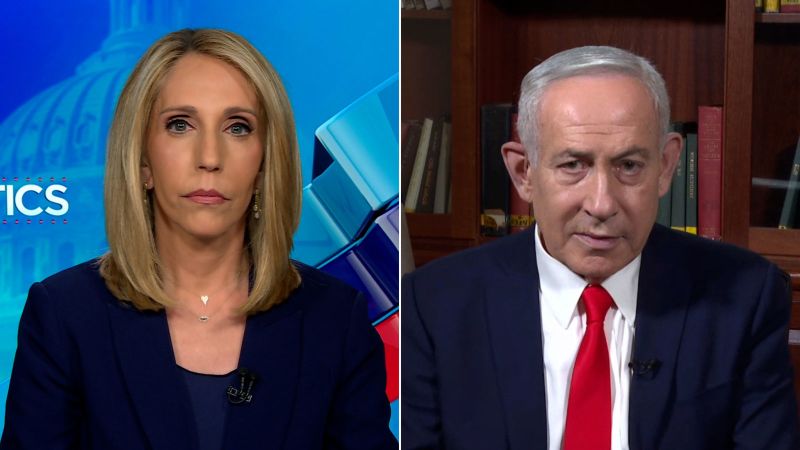
“He threatens to destroy my country, the one and only Jewish state,” Netanyahu told CNN’s Dana Bash, reinforcing his belief that the U.S. should prioritize Israel’s security concerns over Turkey’s growing military power.
Broader Tensions with Erdogan
The rift between Netanyahu and Turkish President Recep Tayyip Erdogan has deepened in recent months, fueled by disagreements over regional policy and mutual accusations of aggression. Netanyahu criticized Erdogan’s administration for its actions in the Middle East, which he claims have destabilized the area. In an exclusive interview, he reiterated that Turkey’s leadership remains a key source of tension, particularly in its dealings with Israel. This has led to a growing divide in how the two nations approach security threats and diplomatic partnerships.
“This is not a force for peace and stability. When you give them that power, you’re going to see aggression in its wake,” Netanyahu said, using the F-35 sale as a case study in his broader critique of Turkey’s foreign policy.
Trump’s Position on the F-35 Deal
While Netanyahu pushed back against the F-35 sale, President Trump has remained supportive, viewing Turkey as an “extraordinary” ally. During his visit to Turkey for the NATO summit, Trump indicated that the sale could be reversed if necessary, signaling his openness to adjusting the deal based on diplomatic considerations. However, Netanyahu argued that the agreement was a critical step in the U.S. strategy to counterbalance regional adversaries, and he urged Trump to take a firm stance in favor of Israel’s security interests.
Strategic Implications of the Sale
Netanyahu’s opposition to the F-35 jet sale is rooted in his fear that it would strengthen Turkey’s military posture, potentially giving the country an edge in conflicts with Israel. He emphasized that the sale could complicate the U.S.’s position in the region, particularly with regard to Iran and other key adversaries. In an exclusive interview, Netanyahu warned that the decision to arm Turkey might have far-reaching consequences for the balance of power in the Middle East, urging the administration to consider the long-term strategic impact before finalizing the deal.
Israel’s Stance on U.S.-Iran Ceasefire
As the U.S. moves forward with its exclusive F-35 jet sale to Turkey, Netanyahu has not yet condemned the recent agreement to halt hostilities with Iran. The deal, which includes sanctions relief on Iran’s oil exports, represents a diplomatic shift that Netanyahu believes could weaken Israel’s leverage in negotiations. While acknowledging the potential benefits of the ceasefire, he remains skeptical about its ability to curb Iran’s nuclear ambitions or missile development. “It’s too early to say what will happen,” he said, adding that the U.S. should continue to prioritize military cooperation with Israel as part of its broader regional strategy.
Netanyahu’s Political Strategy
In an exclusive interview, Netanyahu also addressed the waning support for Israel among U.S. Democrats, criticizing their reluctance to back the country’s security initiatives. He singled out New York Mayor Zohran Mamdani, who has advocated for a more balanced approach to Israeli-Palestinian relations, as emblematic of the growing divide in American politics. Netanyahu argued that the Democratic Party’s focus on social issues has overshadowed its commitment to Israel’s defense, a concern he has raised in recent months as the U.S. continues to navigate complex alliances in the region.