
Trump’s Great American State Fair: Baptisms, Heat, and MAHA Highlights
Qwenews.com – The Great American State Fair, a 16-day event organized to commemorate the nation’s 250th anniversary, wrapped up in Washington, DC, with a mix of triumphs and challenges. Central to the fair’s narrative were three defining elements: spiritual moments like baptisms, the sweltering heat that tested attendees, and the MAHA (Military Appreciation, Honor, and Heroism) initiatives that aimed to unite the country. While the fair succeeded in drawing crowds and showcasing state pride, its political undertones and environmental hurdles sparked conversations about its broader impact on public engagement.
Spiritual Moments Amid the Chaos
Amid the backdrop of political fervor and logistical complexities, the fair became an unexpected stage for spiritual expression. The National Mall, typically a hub for civic events, transformed into a site of worship as over 190 individuals embraced baptism during the event. David’s Tent, a 24/7 musical prayer ministry, emerged as a popular destination for visitors seeking solace and community. This dynamic space, though not part of the official fair itinerary, offered a unique blend of faith and celebration that resonated with attendees.
For many, the act of baptism symbolized a deeper connection to the event’s themes of unity and renewal. One participant, Barry Lee Williams, described the experience as both personal and communal. “This is wonderful,” his wife Sue said, reflecting on the fair’s ability to merge cultural festivities with spiritual reflection. The tent’s presence underscored how the fair’s diverse programming created opportunities for both national pride and individual devotion, even as debates about its political purpose persisted.
Weather Challenges and Unintended Popularity
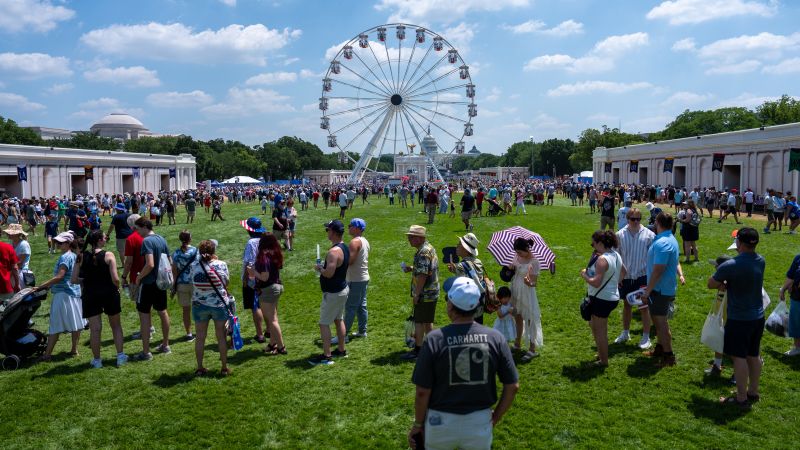
Heat emerged as a persistent disruptor, casting a shadow over the fair’s success. Temperatures frequently exceeded 100°F, prompting the event to close multiple times to provide relief. On July 3, CNN’s Derek Van Dam highlighted the lack of shade, with attendees relying on umbrellas and tents to cope. Despite the sweltering conditions, the daily rodeo and the iconic 110-foot Ferris wheel remained a draw, offering brief escapes from the oppressive heat.
Meanwhile, the FIFA Fan Fest, a large-scale World Cup viewing experience, thrived in the high temperatures. Thousands gathered to watch matches, showcasing the fair’s ability to adapt to unexpected circumstances. While the heat may have dampened some attendance, it also inadvertently highlighted the resilience of both the event’s organizers and its visitors, who braved the conditions to participate in the festivities.
“I don’t care about Trump. I care about my country. Trump will be president for two more years, and then we move on. And we’ve got to get over this divisiveness,” said Kim, a Northern Virginia resident, on the final day of the fair.
Freedom 250, the Trump-backed nonprofit overseeing the fair, reported 150,000 visitors in the first three days, though full attendance numbers remain pending. Trump had promoted the event as a “packed with happy people” celebration, but the weather’s influence on turnout became evident. Some attendees, like Kim and her spouse, expressed disappointment that the nation’s 250th birthday had become a platform for political messaging, noting a shift in the fair’s original intent.
The fair’s state exhibits also revealed a spectrum of participation. While Washington, Massachusetts, Illinois, North Carolina, and Connecticut opted out due to budget constraints, others like Florida and Colorado created standout installations, such as a citrus-themed display and a kayak simulator. These exhibits drew consistent crowds, demonstrating how creativity and engagement could offset logistical setbacks. Yet, the absence of certain states raised questions about the event’s inclusivity and its ability to reflect the full diversity of American culture.