
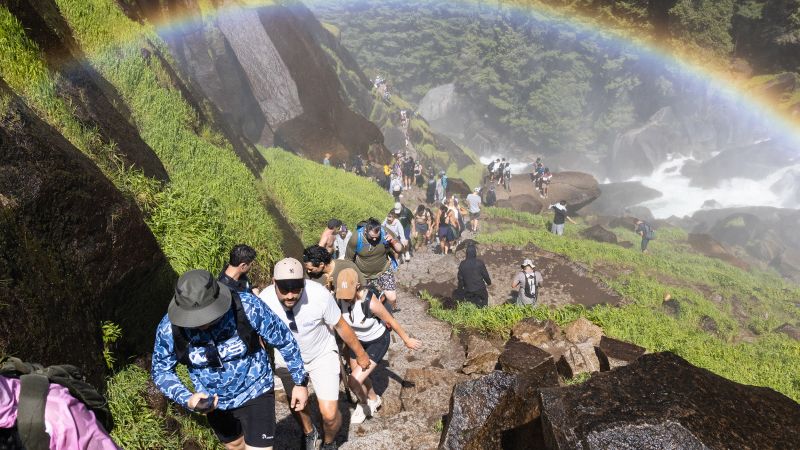
National Parks Struggling with Summer Crowds: ‘L.A. at Rush Hour’ and ‘Disney World’ Comparisons
Qwenews.com – Visitors to American national parks are facing unprecedented congestion this summer, with wait times and overcrowding reminiscent of urban commutes and theme park lines. The phrase ‘L.A. at rush hour’ has become a common analogy among travelers, highlighting the chaos experienced in parks like Zion National Park. Marti Pawlikowski, a participant in a Road Scholar tour from Lancaster, Pennsylvania, described her ordeal as a ‘river of cars’ that stalled for 45 minutes during a spring visit. The delays continued even after entering the Utah park, with shuttle lines stretching as long as the packed queues at Disney World, underscoring a broader trend of visitor saturation.
Record-Breaking Attendance and Traffic Challenges
The removal of timed-entry systems by the National Park Service (NPS) in early 2026 has led to a surge in visitors, overwhelming many parks. Yosemite, for instance, saw a significant rise in attendance, causing gridlocked roads and overcrowded parking areas. Walter Meyer, a Sacramento resident, compared the traffic to ‘L.A. at rush hour,’ noting that every trailhead parking lot in the California park was full by the time his group arrived. This resulted in hours of waiting, turning what should have been a scenic adventure into a logistical nightmare for travelers.
Events and Funding Cuts Exacerbate the Crisis
The 250th anniversary of the national park system has intensified the strain, as events like historical reenactments and fireworks displays attract massive crowds. Michele Treacy from Kinnelon, New Jersey, planned a trip to Mount Rushmore for the Fourth of July weekend but found herself watching the show from a cramped deck two miles away after missing out on tickets. Despite the challenges, she praised the parks’ beauty, stating, ‘The majesty of Mount Rushmore made it all worthwhile.’ However, the frenzy of booking campsites and tickets left her questioning if the t-shirts were even being sold, illustrating the peak of summer chaos.
Infrastructure strain has become a pressing issue, with nearly 25% of the NPS’s permanent staff laid off in 2025, according to the National Parks Conservation Association. This has left facilities underprepared, with an estimated $24 billion in deferred maintenance. While the House rejected the most drastic 2027 budget proposals, the overall NPS budget still declined by 1.3%, forcing parks to manage increasing numbers of visitors with limited resources. The result? A summer marked by long lines, packed trails, and a sense of overwhelm that rivals the busiest city streets.
Experts Criticize the Shift in Management Strategies
Experts argue that the elimination of timed-entry systems was not a solution but a contributing factor to the crisis. Cassidy Jones, a former park ranger and senior visitation program manager at NPCA, noted, ‘I do not think that’s what the strategy was.’ The changes have exacerbated overcrowding, particularly in parks like Yellowstone, where May’s record attendance led to jammed parking lots and extended wait times. The Atlantic reported that funds have been redirected to presidential renovation projects, including upgrades to the White House, further stressing park resources and leaving staff to manage the influx with limited support.
As summer continues, the strain on parks shows no signs of easing. Tour companies like Backroads have increased capacity for national park tours by 12%, while bookings in Death Valley and Great Smoky Mountains parks have risen by 60% year-over-year. Despite the challenges, many visitors remain captivated by the natural beauty of these destinations. However, the experience is often marred by the relentless pace of ‘L.A. at rush hour’ traffic and the relentless energy of ‘Disney World’-style crowds, transforming serene landscapes into high-pressure environments where patience is tested daily.