
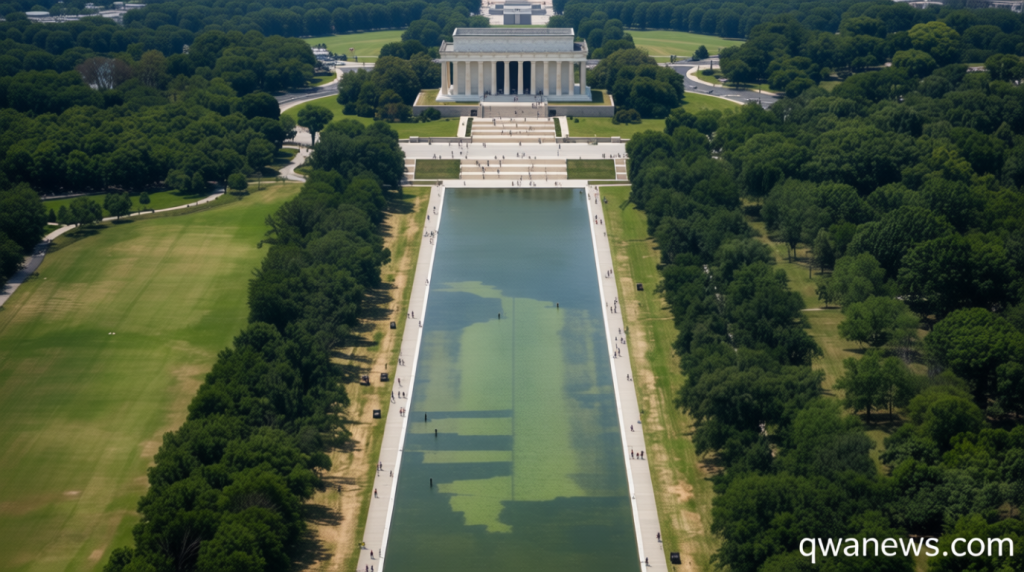
Reflecting Pool’s Algae and Peeling Blue Paint Spark National Debate
The Algae Crisis and Paint Peeling
Qwenews.com – The Lincoln Memorial Reflecting Pool, once a symbol of American unity, has become a flashpoint for controversy due to its algae growth and peeling blue paint. President Donald Trump’s $14 million renovation initiative, launched in late March, aimed to restore the pool’s appearance and align it with the iconic blue of the national flag. However, just weeks before the July 4 deadline, the project faced setbacks as algae spread across the water and paint on the pool’s bottom began to flake. These issues have sparked a mix of public reactions, from frustration to humor, as the pool’s condition reflects broader debates about the renovation’s value and the administration’s approach.
Initial reports claimed the algae was “75% gone” after Trump’s team deployed hydrogen peroxide treatments. Yet, the remaining green algae and peeling paint have fueled conspiracy theories, with some suggesting the project was rushed to cover up inefficiencies or even political motivations. The Interior Department has attributed the algae growth to Washington, D.C.’s humid climate, but critics argue the problem could have been mitigated with better planning. As the pool’s water turns murky, questions arise about whether the renovation was a genuine effort to beautify the nation’s capital or a political spectacle.
Rumors, Debates, and the National Stage
The algae and peeling paint have not only drawn local attention but also national scrutiny, with social media platforms amplifying the discourse. Some users have joked about the pool becoming a “living monument” to the challenges of urban maintenance, while others have criticized the administration’s spending. The conspiracy theories surrounding the project have linked it to Trump’s broader rhetoric about waste and corruption, with critics arguing that the $14 million allocation was a calculated move to divert focus from other controversies.
Meanwhile, the pool’s condition has become a metaphor for the nation’s divided perspectives. For instance, while some see the algae as a natural consequence of climate and maintenance, others view it as evidence of a flawed project. The Interior Department has defended its work, stating the pool is now “crystal clear” and that the peeling paint was an unavoidable side effect. However, the algae issue remains a sticking point, with visuals of the pool’s greenish hue and flaking surfaces circulating widely in both political and cultural discussions.
A Historical Symbol in Turmoil
The Lincoln Memorial Reflecting Pool has long been a site of historical and cultural significance, reflecting the nation’s ideals as much as its monuments. Now, it is at the center of a debate that questions not only its physical state but also its symbolic meaning. The original renovation plan, budgeted at $1.8 million, was expanded significantly to include additional features, such as a new drainage system and lighting enhancements. Critics argue that the increased cost—nearly seven times the initial estimate—was due to poor oversight and a lack of transparency in the decision-making process.
As the pool’s problems escalate, its role as a national icon is being tested. Visitors who once marveled at its clarity now photograph its murky waters and flaking blue surfaces, using the imagery to comment on the project’s progress. The algae and paint peeling have also become a point of contention in political discourse, with some lawmakers accusing the administration of prioritizing aesthetics over practicality. Despite these challenges, the pool remains a focal point for public engagement, with debates continuing over its renovation’s legacy and the role of conspiracy theories in shaping its narrative.
Public Perception and the Ripple Effect
The public’s mixed reactions highlight the complexity of the situation. While some take photos of the algae-covered pool as a critique of government spending, others use it as a backdrop for patriotic celebrations. This duality has made the pool a microcosm of the nation’s divided opinions. The use of hydrogen peroxide to combat algae, for example, has been praised by some as a swift solution, while others see it as a temporary fix that fails to address deeper issues in the project’s execution.
Conspiracy theories have further fueled the debate, with some claiming the algae growth was intentional to create a “green screen” for propaganda or to obscure the project’s flaws. These theories, though speculative, underscore the public’s skepticism toward the administration’s motives. The peeling blue paint, meanwhile, has been interpreted as a sign of carelessness or a deliberate attempt to make the pool appear older than it is. As the pool’s condition becomes a talking point, it reinforces the idea that public projects are often scrutinized for their symbolic value as much as their practical outcome.
Broader Implications for Government Projects
The Lincoln Memorial Reflecting Pool’s issues have sparked a broader conversation about the management of public infrastructure in Washington, D.C. The $14 million renovation, which initially promised a streamlined restoration, has instead become a case study in cost overruns and logistical challenges. The algae and peeling paint are not just aesthetic concerns—they represent the tension between political ambition and the realities of maintaining a historical landmark. Critics argue that the project’s expanded scope, including new drainage and lighting systems, was a way to justify the higher budget and divert attention from the original goal of simply restoring the pool’s surface.