
Summer Berries and Pesticide Concerns: A Guide to Safe Consumption
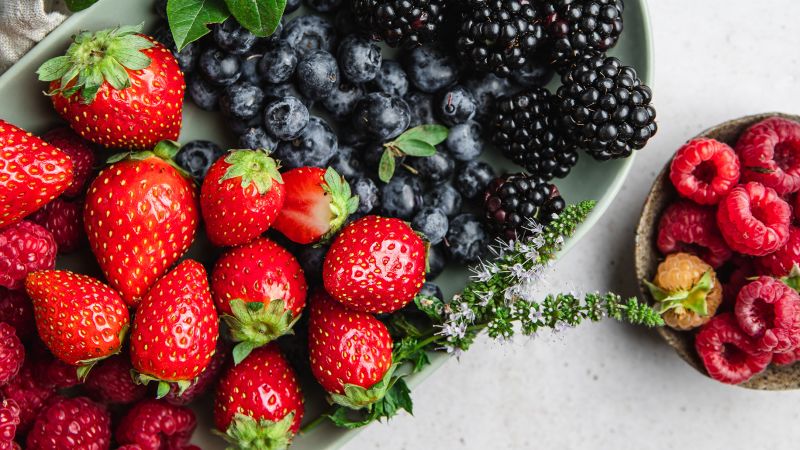
Qwenews.com – My infant grandson can’t resist munching on blackberries or strawberries, often demanding more after just one bite. These fruits are rich in antioxidants, fiber, and vitamin C, which should make his diet both nutritious and wholesome. Yet, I find myself worried about the potential pesticide residue he might ingest. This concern stems from the 2026 Shopper’s Guide to Pesticides in Produce, published annually by the Environmental Working Group (EWG), a nonprofit health advocacy group. The guide highlights blackberries, strawberries, and blueberries as top contenders for the “Dirty Dozen” list—fruits and vegetables with the highest pesticide levels in the U.S.
Pesticide Exposure: Risks and Controversies
The 2026 Dirty Dozen also includes cherries, apples, pears, grapes, peaches, nectarines, and leafy greens such as kale and spinach. While the order of items may shift over time, berries consistently rank high in this category. Raspberries, however, stand out as a notable exception. Due to their growth methods, they rarely make the list and often fall within the “Clean Fifteen”—a group of produce with minimal pesticide presence.
“Pesticide exposure during pregnancy may lead to an increased risk of birth defects, low birth weight, and fetal death,” according to the American Academy of Pediatrics.
“Exposure in childhood has been linked to attention and learning problems, as well as cancer.”
Studies suggest pesticides are also connected to lower sperm concentrations, heart disease, and genetic damage. In response, the Alliance for Food and Farming—representing organic and conventional farmers—argues that residues don’t necessarily equate to danger. The EPA sets safety limits that include wide margins to protect children, they note.
Washing Techniques to Reduce Pesticide Levels
Researchers at the Harvard T.H. Chan School of Public Health explain that contact pesticides, which sit on the surface, can often be removed through washing. However, systemic pesticides, absorbed by the plant itself, are harder to eliminate. A recent peer-reviewed report from EWG scientists analyzed 47 studies on washing methods, including tap water and vinegar or baking soda solutions.
The findings indicate that soaking in water achieved the lowest median reduction of about 30% in pesticide levels. In contrast, vinegar or baking soda showed a higher median reduction of approximately 50% across all produce types. “Overall, soaking with vinegar or baking soda had the highest median percent reduction—about 50%—across all pesticides and produce,” said Yoshira Ornelas Van Horne, an environmental health sciences professor at UCLA Fielding School of Public Health, in an email.
For optimal results, use one teaspoon of baking soda per two cups of water and soak most fruits and vegetables for five to ten minutes. Berries, with their high water content and thin skin, may require only one to two minutes of soaking. This method helps break down many surface pesticides, according to Peng Gao, an assistant professor of environmental health and exposomics.
Organic Options for Maximum Safety
If budget allows, choosing organic versions of the Dirty Dozen list items, like berries, can significantly reduce pesticide exposure. Organic farming avoids synthetic pesticides, relying instead on natural alternatives such as minerals or plant-based extracts. However, organic farms can still face contamination from neighboring conventional farms, potentially leading to the loss of their organic certification.
Despite this, research shows that switching to organic foods can cut pesticide levels in the body by up to 95% within days. Experts recommend starting children on organic diets to lower long-term health risks. For those unable to buy organic, thorough washing remains a practical step to minimize contact pesticide exposure.