
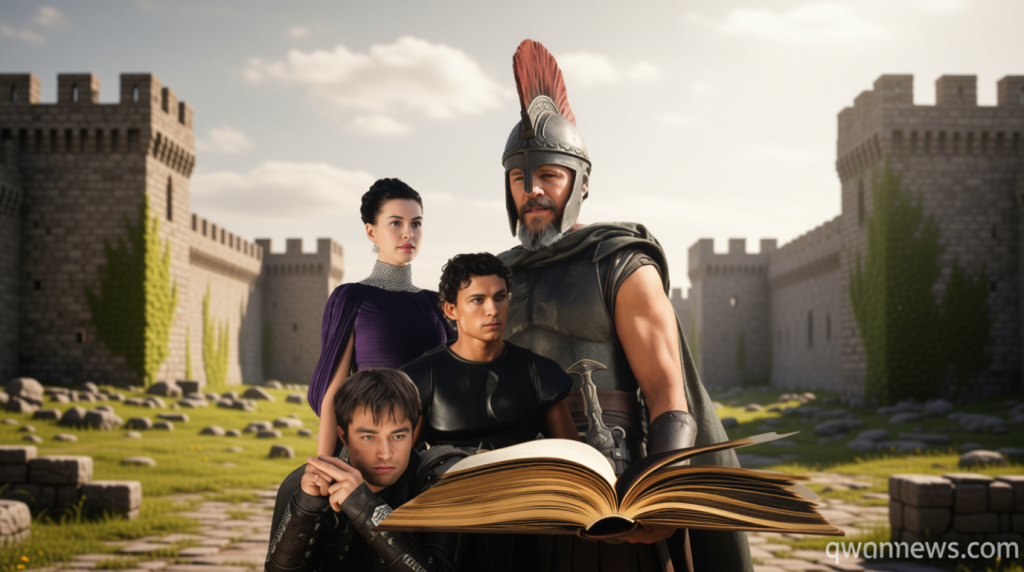
‘Odyssey’ Fever Sweeps Classics Enthusiasts
Qwenews.com – As the July 17 premiere of Christopher Nolan’s adaptation of Homer’s “Odyssey” draws near, a wave of excitement is sweeping through the world of ancient studies. Educators in universities and high schools are preparing for a potential surge in student enthusiasm, hoping to capitalize on the film’s cultural impact. Museums and academic book clubs are also stepping up efforts, with themed events and packed discussions indicating a renewed interest in the timeless Greek epic.
From Myth to Modern Cinema
Nolan’s latest project, based on Homer’s legendary poem, features Matt Damon as Odysseus, the Ithacan king embarking on a decade-long journey home after the Trojan War. His voyage, filled with mythical encounters, has sparked global anticipation. With a history of blockbuster hits like “Oppenheimer,” “Inception,” and the “Batman” trilogy, Nolan’s involvement is expected to elevate the film’s profile significantly.
“I knew it was going to be big if Christopher Nolan was directing it, and anytime we can get people talking about the things we study in class, it’s exciting,” said Jennie Luongo, a Latin instructor at St. Andrew’s Episcopal School in Austin, Texas, and president of the American Classical League.
Hollywood analysts are predicting massive box office returns, with some estimates suggesting the film could cross the $1 billion mark globally. Classics teachers, who often focus on the ancient Mediterranean’s history and culture, see this as a chance to inspire more students to explore the original text or enroll in courses.
A Ripple Effect Across Media
The buzz surrounding the film isn’t limited to classrooms. Emily Wilson, a classicist known for her 2017 translation of “The Odyssey,” has seen a dramatic increase in media attention. “With the movie coming out, I’m overwhelmed with questions from journalists,” Wilson shared with CNN.
Similar excitement was witnessed with Ridley Scott’s “Gladiator” in 2000, which the New York Times linked to a surge in ancient-world literature. The film’s success also spurred a wave of adaptations, including “Alexander,” “Troy,” and “300,” as well as TV series like HBO’s “Rome.” This trend has been echoed in recent events, such as the Getty Museum’s May-themed activities in Los Angeles and Australia’s book retailer-hosted lectures.
Global Engagement in Motion
In the UK, the Classical Association is aligning its book clubs with Homer’s work, with plans for film screenings. “The movie has already brought new audiences to our events, and we’re eager for more,” said Katrina Kelly, the association’s engagement director.
Meanwhile, UC Berkeley’s Arts & Humanities department launched an “epic book club” in January and May, promoting the film as the “world’s most epic tale.” The initiative, which included seven online sessions, attracted over 1,300 participants from around the globe—far exceeding initial expectations. Professors like Kim Shelton are now contributing insights to further deepen public engagement with the ancient text.