
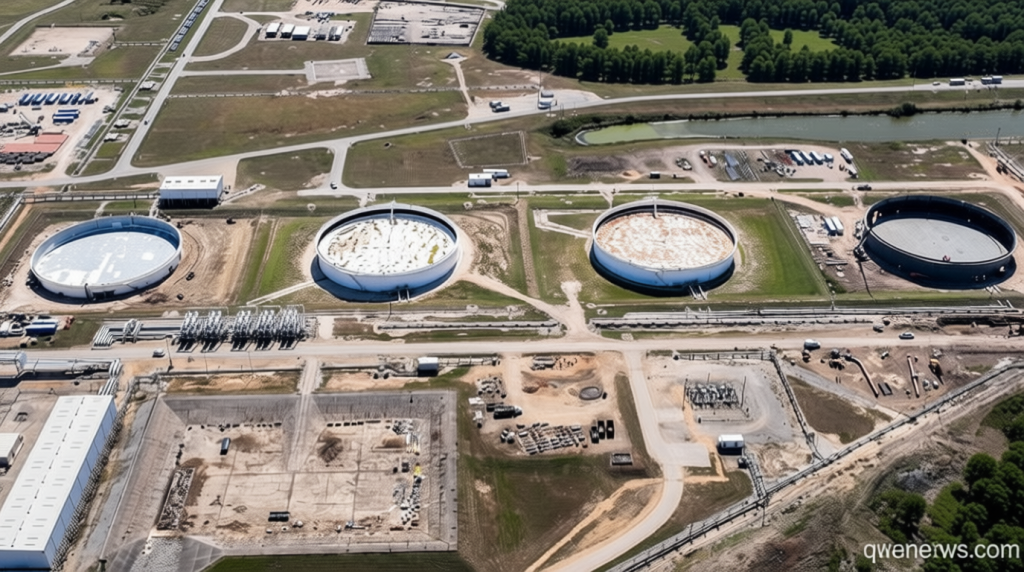
US Emergency Oil Stockpile Tumbles to 1983 Low Amid Iran Conflict
Qwenews.com – Recent federal data has revealed a sharp decline in the United States’ emergency oil reserve, the Strategic Petroleum Reserve (SPR), marking its lowest level since the Reagan administration. The reserve saw a record 8.9 million barrels withdrawn in a single week, pushing its holdings to 340.3 million barrels. This drop has raised concerns among energy analysts, as the stockpile now stands at the lowest point since the early 1980s. The depletion comes amid heightened tensions with Iran and the broader geopolitical landscape, which has led to increased uncertainty in global oil markets.
Strategic Implications of the SPR’s Decline
The SPR, established in 1975, serves as a critical buffer against supply shocks and price volatility. Its current level of 340.3 million barrels is a stark contrast to the 20% minimum required for operational readiness, which means the reserve is now operating at just 57% of its full capacity. This situation has sparked debates about the effectiveness of the U.S. energy strategy, particularly as the country grapples with rising inflation and energy costs. Mike Sommers, CEO of the American Petroleum Reserve, warned that the SPR’s depletion could have severe consequences if global oil prices spike unexpectedly.
The drawdown reflects a shift in policy under the Biden administration, which has prioritized reducing reliance on fossil fuels and lowering energy prices for consumers. However, the SPR’s low level has also been influenced by aggressive withdrawals during the Trump presidency, which aimed to stabilize domestic markets during the Russia-Ukraine conflict. While these actions helped ease price pressures, they left the reserve in a precarious state, now exacerbated by ongoing geopolitical instability. Experts argue that the SPR’s role in safeguarding the nation’s energy security has never been more vital.
Historical Context and Strategic Impact
Reagan-era records show the SPR had less oil in July 1983, a period when the reserve was being filled for the first time. At that time, the U.S. economy was smaller, and the current levels reflect a significant drop of 75 million barrels since late February. This decline underscores the ongoing strain from the Iran conflict and its ripple effects on global oil markets. The SPR’s depletion has also been linked to China’s reduced exports and other governments’ emergency releases, which have temporarily mitigated the risk of a severe oil crisis.
“The Strategic Petroleum Reserve releases, combined with other governments’ actions and China’s reduced exports, have prevented the Armageddon scenario of $150 oil from happening to date,” remarked Andy Lipow, president of Lipow Oil Associates. His comments highlight the collaborative efforts in stabilizing oil prices, but also emphasize the fragility of the current supply chain. With the SPR at such a low level, any disruption in production or shipping could lead to rapid price increases, threatening both households and industries.
Analysts are closely monitoring the SPR’s status as a key indicator of U.S. energy resilience. The reserve’s current level is the lowest since the early 1980s, when the Cold War era’s oil shortages were a major concern. This situation has reignited discussions about the need to replenish the SPR, particularly as the country faces potential challenges from hurricanes in the Gulf of Mexico, which could further strain oil production and shipping. The administration is now under pressure to balance immediate economic needs with long-term energy security, a dilemma that has tested policy decisions over the past few years.
As the SPR’s levels continue to fall, the impact on the U.S. economy becomes increasingly evident. Energy prices, which have already seen a rise due to the Iran conflict and reduced supply from OPEC nations, could surge if the reserve is unable to meet demand. The current drawdown of 8.9 million barrels in a single week is a sign of the administration’s proactive approach to managing oil markets, but it also raises questions about the reserve’s ability to act as a reliable safety net. Industry experts suggest that the SPR’s role has become more critical in an era of geopolitical uncertainty and climate-driven energy transitions.