
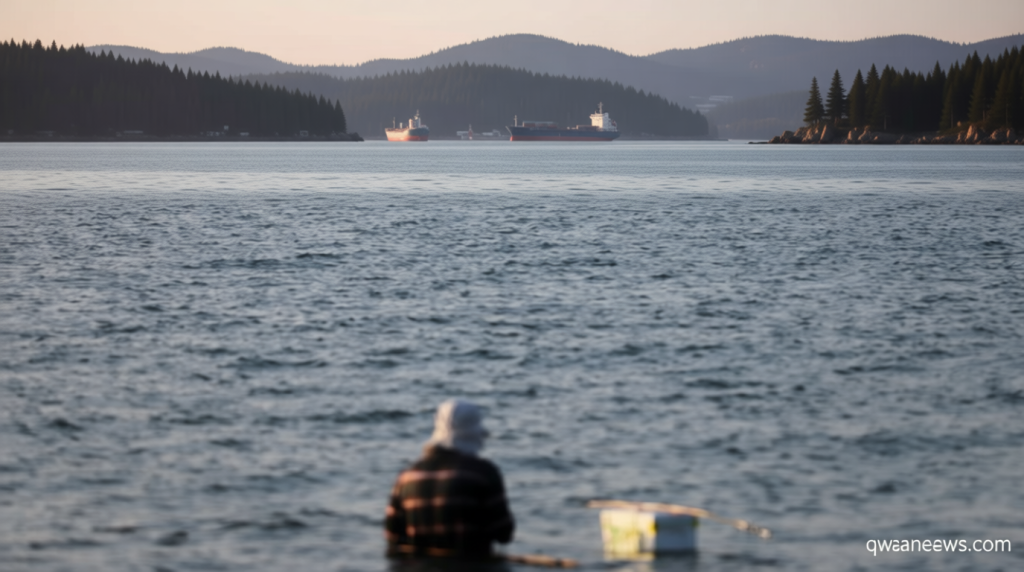
Trump Says the Strait of Hormuz is Reopened, But Industry Skepticism Lingers
Qwenews.com – President Donald Trump announced that the Strait of Hormuz has been reopened after a significant agreement with Iran, asserting that the critical maritime route is now secure for international shipping. This declaration, made during a high-stakes diplomatic engagement, aims to alleviate concerns over the region’s stability. However, despite Trump’s optimism, the shipping industry remains cautious, with most vessels still avoiding the strait due to lingering uncertainties about the agreement’s implementation.
The Strategic Significance of the Strait of Hormuz
Located between the Arabian Peninsula and the Iranian Peninsula, the Strait of Hormuz serves as a vital chokepoint for global oil transportation. Approximately 20% of the world’s seaborne oil trade passes through this narrow waterway, making it a strategic focal point for energy markets. Trump’s assertion that the strait is now clear reflects the U.S. and Iran’s efforts to resolve tensions that had previously disrupted maritime traffic. Yet, even with the agreement, the immediate impact on oil flow is expected to be modest.
“The security situation for the shipping industry remains volatile, and we still consider it very risky for ships to commence transits at this point,” stated Jakob Larsen, chief safety and security officer at the Baltic and International Maritime Council (BIMCO). He emphasized that the U.S. and Iran’s statements do not yet provide enough clarity on the timing of the deal’s finalization or the specific measures ensuring safe passage.
Industry’s Cautious Response to the Hormuz Reopening
While Trump’s declaration has generated hope, industry analysts suggest that the actual reopening of the strait will take time. According to Bob McNally of Rapidan Energy Group, the agreement’s terms have only marginally increased oil flow, with estimates indicating between 0% and 10% of normal movement exiting the strait. This cautious approach is driven by the need for tangible assurances from both sides, rather than just symbolic gestures.
“Surprising volumes of crude and petroleum products still appear to be transiting the strait,” noted Natasha Kaneva, JPMorgan’s head of global commodities strategy. She pointed out that commercial traffic has not entirely halted, even as tensions persist and naval blockades remain in place. “Operators are proceeding cautiously, prioritizing safety over speed,” Kaneva added, highlighting the sector’s hesitancy.
Meanwhile, maritime insurers like Skuld have maintained their current risk assessments, citing the need for confirmed safe passage before restoring full coverage for vessels in the region. “Market-wide rate reviews, especially for war-risk premiums, will depend on the agreement’s finalization,” the insurer explained. Without clear guarantees, ship operators continue to avoid the strait, exacerbating the bottleneck in oil transportation.
Historical Context and Current Challenges
Historical data shows that the Strait of Hormuz has often been a hotspot for geopolitical disputes, with past incidents such as the 2019 attack on tankers prompting widespread disruptions. Despite these challenges, commercial traffic has generally persisted, albeit at reduced levels. Kpler, a leading maritime tracking firm, reported that no significant movement has been observed among the 220 tankers and nearly 500 ships trapped in the Persian Gulf. “This isn’t unexpected, as the deal isn’t scheduled to be finalized until Friday,” said Matt Smith, Kpler’s lead oil analyst.
“It’s a chicken-and-egg situation,” Smith explained. “Until there’s broader confidence in the agreement, ships will remain hesitant to transit. The real test will be how the U.S. and Iran manage the next few weeks to ensure sustained stability.”
Analysts also highlight the importance of mine-clearing operations, which Trump mentioned during a G7 summit with French President Emmanuel Macron. “They’re doing a little hunting for a couple of mines they’ve already found, but ships are starting to go out now,” the president said, projecting full openness by Friday. However, Larsen pointed out that mine clearance alone is insufficient. “Clarity on maintaining safe distances between vessels and securing naval protection is still needed,” he stressed, noting that operators await comprehensive assurances before resuming operations.
Looking Ahead: The Road to Full Reopening
As the agreement approaches finalization, the focus shifts to its long-term viability and the potential for a sustained return to normal shipping levels. Trump’s statement on the Strait of Hormuz underscores the administration’s commitment to resolving the crisis, but industry insiders warn that optimism must be tempered with realism. “The agreement is a step in the right direction, but its success depends on consistent cooperation between the U.S. and Iran,” said a spokesperson for the International Maritime Organization.
With the strait’s reopening, the immediate impact on global oil prices could be felt, though analysts suggest it may take weeks for traffic to normalize. The strategic implications of Trump’s declaration on the Hormuz strait extend beyond the immediate operational concerns, signaling a potential shift in the balance of power in the region. As the world watches closely, the shipping industry remains on high alert, awaiting further developments that will determine the strait’s future as a critical trade artery.