
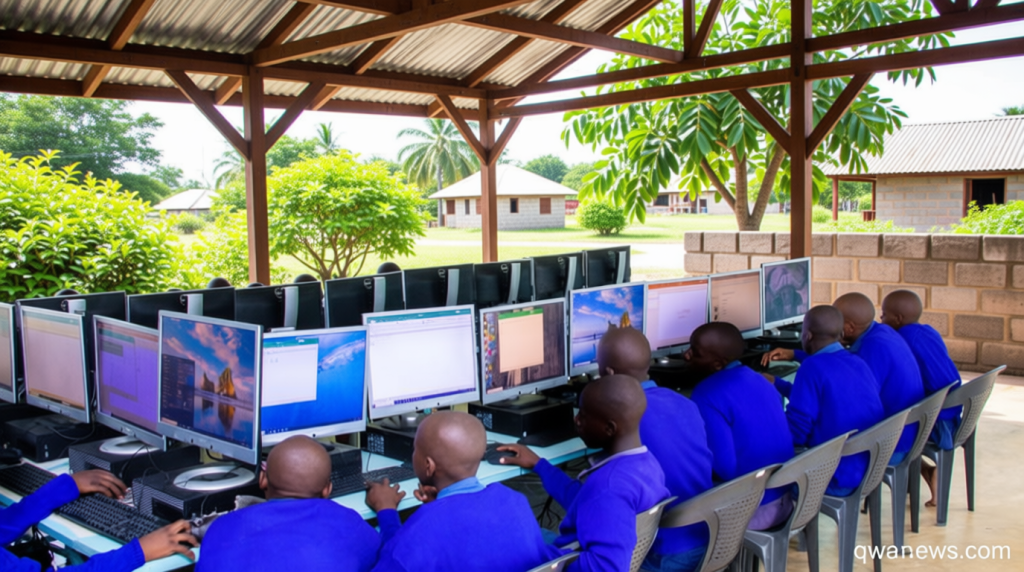
Coding Classes Are Rewriting Futures in a Kenyan Youth Prison
A Personal Connection to the Cause
Qwenews.com – Kenyan tech entrepreneur Paul Akwabi’s journey to a juvenile detention center near Mombasa was driven by a familiar sense of recognition. Growing up in Nairobi’s impoverished Kibera neighborhood, one of the globe’s largest slums, he once delivered illicit goods for older peers. Reflecting on his past, Akwabi recalled, “I thought, ‘This could have been me.’” His early fascination with electronics, nurtured through self-study and repairing radios, eventually led to a career in technology. After completing secondary school, he worked as a street vendor while studying Computer Science at the Technical University of Mombasa. For Akwabi, technology evolved from a hobby into a tool for personal and societal transformation.
Bringing Tech Education to the Prison Walls
In 2024, Akwabi’s organization, TechKidz Africa, partnered with Close the Gap Kenya—a nonprofit that repurposes IT equipment—to establish a computer lab within Shimo La Tewa Borstal Institution and Boys Education Centre. The collaboration launched a three-month digital literacy program tailored to young offenders aged 4 to 19. Unlike traditional school settings, the initiative targets incarcerated youth, aiming to equip them with ICT skills that enhance employability and digital safety. Among the initial 25 students enrolled, 21 had never interacted with computers before.
Transforming Skills and Mindsets
The course curriculum progresses from foundational concepts to advanced applications. Learners begin with digital ethics, hardware maintenance, and email basics before advancing to software tools like Microsoft Excel and Word. By the final stages, they explore coding, web design, and robotics. A 19-year-old from Nyeri County shared, “At first, it was difficult to operate the computer,” highlighting the program’s role in bridging knowledge gaps. Another participant from Meru County noted, “I was able to use a computer for the first time and enjoyed typing activities,” expressing hope to leverage graphic design skills for promoting his plumbing business post-release.
Broader Implications for Kenya’s Tech Ecosystem
Kenya’s tech sector is expanding rapidly, yet disparities persist in access to technology and digital skills. A 2024 government survey revealed that over 50% of Kenyans use mobile phones, but only 11.6% own computers. The Center for International Governance Innovation emphasized that urban areas outpace rural and marginalized communities in digital literacy. Jostinah Wawasi Mwang’ombe, senior superintendent at Shimo La Tewa Institution, noted that the prison system disproportionately houses youth from low-income rural backgrounds, many with limited formal education. “We had to start from way, way lower—just understanding even what computers are and their purpose before we started teaching them how to use them,” Akwabi remarked.
Rehabilitation Through Education
Shimo La Tewa Borstal Institution focuses on rehabilitating boys aged 15 to 18 who have committed serious offenses. Inmates are required to pursue formal education, vocational training, or agricultural programs during their three-year sentences. A probationary phase allows them to reintegrate into communities for the final two years. Mwang’ombe highlighted the importance of teaching “digital hygiene” to foster secure tech usage and positive habits. By combining vocational expertise with modern digital skills, the program seeks to empower learners for a brighter future beyond prison walls.