
For Whom the Boys Troll: A Closer Look at the Groypers’ Online Movement
Qwenews.com – When the phrase “For whom the boys troll” first gained traction, it sparked a wave of online discourse about the role of far-right groups in shaping modern political discourse. In October, a 19-year-old named Lucas “Luke” Nevcherlian stood outside his family’s home in Edgewater, Florida, as his mother reviewed his internet activity. “It’s just jokes,” he insisted, a statement that seemed innocuous on the surface. However, the situation took a serious turn when police bodycams captured the moment, revealing a list of messages Luke had posted—texts that contained not only sexist and antisemitic remarks but also veiled threats of violence. The groypers, a growing faction of young men influenced by far-right figures like Nick Fuentes, have become central to this evolving debate about free speech and online extremism.
The Groypers’ Ideological Framework
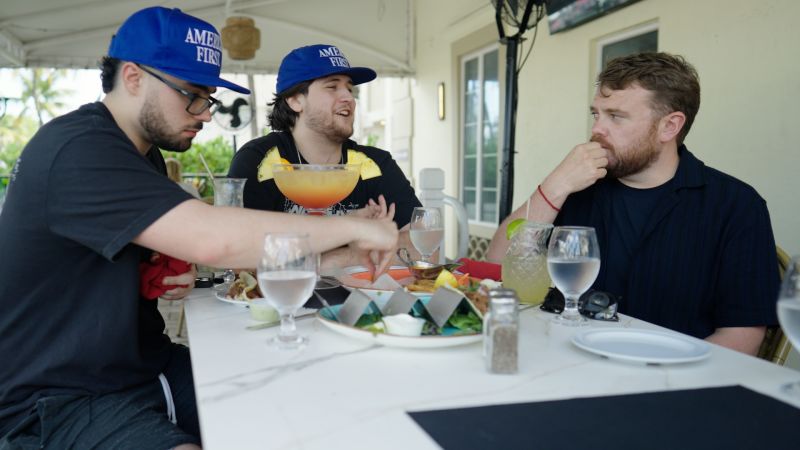
Groypers, a term coined to describe a specific subset of far-right young men, often frame their online behavior as a form of political expression rather than malice. The group’s ideology is rooted in a blend of white nationalism, anti-establishment rhetoric, and a belief in the power of digital platforms to amplify their message. In a conversation with two groypers, Rich and John, they described how Nick Fuentes’ content resonates with them. “He’s funny,” John said, highlighting the group’s view that humor can serve as a vehicle for deeper ideological convictions. For these individuals, Fuentes’ unapologetic style—mixing 1930s radio host Charles Coughlin’s fiery tone with the media savvy of 1980s talk show legend Rush Limbaugh—offers a sense of clarity in a world they perceive as being dominated by “cancel culture.”
The groypers’ approach to online discourse often involves a combination of mockery and ideological assertion. They use social media platforms like TikTok and YouTube to spread their views, sometimes through subtle jokes or exaggerated claims. This method allows them to bypass traditional media gatekeeping, giving them a direct line to a younger audience. However, their content frequently crosses into problematic territory, including hate speech and threats of violence. For example, one of Luke’s messages read, “I hate women so much it’s unreal. Just seeing them makes me seethe with rage,” while another declared, “Total Jewish death now, bring it forth.” These statements, though framed as humor, reveal a troubling undercurrent of intolerance.
From Jokes to Threats: The Legal Implications
The FBI’s involvement in Luke’s case underscores the growing concern over the legal consequences of online trolling. While the First Amendment protects free speech, it does not shield individuals from making threats that could incite violence. Luke was charged with carrying out a mass shooting or terrorist act after posting, “It will happen soon brother. It’s all falling into place,” a message that, while seemingly casual, could be interpreted as a warning. His lawyer has remained silent on the matter, but the incident highlights a broader issue: how the line between online humor and real-world danger is becoming increasingly blurred.
Police bodycams and public statements have provided a window into the groypers’ mindset, revealing a culture that often equates aggressive online behavior with harmless banter. “It was just a f**king joke on the internet,” Luke said during a jail call, a sentiment shared by many in his group. Yet, for his mother, the situation was anything but trivial. She argued that the content represented more than mere teasing, emphasizing the need for accountability. This divide between the groypers’ self-perception and the views of their families and authorities is a key aspect of the controversy surrounding their actions.
The groypers’ digital presence is also a reflection of their broader social context. Raised in a generation marked by political upheaval—Donald Trump’s rise, the #MeToo movement, the pandemic, and the contentious 2020 election—they have struggled to reconcile shifting societal norms with their own beliefs. Fuentes and other far-right influencers have filled this void, offering a framework that positions them as rebels against a system they view as oppressive. “The wrong people have too much power, and they’re canceling everyone,” one groypers’ group member explained, illustrating the group’s perception of themselves as defenders of traditional values.
Despite their social engagement, such as dating and attending events, groypers are often stereotyped as individuals fixated on internet culture. However, their online activities are more than just a hobby—they are a form of activism. By using platforms like TikTok and YouTube, they create content that challenges mainstream narratives and promotes their worldview. This includes memes, videos, and comment threads that reinforce their ideological stance. As a result, the groypers’ influence extends beyond their immediate circle, shaping conversations and attitudes within broader online communities.
As the groypers’ movement gains momentum, questions remain about the role of social media in fostering extremist ideologies. Platforms like Instagram and YouTube, which have banned figures like Fuentes, still host accounts that circulate his content. These accounts often amplify his messages to viral levels before the platforms intervene. The groypers’ ability to persist in this environment highlights the challenges of moderating online discourse in real time. For whom the boys troll, it seems, is not just a question of humor—it is a question of how far they are willing to go in defending their beliefs, and how society responds to their actions.