
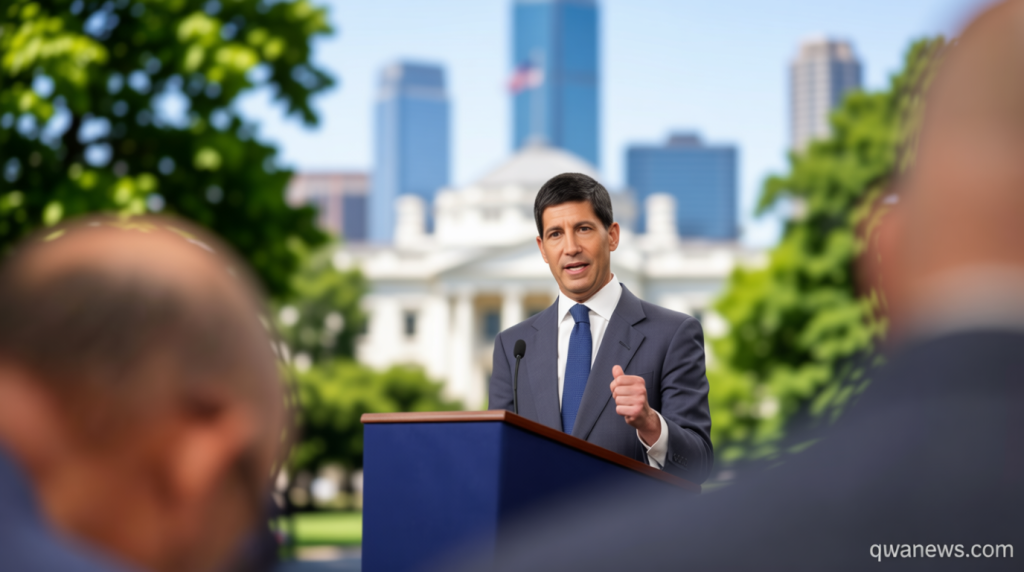
Markets Challenge Warsh on Inflation Commitment
Qwenews.com – Long-term bond yields climbed sharply during Federal Reserve Chairman Kevin Warsh’s Wednesday address, as investors signaled skepticism about the central bank’s resolve to combat rising prices. The 30-year US Treasury yield leaped from approximately 5.1% to 5.21%, marking its peak since 2007. Meanwhile, the 10-year yield advanced from slightly above 4.61% to nearly 4.69%, approaching its strongest level in more than twelve months.
Warsh emphasized the Fed’s unwavering stance on price stability during his post-meeting remarks.
Let me reiterate: There is no soft inflation target. There is no soft implicit target, not on this committee’s watch. There’s only a target, and it’s 2%.
The bond market’s response was clear: demonstrate your commitment through action. Long-term yields typically reflect expectations regarding both economic expansion and inflation trajectories. The pronounced increase suggests traders worry the central bank may fall short in addressing persistent price pressures.
Market Participants Question Fed Action
While long-term yields surged, the short-term two-year Treasury yield remained relatively stable, tracking expectations for near-term policy decisions. Investors have increasingly positioned themselves for potential rate increases throughout 2026 to counter inflationary forces.
Steve Sosnick, chief strategist at Interactive Brokers, captured the market’s sentiment following Warsh’s statements.
Really the market’s issue is, are you doing something? It’s one thing to talk about fighting inflation. It’s another thing entirely to do something about it. And again, it’s not clear what he’s doing about it.
When bond prices decline, yields rise accordingly. Traders sold off long-term holdings, seeking greater compensation for the risk that inflation could erode their investment returns.
Geopolitical Tensions Complicate Policy Outlook
The Fed maintained interest rates unchanged for the fifth consecutive session on Wednesday. The US-Israeli conflict with Iran has generated significant oil market disruptions over recent months, pushing inflation higher. Renewed hostilities this month have reignited concerns about sustained elevated energy costs.
Supply-side challenges present particular difficulties for monetary policymakers. While traditional tools primarily target demand, issues such as constrained global oil supplies or semiconductor shortages stemming from artificial intelligence expansion prove more resistant to interest rate adjustments.
Warsh has established task forces examining various aspects of the central bank’s strategy, including its inflation framework. Despite his vocal determination to control price growth, market patience continues to wane.
Volatility Sweeps Financial Markets
Warsh indicated a preference for reduced central bank communication, suggesting markets should respond to fundamentals rather than official guidance.
I was comforted that markets in the inter-meeting period weren’t reacting to us. They weren’t reacting to (the Fed’s quarterly dot plot) or to speeches. They appeared more than ever to be reacting to real-time events, so they’re gauging themselves how restrictive the Treasury curve should be, and that I think has been a useful development.
Equities, bonds, and the US dollar all experienced declines as Warsh’s comments triggered renewed uncertainty. The Dow Jones Industrial Average dropped more than 1,100 points, representing a 2.19% decline and marking its poorest performance in over twelve months. The dollar index fell by more than 0.5% as investors recalibrated expectations regarding potential rate increases.
According to CME FedWatch, a real-time forecasting platform, markets now assign a 57% probability to a September rate hike, down from nearly 70% earlier in the day but consistent with previous assessments.
Bond yields have advanced throughout the month as Washington-Tehran tensions escalated and energy prices recovered. Warsh acknowledged the yield increases on Wednesday while expressing approval of market-driven adjustments.
Higher borrowing costs continue to ripple through the economy. The 10-year Treasury yield affects mortgage rates and other credit expenses nationwide. The 30-year fixed mortgage rate reached 6.58% last week, its strongest reading in nearly twelve months.
Three Fed officials voted for a rate increase on Wednesday, revealing internal divisions within the central bank. Sosnick noted that market testing of new leadership represents normal behavior.
It’s not uncommon for markets to test new Fed chairs.