
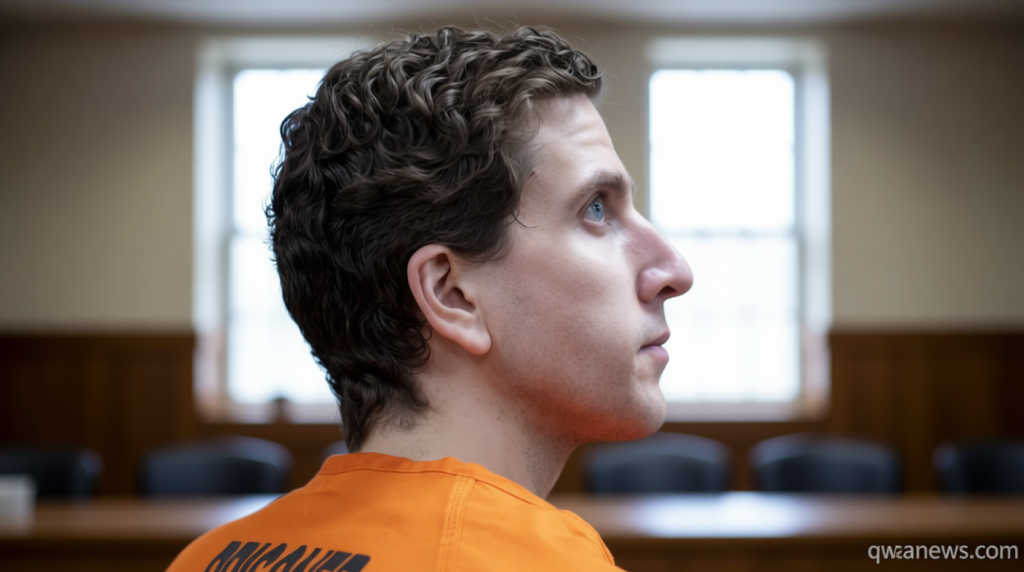
Kohberger Seeks to Undo Guilty Plea Amid Claims of False Promises
Qwenews.com – More than twelve months have passed since Bryan Kohberger delivered a remarkable courtroom declaration. During a hearing last July, Judge Steven Hippler posed a direct question to the defendant: “Are you pleading guilty because you are guilty?” Kohberger’s response was immediate and clear—”Yes.” This admission surprised many observers, particularly given that his legal team had dedicated years to mounting a vigorous defense against the accusations.
Now, Kohberger is attempting to reverse that decision. The defendant entered a guilty plea for the murders of four University of Idaho students who were killed in their Moscow, Idaho, residence during the early morning hours of November 13, 2022. The victims identified in the case include Ethan Chapin, age 20; Kaylee Goncalves, 21; Xana Kernodle, 20; and Madison Mogen, 21.
Legal Grounds for Withdrawal
Kohberger’s plea agreement, finalized just one month prior to the commencement of jury selection, successfully allowed him to sidestep Idaho’s death penalty. The court ultimately handed down a life sentence without the possibility of parole. According to a court filing submitted on Monday, the defendant asserts that his legal counsel provided inadequate representation and that his guilty plea was neither voluntary nor entered with full understanding.
He contends that his attorneys induced his plea through broken commitments and threats. Specifically, Kohberger alleges that his lawyers failed to present certain evidence during plea negotiations that could have demonstrated his innocence. Furthermore, he claims his attorneys assured him that his plea did not require truthfulness, even though he maintained a “vehement denial of actual guilt.”
My actual innocence is my truth, and the plea, hinged on by false promises and blatant disinformation, MUST be withdrawn.
The defendant also maintains that his legal team guaranteed specific privileges, including immediate contact visits, freedom of movement, and employment opportunities. Additionally, Kohberger alleges that his attorneys told him “elaborate lies” regarding what living conditions would entail under both a life sentence and death row confinement.
Expert Analysis on His Chances
Legal professionals have weighed in on Kohberger’s prospects for successfully overturning his plea. As part of the plea agreement executed last year, the defendant completed a questionnaire designed to verify that he was pleading guilty voluntarily. Several questions on the form, to which he responded affirmatively, asked whether he was entering his plea freely, admitting to all crime elements, and understanding that he might not be able to withdraw his plea later.
The nine-page document covered his constitutional rights, cognitive capacity to enter a plea, the terms of the agreement, and his right to appeal. Kohberger signed this survey before appearing before Judge Hippler.
Samuel Newton, an associate professor of law at the University of Idaho College of Law, explained to CNN that waiving the right to appeal generally prevents appellate review of a plea. However, Kohberger retains certain pathways forward. He can argue either that his attorneys were ineffective or that his plea was coerced in some manner, with such claims typically needing to be filed within one year, according to CNN legal analyst Joey Jackson.
“The courts have separate post-conviction proceedings for ‘exactly the kind of claims … that a standard appeal typically can’t reach,'” Newton noted. “So the (appeal) waiver was real and significant, but it’s also precisely why he’s using the post-conviction route instead of an appeal.”
The High Bar of Manifest Injustice
Both attorneys acknowledged that overturning a plea is challenging. Newton pointed out that Idaho Rule of Criminal Procedure 33(c) applies a more lenient “fair and just reason” standard before sentencing, but after a sentence is imposed, withdrawal requires demonstrating a “manifest injustice.”
Meeting this high threshold means Kohberger must prove he did not enter his plea voluntarily, was not properly informed of consequences, or failed to provide informed consent under various other statutory standards.
The initial step involves filing for post-conviction relief, which Kohberger completed on Monday. Newton described this as a civil proceeding, also known as a collateral proceeding, where the burden falls on Kohberger to substantiate his claims. To prevail under a “false promises/disinformation” theory, he would need to demonstrate that his plea became involuntary or unknowing due to material misrepresentation from his legal team.