
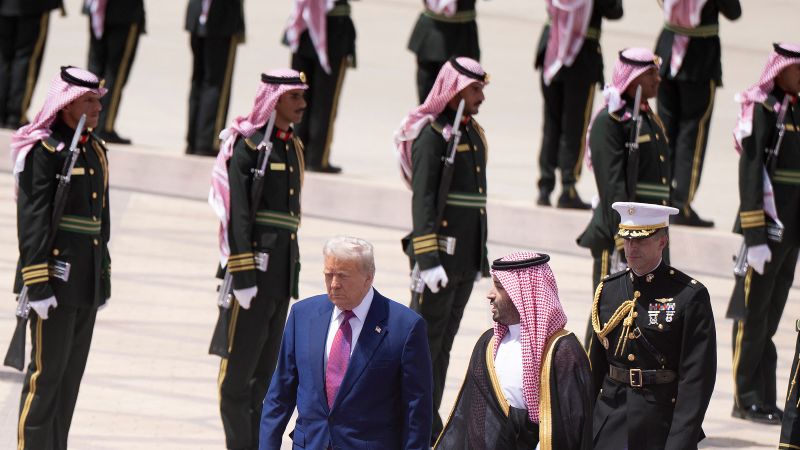
Saudi Arabia’s Nuclear Deal Stalls as Trump Administration Hesitates
Qwenews.com – The nuclear deal that would permit Saudi Arabia to enrich uranium has been delayed, with the Trump administration holding off on final approval. Sources reveal that the United States and Saudi Arabia have reached a tentative agreement to allow the kingdom to develop its own nuclear enrichment capabilities, sidestepping international oversight mechanisms meant to prevent nuclear weapons proliferation. This agreement, outlined in documents reviewed by CNN, remains in limbo awaiting President Donald Trump’s endorsement. Although initial talks between the US and Saudi officials concluded in October 2025, the draft accord has not yet been finalized, with some insiders suggesting the ongoing conflict with Iran has contributed to the holdup.
Reasons Behind the Administrative Hesitation
Key figures within the Trump administration have acknowledged that the war with Iran—fought partly to counter Tehran’s nuclear ambitions—has influenced the timing of the deal. One official stated that lawmakers on Capitol Hill are also considering the possibility that the administration is delaying the agreement to avoid a potential resolution that could unify opposition across party lines. Such a move might block the deal from proceeding, creating uncertainty about its future implementation.
Analysts warn that the nuclear deal that would permit Saudi Arabia to enrich uranium could mark a significant shift in the country’s nuclear strategy. The Crown Prince, Mohammed bin Salman, has previously expressed his intent to pursue nuclear arms if Iran achieves them, raising concerns about the balance between cooperation and security. The deal, if finalized, would enable Saudi Arabia to produce both enriched uranium and plutonium, key components for nuclear weapons, while still allowing for peaceful nuclear energy development.
Details of the Agreement and Safeguard Mechanisms
The nuclear deal that would permit uranium enrichment includes a civil nuclear cooperation pact and a bilateral safeguards agreement. While these frameworks establish the basis for technology and material transfers, they do not yet define whether Saudi Arabia will be granted access to sensitive nuclear components. Additional scrutiny is required to ensure the agreement meets international standards for nonproliferation.
International safeguards typically involve commitments with the International Atomic Energy Agency (IAEA), the UN’s nuclear watchdog. These protocols verify compliance with the Nuclear Non-Proliferation Treaty (NPT) by tracking technology, conducting inspections, and analyzing data. However, the current deal does not mandate Saudi Arabia to adopt the Additional Protocol, a more stringent IAEA standard. Instead, the safeguards will be managed through a US-Saudi bilateral arrangement, which has raised questions about its effectiveness compared to multilateral frameworks.
Implications for Regional Security
Without clear limitations, experts caution that the nuclear deal that would permit Saudi Arabia to enrich uranium could provide the kingdom with the means to produce weapons-grade material. The administration’s waiver report to Congress highlighted that the bilateral agreement would include enhanced measures for key areas like enrichment and reprocessing, but it stopped short of detailing how these would prevent proliferation. The IAEA’s role in monitoring the program is acknowledged, though specifics of its involvement remain under discussion.
“This nuclear deal that would permit Saudi Arabia to enrich uranium represents a major step forward in our partnership,” stated Energy Secretary Chris Wright in an October 2025 statement. “With bilateral safeguard agreements, we aim to support Saudi Arabia’s energy needs while maintaining a firm commitment to nonproliferation.”
The deal’s approval could reshape the regional nuclear landscape, as Saudi Arabia and Iran have been locked in a rivalry over nuclear capabilities for years. If the agreement is finalized, it would allow the kingdom to develop a self-sufficient nuclear program, potentially reducing its reliance on foreign enrichment technology. However, the absence of a binding international protocol raises concerns about accountability, especially given the historical tensions between the US and Iran. The Saudi Arabian Embassy in Washington, DC, has not yet provided additional comments on the matter, leaving the deal’s future in question.