
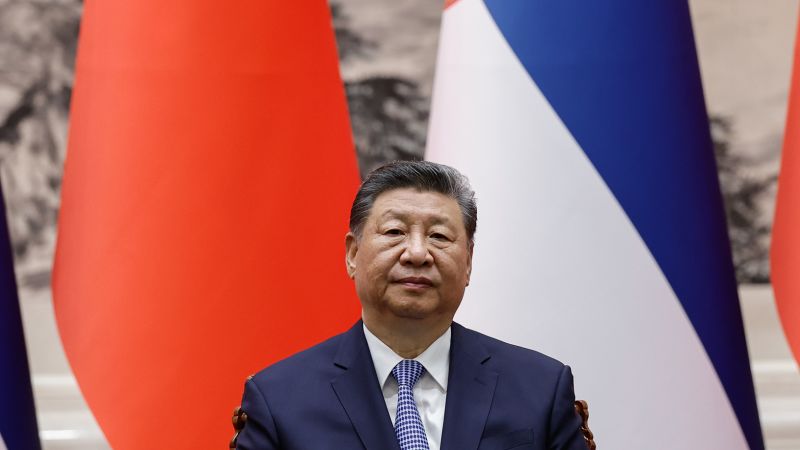
Trump Accuses China of Hacking US Election Data Amid State Visit Plans
Qwenews.com – President Donald Trump recently accused China of taking US election data, a claim that has intensified scrutiny on the nation’s cybersecurity practices. While the allegations were made during a televised speech, they appear to be part of a broader narrative to highlight tensions between the United States and its largest trading partner. Despite this, Trump’s administration continues to proceed with plans for a high-profile state visit by Chinese President Xi Jinping, scheduled for late September. The juxtaposition of these events has raised questions about the balance between political posturing and diplomatic engagement.
Accusations and Diplomatic Reactions
During a prime-time address, Trump reiterated his belief that China orchestrated a significant data breach targeting US election systems. “The Chinese government wanted the US president to lose,” he stated, framing the incident as a strategic move to retaliate against his policies, including tariffs and military investments. However, the allegations lack concrete evidence, prompting sharp criticism from Beijing. Chinese officials swiftly dismissed the claims, emphasizing their commitment to non-interference in American electoral processes.
“China adheres to the principle of non-interference in other countries’ internal affairs. We have no interest in interfering in the US elections and have never done so,” said Lin Jian, a spokesperson for the Chinese foreign ministry, during a press briefing. This response underscored the Chinese government’s stance that the accusations were politically motivated, aimed at undermining trust between the two nations.
The White House confirmed that preparations for Xi’s state visit are moving forward as planned, with no indication of halting the itinerary due to the recent allegations. This decision has been viewed by some analysts as a calculated move to prioritize economic and strategic interests over political disputes. While the election data breach remains a point of contention, the administration appears to be focusing on strengthening ties with China, a critical partner in global trade and technology.
Historical Context and Upcoming Meetings
Xi Jinping’s visit to Washington marks the second major diplomatic engagement between the two leaders in less than a year. The previous meeting in Beijing, held in May, centered on trade negotiations and geopolitical cooperation. Now, with the September visit, the agenda is expected to include discussions on cybersecurity, climate change, and regional security. Analysts note that such meetings are typically used to align interests and address mutual concerns, yet Trump’s recent accusations have cast a shadow over these talks.
The timing of the state visit has drawn attention to the potential conflict between Trump’s political rhetoric and his administration’s diplomatic approach. While he has consistently criticized China’s role in the election data breach, the focus on this issue has not translated into concrete actions against Beijing. This inconsistency has led to speculation that Trump may be using the allegations as a tool to rally support ahead of the upcoming midterm elections, rather than as a serious diplomatic issue.
Strategic Alliances and Economic Ties
Despite the election-related controversy, Trump has emphasized the importance of maintaining a strong alliance with China. At a recent World Cup event in New York, he suggested that the US and China could work together to enhance bilateral cooperation. “We do China, United States. So you have a short flight in between games. The players would love that,” he remarked, referencing FIFA president Gianni Infantino. This remark highlighted Trump’s willingness to focus on shared goals, even as he revisited past disputes.
Trump’s administration has also continued to highlight economic partnerships with China, including trade agreements and joint ventures in technology and energy. While the election data breach remains a point of contention, these economic ties suggest a pragmatic approach to US-China relations. However, the allegations have sparked debates about the extent to which these partnerships are safeguarded against potential cyber threats. The White House’s decision to proceed with the state visit indicates a commitment to maintaining this balance, even in the face of political disagreements.
Public and Political Reactions
The accusations have elicited mixed reactions from the American public and political figures. Some analysts argue that the claims, while serious, are part of a larger campaign to frame China as a key player in the election’s outcome. Others contend that the focus on China has overshadowed other potential issues, such as domestic cybersecurity vulnerabilities. The Republican National Committee, for instance, has echoed Trump’s concerns, while Democratic lawmakers have called for a more thorough investigation into the data breach’s origins.
Meanwhile, the Chinese government has maintained its position that the allegations are unfounded. Lin Jian’s statement at the press briefing was followed by a renewed emphasis on China’s cybersecurity initiatives, including partnerships with private firms and investment in domestic data protection infrastructure. This response suggests that Beijing is prepared to defend its actions while continuing to engage with the US on other fronts. As the state visit approaches, the focus will likely shift from accusations to tangible collaboration, though the election issue may linger in the background.
Broader Implications for US-China Relations
The juxtaposition of Trump’s election-related accusations with the state visit plans reveals a complex dynamic in US-China relations. While the administration is keen to showcase diplomatic progress, the ongoing debates about data security reflect deeper concerns about national interests. The data breach, though significant, may serve as a strategic tool to negotiate terms in other areas of cooperation. Analysts suggest that the visit could include discussions on technology standards, intellectual property rights, and the role of Chinese tech firms in US markets.
As the September visit nears, the challenge for both nations will be to navigate the political tensions while advancing their shared objectives. Trump’s allegations, while impactful, have not disrupted the momentum of the state visit. This underscores the administration’s preference for diplomatic engagement over confrontation, even when addressing sensitive issues like election data. The outcome of these talks could shape the trajectory of US-China relations for months to come, balancing accountability with collaboration.