
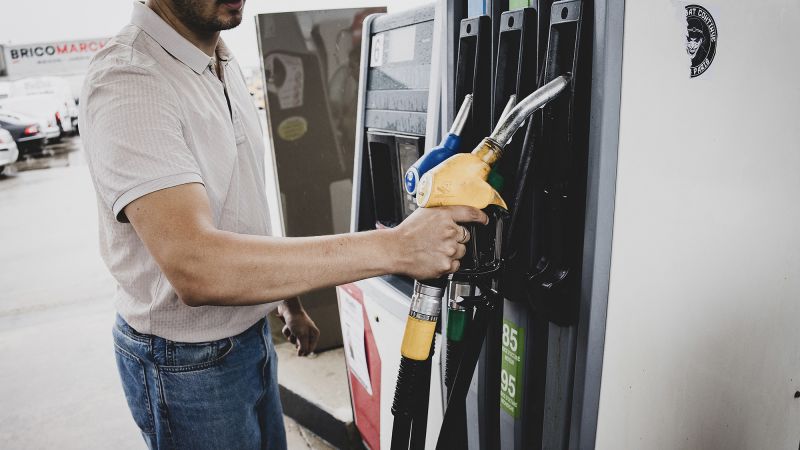
The world no longer has an oil problem. It has a gasoline problem
Qwenews.com – As the Iran conflict enters its third month, global energy dynamics have shifted from concerns over crude oil availability to a pressing shortage of refined fuels like gasoline. Despite the release of hundreds of millions of barrels of oil from the Persian Gulf, prices have climbed above $80 per barrel, yet the real crisis lies in the world’s ability to convert this raw material into usable products.
Refining Constraints and Regional Disruptions
While oil supply chains have stabilized somewhat, the refining infrastructure remains under strain. The war disrupted Middle Eastern operations, and Iran’s strikes on refineries exacerbated the issue. Meanwhile, Ukraine’s attacks on Russian energy sites have further complicated the picture. Extreme heat waves have also hindered refinery efficiency, which relies on controlled cooling processes.
“The question is no longer whether crude barrels will return, but how quickly the global refining system can process them,” said Natasha Kaneva, head of global commodities research at JPMorgan.
According to Kaneva, global refining capacity has dropped by 8.4 million barrels per day since the conflict began, resulting in a 10% decline in fuel production. The Strait of Hormuz, once a critical artery for oil flow, still faces volatility due to renewed strikes, U.S. naval blockades, and geopolitical tensions. While Middle Eastern output has risen by 4 million barrels per day since May, the region’s refineries remain at risk of prolonged downtime.
China’s Strategic Shift and Southeast Asia’s Crisis
China’s response to the crisis has further strained global gasoline markets. The country reduced refinery output by 3 million barrels per day, redirecting resources to coal-fired power plants and electric vehicle production. This move drained emergency oil reserves and worsened fuel shortages in Southeast Asia, where demand for refined products has surged.
“The fundamental oil-market narrative remains unchanged: There is sufficient oil available globally as long as it can be transported to where it is needed,” said Rob Thummel, a senior portfolio manager with Tortoise Capital.
Amid these challenges, the U.S. has become a critical supplier of gasoline and diesel, filling the gap left by Middle Eastern disruptions. However, this has limited domestic production, contributing to stagnant gas prices despite Trump’s promises. The U.S. refining sector, already weakened by closures in California and outdated facilities, struggles to meet both export and local demand.
Long-Term Challenges in Refining Infrastructure
For years, the U.S. has faced refining capacity issues, with four California refineries shut down due to environmental policies and rising costs. The last major expansion was Marathon’s Garyville facility in Louisiana, completed in 1977. As Russia’s influence grows, the timing for global recovery could be even more precarious, with refining systems worldwide racing to adapt to a new era of energy challenges.