
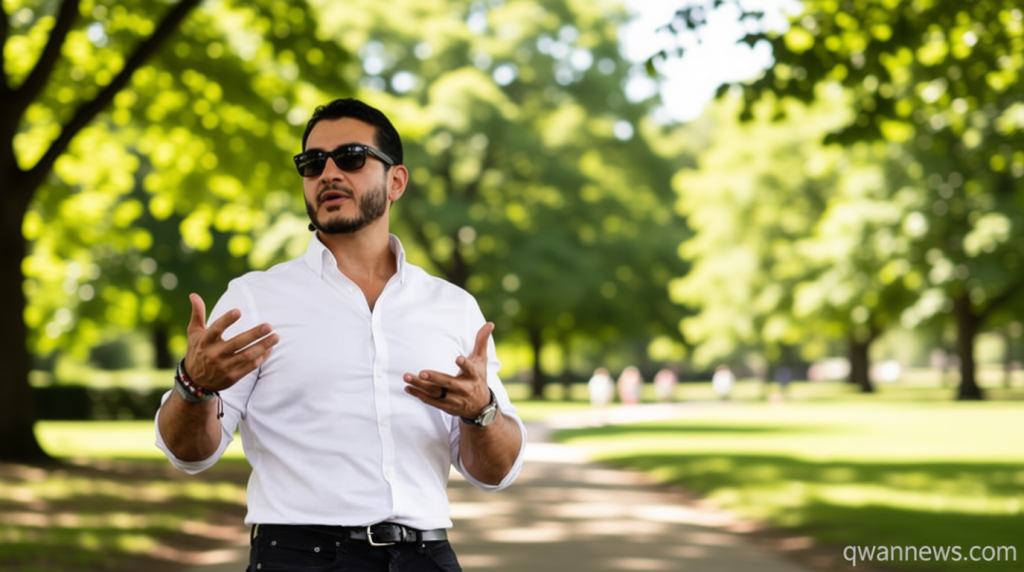
Michigan Democrats angry at their party: Abdul El-Sayed’s challenge
Qwenews.com – Michigan Democrats are angry at their party’s shifting priorities, and Abdul El-Sayed is positioning himself as the voice of discontent. The former public health official and progressive leader is running against fellow Democrat Haley Stevens in the August 4 Senate primary, a race seen as critical to the party’s midterms strategy. While some fear El-Sayed’s radical stance could split the vote, he argues that the Democratic establishment is out of touch with the concerns of everyday Michiganders. His campaign highlights a growing divide within the party, as progressive ideals clash with the need for pragmatic policies to win over a diverse electorate.
The Primary as a Crucible for Democratic Ideals
The upcoming Democratic Senate primary in Michigan is not just a contest for a single seat—it’s a referendum on the party’s direction. El-Sayed, backed by high-profile figures like Bernie Sanders and Alexandria Ocasio-Cortez, represents a more left-leaning agenda, while Stevens, a moderate with a track record of winning in traditionally Republican-leaning districts, appeals to centrist voters. The race has intensified as both candidates vie to secure the nomination, with implications for the broader national election in November.
El-Sayed has consistently framed his candidacy as a response to the Democratic Party’s perceived failures. “Michigan Democrats are angry at their party because it’s not addressing the real issues,” he told CNN during a rally in Grand Rapids. “People are struggling with healthcare costs, job losses, and the future of automation. These are the problems that need immediate action, not just ideological debates.” His message resonates with voters who feel the party has prioritized partisan identity over tangible solutions, particularly in an era of economic uncertainty.
“Most people don’t care about where they fall on the left-right scale. They’re worried about whether they can afford their prescriptions, if their kids will have stable jobs, and if the government can keep up with the changes in technology. That’s what the voters are looking for,”
El-Sayed added, emphasizing the need for a candidate who can connect with the working class and middle-income families. This stance has drawn both support and criticism, with some party leaders worried about alienating key constituencies.
Strategies in Conflict: A Tale of Two Candidates
Haley Stevens, on the other hand, has positioned herself as a unifying figure, arguing that her approach is more aligned with the party’s traditional strengths. She has focused on healthcare reform that balances affordability with quality, while also highlighting her experience in bipartisan negotiations. “I understand the Michigan voter,” Stevens said during a campaign stop in East Grand Rapids. “They want someone who can win, not just someone who talks about radical change.”
El-Sayed’s campaign has taken a more confrontational tone, accusing Stevens of being too accommodating to corporate interests. In a recent debate, he criticized her for supporting policies that he claims favor the status quo. “If you want your politics dictated by AIPAC or Chuck Schumer, then I’m not your guy,” he said, underscoring his belief that the Democratic establishment is too influenced by external donors and party leaders. This contrast in strategies has intensified the competition, with both candidates appealing to different factions within the party.
As the August 4 primary approaches, the stakes have never been higher for Michigan Democrats. The outcome will determine whether the party continues to emphasize progressive policies or adopts a more centrist platform to secure victory. El-Sayed’s challenge to the Democratic establishment has sparked a wider conversation about the balance between ideological consistency and electoral viability. Whether he can unite the party or deepen its divisions remains to be seen.
With the November general election just months away, the Democratic Party faces a delicate balancing act. El-Sayed’s emphasis on issues like healthcare, immigration, and U.S. aid for Israel has drawn scrutiny from both allies and opponents. However, his ability to articulate the frustrations of voters—many of whom feel ignored by the party’s leadership—has given him a strong narrative. As the primary heats up, the question is no longer just about who will represent Michigan in November, but whether the party can reconcile its internal tensions and present a united front.