
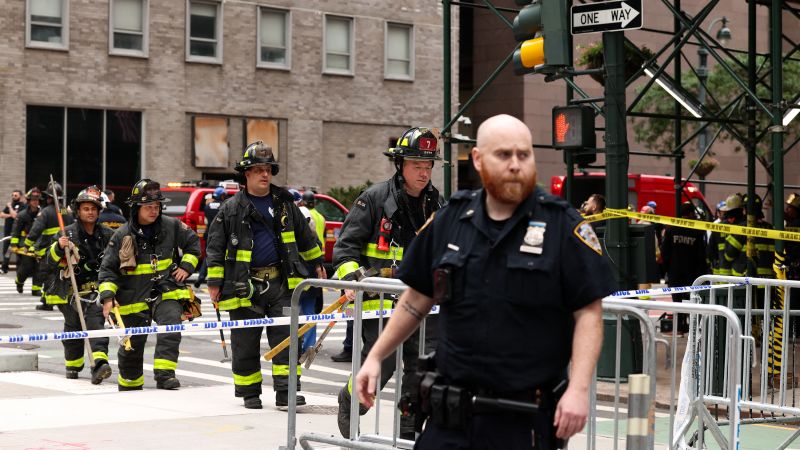
Manhattan High-Rise Faces Stability Concerns Following Structural Failure
Qwenews.com – Manhattan high rise unstable after a critical structural failure has shaken the city’s construction sector, prompting officials to declare the situation a “major incident.” The high-rise, currently under development in Midtown Manhattan, has been evacuated following the buckling of its central columns, a phenomenon that has raised alarms among city leaders and residents alike. Located at the former Pfizer headquarters on East 42nd Street, the building is now being converted into residential apartments, a project that has been in the works for over two years. The instability has led to immediate safety measures, with crews working to secure the structure and assess potential risks.
Emergency Response and Structural Assessments
City officials have confirmed that the high-rise remains a focal point of concern, with structural engineers and fire safety teams collaborating to evaluate the damage. The buckling of columns, a sign of compromised load-bearing capacity, has been identified as the primary issue. A team of six specialists is currently inspecting the site, using advanced equipment to monitor any further shifts in the building’s framework. While the risk of a full collapse appears low, the city’s fire chief has emphasized that localized sections could still suffer severe damage if stabilization efforts are not swift.
“This is the most extreme case he’s ever seen,” said an FDNY member, describing the buckled columns as “unprecedented in scale and speed.” The damage has been localized to the core of the building, which houses critical infrastructure like elevator systems and utility lines. Engineers are prioritizing the installation of temporary shoring to prevent further destabilization, with reinforcement work expected to continue through Tuesday evening and into the following days.
Residents and nearby businesses have been urged to stay alert, with some already reporting concerns about the building’s safety. The city is considering temporary measures such as restricting access to certain floors and setting up monitoring stations to track any changes in structural integrity. Officials have also announced plans to conduct a thorough investigation to determine the cause of the buckling, which could have implications for future construction projects in Manhattan.
Impact on Urban Development and Workforce
The incident has cast a shadow over Manhattan’s ambitious residential expansion plans, which have seen a record number of housing units added since 1965. With the city aiming to address a growing housing shortage, this development delay could affect timelines for thousands of potential residents. The buckling has also highlighted challenges within the construction workforce, which has been strained by rising labor costs and reduced immigration policies.
Jason Polanco, managing director of Manhattan Realty Group, shared that the evacuation was unexpected, disrupting operations for his team and others in the building. “We anticipated a short setback, but the prolonged closure has forced us to rethink our strategies,” he said. Businesses in the building, including a local dental practice and a wellness studio, face not only operational delays but also financial strain due to lost revenue. The exact duration of the disruption remains uncertain, with some experts estimating it could take weeks to fully resolve.
Leila Bozorg, deputy mayor for housing and planning, noted that the team entering the building has observed no new structural movement since the initial collapse. They accessed the 17th floor via elevator and identified bent columns and sagging floors, which are being analyzed for root causes. The investigation includes reviewing construction materials, load distribution, and potential design flaws, as the city seeks to prevent similar incidents in the future.
Broader Implications for the Construction Industry
The buckling of columns in the Manhattan high-rise underscores the vulnerabilities in a rapidly evolving construction landscape. As demand for housing in Manhattan surges, developers are pushing to meet deadlines, sometimes at the expense of meticulous safety checks. This incident may serve as a cautionary tale for the industry, emphasizing the need for stricter oversight and contingency planning. The cost of delays in such high-profile projects could ripple through the city’s economy, affecting both developers and the workforce.
Industry experts warn that the buckling could be a harbinger of larger issues in the sector. With inflation-driven costs and higher interest rates, developers are under pressure to complete projects efficiently. This has led to tighter timelines and, in some cases, overlooked safety protocols. The high-rise’s instability highlights the importance of maintaining balance between speed and precision in construction, particularly in densely populated areas where structural failures can have far-reaching consequences.
Local contractors are now scrambling to reinforce the building while also managing their own financial constraints. The estimated cost of stabilization efforts could reach millions, adding to the city’s infrastructure budget. Meanwhile, residents in the area have expressed mixed reactions, with some voicing fear for their safety and others urging swift action to minimize disruption. As the investigation continues, the focus remains on restoring stability to the Manhattan high-rise and ensuring it becomes a model of resilience in the face of modern construction challenges.