
Hungarian State TV Halts News Broadcast as Media Overhaul Begins
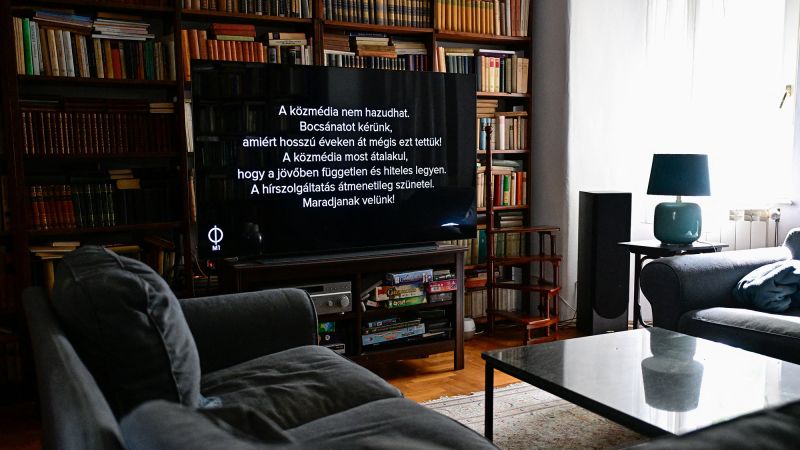
Qwenews.com – In a significant move signaling a shift in public service media direction, Hungarian state television announced on Tuesday that its news broadcast had been temporarily paused. The decision, part of a broader government effort to revamp state media, aims to establish an independent and credible outlet, according to officials. The main M1 channel shared the notice on a black screen, stating:
“Public service media cannot lie. We apologise for doing this for many years nonetheless.”
This action has sparked both curiosity and criticism, as it marks the beginning of a transformative period for Hungary’s media landscape.
Context of the Media Overhaul
The suspension comes amid Prime Minister Peter Magyar’s post-election pledge to modernize state media and curtail what he terms “propaganda” from the previous administration under Viktor Orban. Magyar’s party, following its victory in April, has targeted Orban’s key institutions, including the media, to reshape their operations. Local media outlets reported earlier in the day that some editors at state TV and radio stations had been dismissed, though Reuters could not confirm these claims immediately. This restructuring is part of a larger initiative to align state media with the new government’s priorities, emphasizing transparency and journalistic integrity.
The changes reflect a deliberate strategy to address concerns about media bias that have persisted under Orban’s leadership. Magyar emphasized the importance of balance and objectivity in public broadcasting, stating that the suspension of news programming marked a “historic day” in ending years of media bias. His government has also halted broadcasts at state-run Kossuth Radio, signaling a unified approach to reforming the entire state media network. In his first decree as prime minister, Magyar mandated a thorough review of media financing and operations to align them with his vision of a more transparent service. Analysts, however, note that achieving a truly balanced media landscape will be challenging, given the deep-rooted influence of prior policies.
The Legacy of Orban’s Media Control
Under Orban’s leadership, state media became increasingly aligned with government interests, with new laws tightening control and private outlets either closing or being acquired by pro-government figures. This has contributed to Hungary’s decline in press freedom rankings, dropping from 23rd in 2010 to 74th in 2026 according to Reporters Without Borders. Orban’s administration has defended its media practices, asserting they meet EU standards for freedom and independence. However, critics argue that the suspension of news broadcasts under Magyar’s regime is a direct response to the perceived dominance of Orban’s media agenda.
The decision to suspend news programming has drawn mixed reactions from the public and media observers. While some view it as a necessary step toward reclaiming editorial independence, others fear it could be a new phase of state influence. Social media platforms have seen a surge in discussions about the implications of the suspension, with users debating whether this move signifies genuine reform or a calculated effort to reshape public perception. Meanwhile, international media watchdogs are closely monitoring the development, as it could set a precedent for other nations facing similar challenges in their media systems.
Implications for Public Trust and Media Independence
The suspension of news broadcasts has raised questions about the long-term effects on public trust in state media. For years, audiences have grown skeptical of the news content due to its perceived alignment with political agendas. By halting the broadcast, the government may be attempting to reset the narrative, allowing time for a more impartial approach. However, the effectiveness of this strategy depends on the implementation of the overhaul and the willingness of new editorial teams to uphold standards of objectivity.
Magyar’s media reform plan includes not only the restructuring of existing outlets but also the introduction of new frameworks to ensure accountability and independence. The government has outlined measures such as revising funding mechanisms, establishing oversight committees, and promoting diverse viewpoints within state media. These steps are intended to create a more balanced information environment, though their success will hinge on the specific policies and the ability to resist political interference. As the suspension continues, the media industry and public will be watching closely to see if Hungary’s state TV can truly become a trusted source of news.