
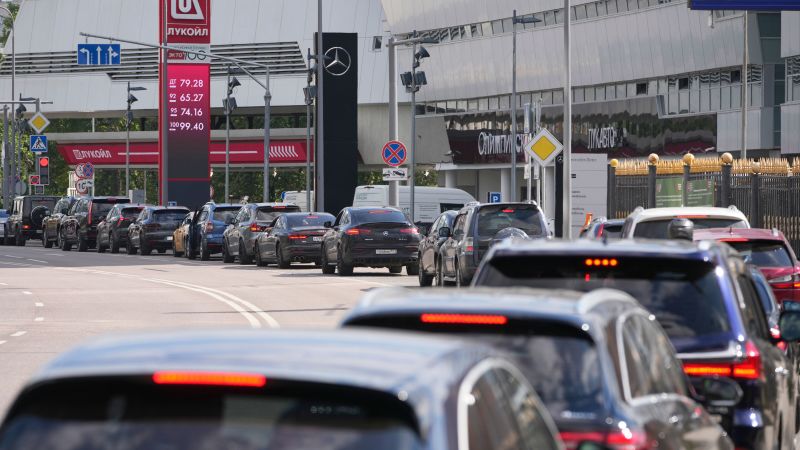
Almost every Russian region hit by fuel crisis, as Ukraine escalates drone attacks
Qwenews.com – A nationwide gasoline shortage has gripped nearly all of Russia’s 83 regions, according to CNN’s analysis. With many gas stations enforcing purchase limits, the crisis has spread across the country’s 11 time zones, intensifying as Ukrainian drone attacks continue to target critical oil infrastructure. The situation first worsened in Crimea, where a state of emergency was declared and fuel sales to civilians were suspended on June 21. Now, over 50 regions have officially reported supply issues, while unofficial reports indicate disruptions in almost every province.
Regional leaders and local media have highlighted the strain on fuel distribution, prompting some areas to implement a “state of heightened alert.” Among them are Irkutsk and the Transbaikal region in eastern Russia, which have taken this step to manage the fallout. Russian President Vladimir Putin acknowledged the shortages during a Sunday state TV interview, stating, “We are currently seeing certain shortages, although they are not critical.” This came as part of a rapid PR campaign aimed at calming public concern.
“The key difference is the scale and persistence of the attacks,” said Sumit Ritolia, lead analyst for refining supply and modeling at Kpler. “In this race between the repairers and the attackers the balance is shifting.”
Experts warn that the current crisis is more severe than previous disruptions. Last August, increased Ukrainian attacks caused regional supply issues, but this time, the damage is deeper. Ritolia estimates Russian gasoline production is now operating at about 20% below domestic demand due to sustained strikes, with refinery operations hitting multi-year lows. Sergey Vakulenko, a former Russian oil industry veteran, added that the frequency and volume of drone attacks have risen sharply, testing the sector’s resilience.
Public frustration is mounting as lines at gas stations grow. A recent video shows two women in Moscow arguing over their positions in a queue, with one accusing the other of being “a moron.” In Krasnodar, a man faced backlash for refueling his car with a container, as two women criticized him for violating purchase limits. To curb hoarding, several regions have banned the use of large canisters holding up to five gallons.
Authorities are also cracking down on price gouging. In Irkutsk, police fined four individuals for reselling fuel at four times the national average. A 20-year-old man was caught in a sting operation, allegedly selling gasoline at inflated rates. The region’s governor, under heightened alert, restricted sales to emergency services only, aiming to stabilize the situation.
Putin’s interview reflected growing unease, as he warned that the strikes were “designed to create uncertainty for us, or even better to lead to a schism in Russian society.” While his remarks sought reassurance, they underscored the deepening challenge for the government to maintain control amid the crisis. The combination of supply disruptions and public unrest highlights the pressure on Russia’s energy sector and its ability to respond to the escalating conflict.