
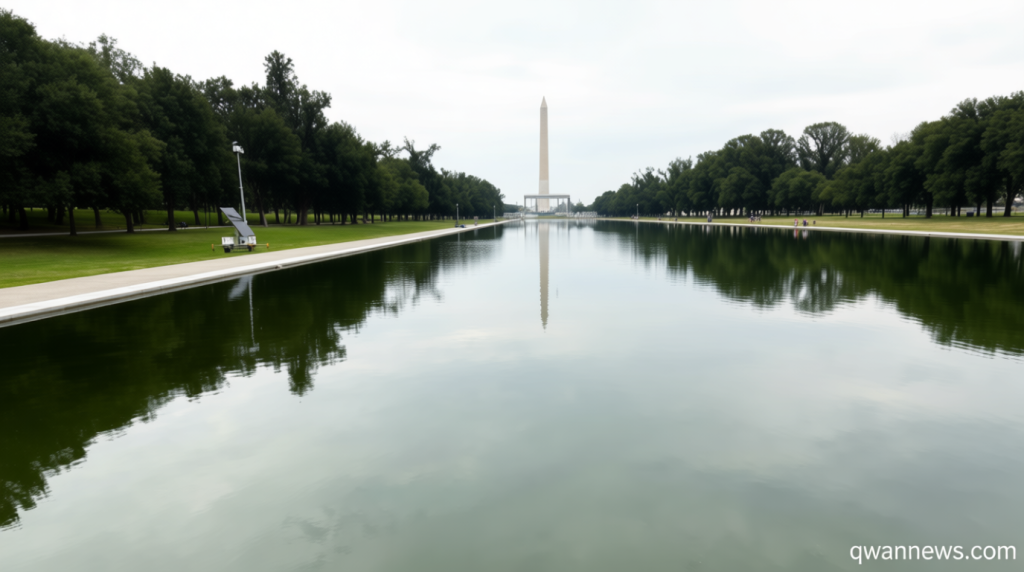
Can the so-called nanobubbler save the Reflecting Pool?
Lincoln Memorial’s water clarity project faces scrutiny
Qwenews.com – The Lincoln Memorial Reflecting Pool, a beloved Washington, D.C., landmark, has long struggled with maintaining its pristine appearance. To address this, the Trump administration has deployed a $1.7 million ozone nanobubbler system, claiming it represents cutting-edge technology. This device generates 500 million microscopic bubbles per teaspoon of water, aiming to oxidize algae, bacteria, and other impurities through oxygen injection.
Greenwater Services, the company contracted to manage the pool’s water quality, has become a focal point of controversy. Despite being based in Brookfield, Ohio, and having no political ties, the firm is now navigating a storm of public and political challenges. The project’s reliance on temporary equipment to meet the president’s deadline for the July Fourth festivities highlights the urgency of the task.
“Our job was to come here and bring a technology that we think can keep the Reflecting Pool looking clean and reflect the way it is supposed to,” said Chas Antinone, the company’s president and chief operating officer.
While the nanobubbler initially succeeded in clearing the water, issues emerged. On June 12, the National Park Service requested the removal of four stand-alone mobile units, which had been operating since June 6. These temporary machines, visible to the naked eye, created small white plumes of bubbles but were later taken offline without explanation. Algae quickly returned, sparking renewed debate about the system’s effectiveness.
Political entanglements complicate the project
Questions about the project’s transparency have intensified. Campaign finance records show no contributions from Antinone, yet the company’s no-bid contract and the owner’s donations have drawn criticism. The Reflecting Pool has become a symbol of broader disputes, with some linking its condition to the administration’s challenges, including a peeling bottom and allegations of vandalism.
“It’s not surprising they were brought into the conversation, nor is it surprising they implemented it,” remarked Joe Trusty, editor of Pool Magazine. “Whether it can sustain results in a large, shallow body of water like the Reflecting Pool remains uncertain.”
With no official timeline for repairing the aging pipes essential to the system’s operation, doubts linger about the nanobubbler’s long-term viability. The Department of Interior has yet to clarify why the temporary units were removed, leaving the project’s future in question. As the pool approaches its 6.5 million-gallon capacity, the outcome of this experiment could determine its legacy for years to come.