
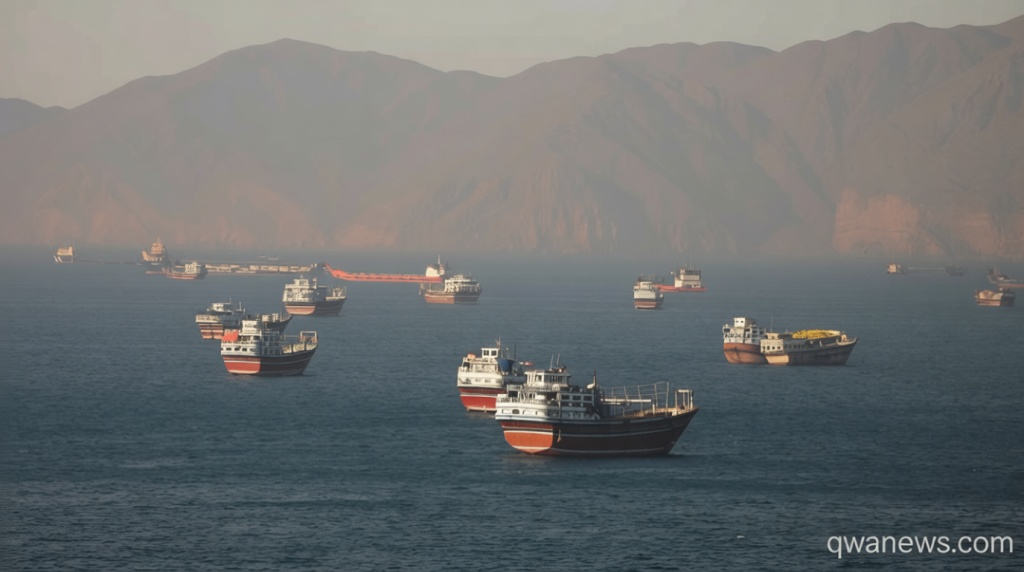
Ships took advantage of an opening in the Strait of Hormuz. But it may be closing
Increase in Traffic Amid Ceasefire
Qwenews.com – Recent activity in the Strait of Hormuz has surged, with over 70 vessels passing through the critical waterway on Wednesday—marking the highest number in three months. However, this momentum stalled on Friday as evacuation plans were temporarily halted. MarineTraffic data shows the sharp rise in movement, doubling the previous day’s count, which experts attribute to the U.S. lifting sanctions on Iranian oil earlier this week as part of a ceasefire agreement.
Humanitarian Push and New Lanes
Following the conflict, the United Nations and the International Maritime Organization (IMO) initiated a coordinated effort to evacuate 11,000 stranded seafarers and 500 vessels from the strait. This included the creation of two new shipping lanes—north of the strait near Iran and south of it close to Oman—to avoid minefields and other threats. Vessels were directed to these routes by relevant agencies, aiming for a controlled, gradual exit from the area.
“What we’re seeing are the ships that were sitting in the Gulf for this elongated period of time starting to move out with a focus on humanitarian aid to get the seafarers out and then a couple of chosen tankers when sanctions were lifted,” said Gene Seroka, executive director of the Port of Los Angeles. “So this is not just a full-fledged green flag, everybody start running through the strait.”
Historical Traffic Trends
Before the conflict, between 110 and 160 ships typically navigated the strait daily. The war disrupted this flow, reducing average daily traffic to fewer than ten vessels. This sharp decline created a cautious environment for maritime operations, with companies relying on US naval escorts and assessing risks closely.
Attack on Vessel Sparks Pause
A vessel was struck in the Gulf of Oman on Thursday, prompting the IMO to suspend its evacuation initiative. A US official confirmed the ship was targeted by an Iranian drone, though details remain unclear. Iran has not yet claimed responsibility. The incident raised fears of continued attacks, especially as ships attempt to approach the strait near Oman.
“The IMO took the precaution of pausing the program even though the vessel that was attacked ‘did not transit under IMO’s evacuation framework,’” stated IMO Secretary-General Arsenio Dominguez.
Industry Hesitation and Risk Factors
Shipping firms have remained cautious, with many still avoiding the strait due to ongoing threats. At least 46 attacks on vessels and 14 fatalities have been reported since the conflict began. Insurers have also pulled coverage for ships under wartime clauses. While some major carriers like Hapag-Lloyd used US naval guides, the support has been inconsistent.
Current Status and Outlook
Despite the recent uptick, the majority of ships transiting the strait this week are still Iranian-flagged, alongside a few Taiwanese Evergreen vessels. Global carriers have yet to return, keeping traffic levels closer to the pre-war status quo. Flexport’s Sanne Manders noted, “The major global carriers haven’t returned yet, so it’s closer to status quo than a real shift.”
Manders and Seroka anticipate a drop in traffic as the IMO’s evacuation effort pauses. The organization plans to reverify safety measures for all ships in the region before resuming operations. The situation remains fluid, with tensions and logistical challenges shaping the strait’s future flow.