
Why these adults are suddenly obsessed with a kids toy from the late 90s
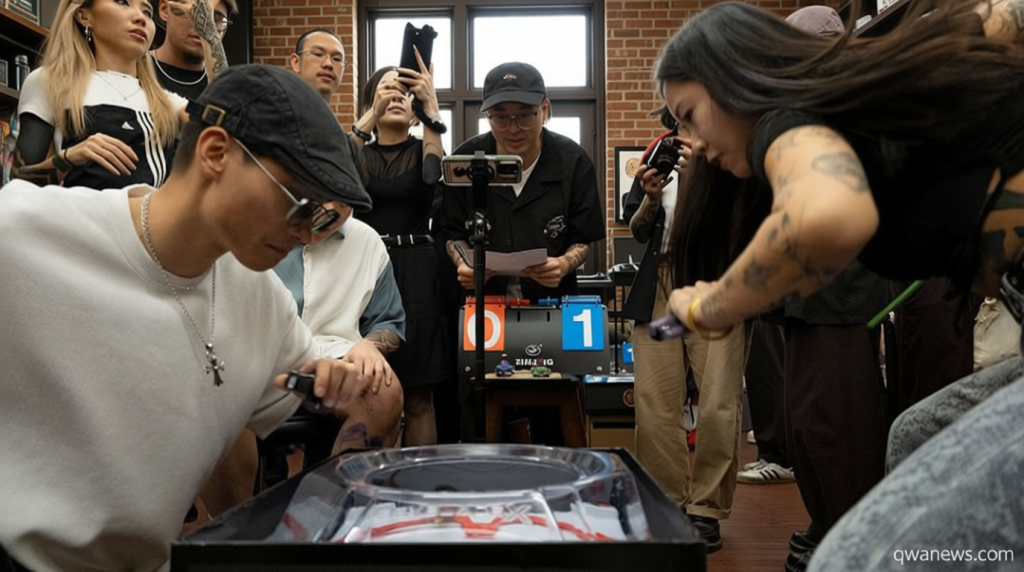
Qwenews.com – The usual hum of needles and cries of discomfort give way to the rhythmic clatter of steel and plastic as a new group of enthusiasts takes over a modest tattoo studio in Hong Kong. Once a hub for inked tigers and dragons, this backstreet location now hosts impromptu battles with Beyblades—spinning tops that once captivated children but now draw grown-ups seeking thrills. The transformation has sparked a frenzy, with local shops inundated by demand and scalpers flipping rare models for prices up to $80, ten times their original value.
The Resurgence of a Classic
Beyblade, a Japanese toy inspired by traditional spinning tops, first captivated audiences in 1999. Its customizable designs, featuring names like “Saber Samurai” and “Arrow Wizard,” allowed players to craft unique weapons and compete on a circular plastic arena. Though popular for decades, the game fell out of mainstream favor until recently. Now, it’s making a splash again, particularly in Asia, where tournaments have emerged in unexpected places—from parks to shopping malls.
“I’m ready to put up a fight,” said Tiff Tam, 28, as she displayed the collection of Beys she’s invested nearly $400 in. Her tattoo parlor, The 59 Tattoo, has even shifted its schedule to accommodate weekend battles, inviting competitors from neighboring studios and the wider community.
The revival is fueled by a blend of nostalgia and competitive spirit. For Marcus Yuen, 36, the move mirrors his own childhood memories of friends gathering in parks to duel with spinning tops. “It’s hard these days to find an event where friends and strangers can come together and play,” he reflected. “This feels like a pure kind of happiness.”
A Modern Twist on Nostalgia
Participants, like Tria John Bernard Benito, 30, have rediscovered the toy through social media, where viral videos highlight its resurgence. Some even repurpose unconventional spaces, such as Chinese woks, as makeshift battlegrounds. The game’s simplicity—stay in the ring, keep spinning—contrasts with the digital age’s fast-paced distractions, fostering face-to-face interactions that feel rare and meaningful.
“We play together now even though we weren’t even close back then. It’s very strange,” remarked Hui, a co-organiser of a suburban park gathering in Tseung Kwan O. The event, drawing fans from across the city, features both kids and adults vying for victory in a format akin to street basketball, where the winner stays to challenge the next round.
Leo Tsoi, CEO of Toys “R” Us, called the sudden popularity “quite unprecedented,” attributing it to social media’s role in reigniting interest. What began as a childhood pastime has now become a cultural phenomenon, uniting generations in a shared love for kinetic competition. The phenomenon underscores how nostalgia, when paired with modern innovation, can transform a toy into a symbol of community and connection.