
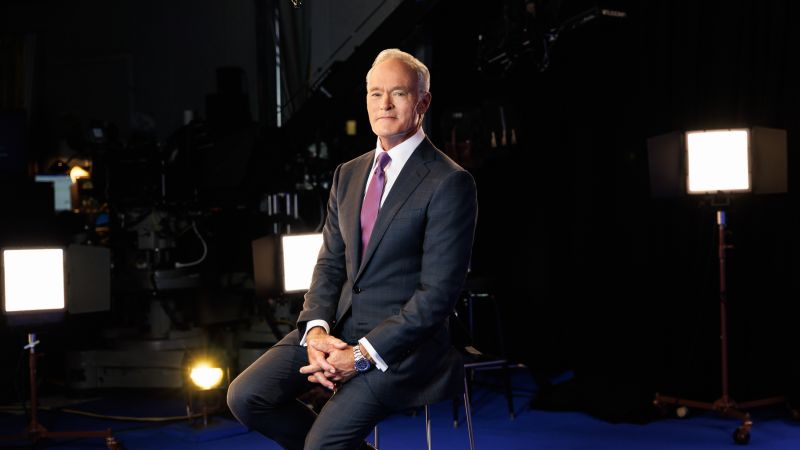
Scott Pelley Speaks: ‘CBS News is on Fire’ and Bari Weiss Should Be Removed
Qwenews.com – the former anchor of CBS’s 60 Minutes has taken a public stance on the state of the network’s news division, declaring that “CBS News is on fire” and calling for the removal of editor in chief Bari Weiss. In a recent interview with The New York Times, Pelley expressed concerns about the direction of the network, linking Weiss’s leadership to growing political favoritism within the organization. His remarks come at a critical time for CBS as it navigates a period of internal strife and external scrutiny.
Leadership Transition and Staff Reactions
Pelley’s comments, released just days after his departure from the network on June 2, reflect a deepening rift between the CBS News team and its new leadership. He pointed to Weiss’s influence, particularly during the show’s most recent season, where he alleges the network has prioritized alignment with the Trump administration over objective reporting. A CBS spokesperson responded by calling Pelley’s claims “not credible,” emphasizing that the network remains committed to unbiased journalism.
“The problem was the incompetence,” Pelley told The Times, adding that the controversy stems from a lack of effective leadership rather than any overt bias. “Webs of political favoritism are woven into the fabric of the organization now.”
Pelley’s interview underscores his resolve to challenge the recent restructuring of 60 Minutes, which he views as a turning point for the program. Weiss, who has faced criticism for her management style, has been at the center of these changes, including the dismissal of several top producers and correspondents. Among those affected were Cecilia Vega and Sharyn Alfonsi, whose exits were met with mixed reactions from the CBS News staff.
Political Ties and Media Evolution
While Weiss’s leadership has been credited with driving modernization, some insiders argue that her reforms have sparked internal divisions. Pelley criticized the network’s shift toward a more politically aligned approach, suggesting that the changes under her guidance have undermined 60 Minutes’ long-standing reputation for investigative rigor. His comments align with broader concerns that the show is becoming less independent and more susceptible to external pressures.
“She brings an ideology into CBS, but television isn’t her thing,” Pelley remarked during the interview, highlighting the network’s growing distance from its roots. “We’ve been there since the 1960s, and now it feels like we’re chasing trends rather than telling the truth.”
Earlier this month, Weiss appointed Nick Bilton, a former tech journalist, as the new head of 60 Minutes, a decision that further unsettled the staff. Pelley described the team as “heartbroken” following the upheaval, though he acknowledged that the changes were necessary to keep the program relevant in a rapidly evolving media landscape. He also noted the program’s success, citing a 9% increase in ratings for the past season and a 11% boost from NFL game coverage.
Scott Pelley speaks about the challenges of adapting to the digital era, which he sees as both an opportunity and a threat. He emphasized that the network’s shift toward online platforms, including TikTok and social media, has been a key part of its transformation. “We started our first online show in 2010,” he stated, defending the program’s digital evolution. “I shoot TikTok verticals on every assignment. We’re there. We’re everywhere.”
Controversy and Corporate Motives
The internal conflict at 60 Minutes has been fueled by mutual distrust, with some veterans of the show suspecting that CBS, through its parent company Paramount, is aligning with Trump’s administration to secure approval for a media merger. Pelley added his voice to these concerns, arguing that Weiss’s management has introduced a subtle political bias into the network’s operations. “They’re not just changing the format,” he said, “they’re changing the narrative.”
“We’re seeing a shift from journalistic integrity to political expedience,” Pelley remarked, stressing that the network’s credibility is at stake. “If we don’t act now, we’ll lose the trust of our audience.”
Despite Weiss’s efforts to modernize, critics argue that her team has overlooked the show’s storied history of innovation. The controversy reflects a deeper divide between traditionalists and reformers, with the latter pushing for a more dynamic approach to storytelling. As the situation unfolds, the future of 60 Minutes remains uncertain, with Pelley now advocating for a leadership change to restore its credibility.