
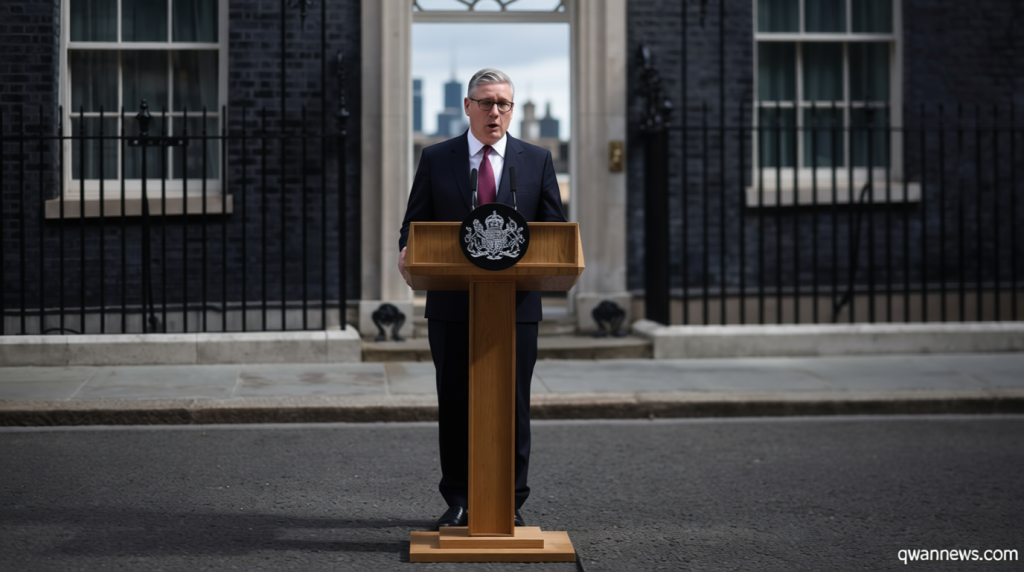
Elected on a Promise of Better, Starmer’s Leadership Falters
Qwenews.com – Keir Starmer, elected on a promise of better, now faces the challenge of rebuilding trust in his leadership after just 24 months in office. His recent resignation as Labour Party leader has sparked debate about whether the country’s political landscape has shifted beyond the reach of his vision for change. The Labour Party, which had campaigned on a pledge to usher in a new era of progress, now grapples with the question of why its optimism has not translated into sustained momentum for Britain’s future.
The Urgency of Expectations
The election of Starmer in July 2024 was marked by high hopes for economic renewal and social reform. Voters, frustrated by years of Conservative fiscal policies, rallied behind Labour’s promise of a better future. Yet, within a short span, the government’s ability to meet these expectations has been called into question. Starmer’s leadership style, which emphasized careful decision-making and maintaining stability, has been both praised and criticized for its impact on political momentum and public morale.
“Elected on a promise of better, we’ve had to navigate a complex landscape of policy choices and public sentiment,” said a Labour strategist, reflecting on the challenges of translating campaign pledges into tangible results.
The Economic Dilemma
Starmer inherited a nation struggling with high inflation, stagnant wages, and a growing sense of economic uncertainty. While his administration introduced measures to address immediate concerns, such as targeted tax relief and public sector investment, critics argue these steps were not enough to restore confidence. The Labour Party’s cautious approach to fiscal policy, aimed at avoiding the mistakes of past governments, has left some wondering if the party is prioritizing caution over ambition.
Despite early signs of economic improvement, such as a modest recovery in employment rates, the government’s failure to meet long-term goals like reducing public debt and boosting productivity has raised doubts. Starmer’s emphasis on incremental change, while aligning with his legal background, has been seen by some as a missed opportunity to seize the political momentum that followed his election.
The Shadow of Labour’s Past
Starmer’s tenure has been shaped by the legacy of previous Labour governments, which often faced criticism for their own policy missteps. While he aimed to distance his party from these past failures, the parallels between his approach and earlier strategies have become increasingly evident. This has led to accusations that Labour has not fully evolved from its historical role as a party of cautious reform, leaving voters questioning whether the party can deliver the transformation it once promised.
“Elected on a promise of better, Labour has had to balance its new aspirations with the constraints of its historical reputation,” noted political analyst Dr. Emily Carter, highlighting the tension between Starmer’s vision and the party’s established image.
The Role of Public Trust
Public trust in Starmer’s leadership has steadily declined, with polls showing him as the least popular prime minister in Britain’s history. This erosion of support has been fueled by a combination of economic challenges, political infighting, and a perception that the government has not adequately addressed the concerns of ordinary citizens. Voters, once eager to embrace Labour’s transformative agenda, now question whether the party can rise above its past shortcomings and secure lasting change.
The Labour Party’s struggle to maintain public engagement underscores the difficulty of sustaining a political narrative in a rapidly shifting environment. While Starmer’s focus on process and stability was a hallmark of his leadership, it has also been interpreted as a lack of decisive action, further distancing the party from its core promises of progress and renewal.
Looking Ahead for Labour
As Starmer steps down, the Labour Party faces the daunting task of redefining its identity and reconnecting with the electorate. With the prospect of a new leader, the party must decide whether to continue Starmer’s pragmatic approach or embrace a more ambitious vision that aligns with the expectations of those who voted for it. The next leader will need to address the lingering doubts about Labour’s ability to deliver on its election promises, ensuring that the party can reclaim the momentum that once propelled it to power.
Starmer’s resignation marks a pivotal moment for British politics, signaling the end of an era and the beginning of a new chapter for the Labour Party. While his leadership was characterized by a commitment to stability and careful planning, it also highlighted the challenges of balancing immediate needs with long-term aspirations. As the country looks to the future, the question remains: can Labour rise to the occasion and fulfill the promise of better that brought it to power in the first place?