
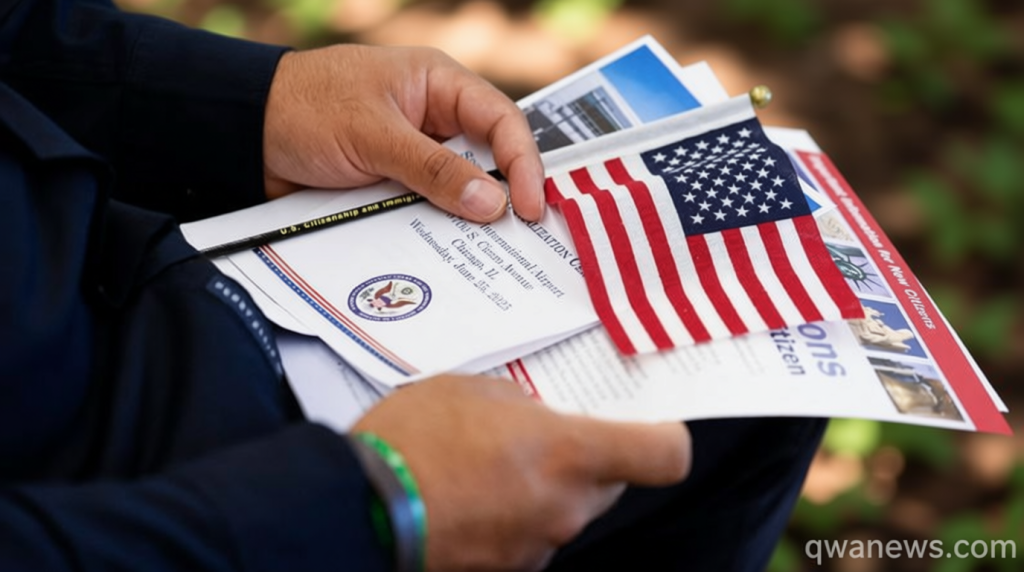
Exclusive: Trump’s Denaturalization Push Targets Naturalized Citizens
Qwenews.com – Exclusive: The Trump administration is intensifying its campaign to rescind citizenship from naturalized Americans, with plans to initiate over 250 denaturalization cases by October 2026. This effort, spearheaded by the Justice Department, aims to revoke U.S. citizenship from individuals accused of deception during their naturalization process, according to a senior official. In the first two months of the year, 29 such cases have already been filed, signaling a significant uptick compared to previous years. The strategy reflects a broader campaign to tighten immigration policies and reinforce the credibility of citizenship.
Behind the scenes, the Justice Department has restructured its operations to prioritize denaturalization cases. Staff from fraud investigation units have been reassigned to support this initiative, which is part of a larger push to scrutinize the backgrounds of naturalized citizens. The official emphasized that these cases are not limited to undocumented residents but extend to individuals who may have obtained citizenship through fraudulent means or ineligible pathways. U.S. attorney offices are also playing a key role, with cases distributed across jurisdictions to handle the increased workload efficiently.
Historical Context and Legal Foundations
Exclusive: The current surge in denaturalization cases marks a departure from historical trends. Since 2008, the average number of denaturalization complaints per year has remained below 10, but the Trump administration has already filed 166 cases by June 2026, surpassing earlier records. This shift underscores the administration’s belief that the legal authority for denaturalization, established decades ago by Congress, should be actively utilized to ensure the integrity of American citizenship. Legal experts note that while the process is well-defined, its recent acceleration has raised questions about its broader implications.
“Denaturalization is a crucial tool to maintain the quality of U.S. citizenship,” said the DOJ official. “It allows the government to remove individuals who may have misrepresented their eligibility, ensuring the rights we hold are earned and not given lightly.”
The process hinges on proving that a naturalized citizen provided false information or committed fraud during their application. Cases can be pursued as civil or criminal matters, depending on the severity of the alleged misconduct. Importantly, those born in the U.S. and granted citizenship by birthright are not targeted, but the focus remains on individuals who obtained citizenship through other means, such as marriage or financial contributions.
Operational Scaling and Case Prioritization
Exclusive: A June 2025 memo from Assistant Attorney General Brett Shumate outlined 10 categories to guide the prioritization of denaturalization cases, including fraud, terrorism support, and national security threats. The memo clarified that these categories serve as flexible criteria, not rigid constraints, enabling the department to target high-risk individuals. The denaturalization unit, composed of 12 specialized attorneys, is now managing a backlog of cases, with referrals coming from various civil divisions, including those focused on identity fraud and prior convictions.
To scale the operation, the Justice Department is drawing resources from other divisions, such as political appointees and fraud specialists, to bolster its capacity. This expansion has led to a more aggressive approach, with the number of cases projected to grow significantly. The official noted that the department is already on track to process several hundred additional denaturalization proceedings by the end of the year, highlighting the intensive nature of these legal actions.
Exclusive: The administration’s focus on denaturalization aligns with its broader agenda to address perceived weaknesses in the immigration system. With over 8 million naturalized citizens added in the past decade, the policy aims to reinforce the standards for obtaining and retaining U.S. citizenship. However, critics argue that the increased pace may compromise due process, as resources are stretched thin and the complexity of each case grows.