
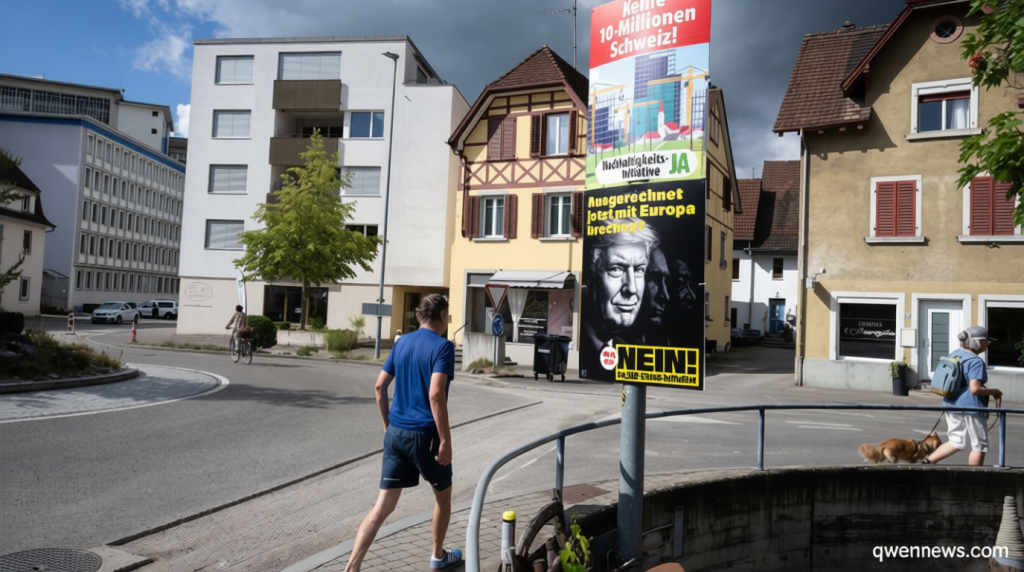
Swiss Voters Set to Reject 10 Million Population Cap in Referendum
Qwenews.com – Swiss voters are expected to reject a proposal to cap the country’s population at 10 million by 2050, according to preliminary projections from Switzerland’s national broadcaster, SRF. The data suggests that approximately 45% of participants support the measure, while 55% oppose it, indicating a strong preference for maintaining current demographic trends. This outcome reflects broader concerns about the economic and social impacts of limiting population growth, particularly on public services, housing, and Switzerland’s relationship with the European Union.
Background of the Population Cap Proposal
The population cap initiative, spearheaded by the right-wing Swiss People’s Party (SVP), aims to restrict Switzerland’s population to 10 million by 2050. The plan would require the government to terminate its EU free trade agreement if the threshold is exceeded for two consecutive years. This proposal has drawn comparisons to the 2016 Brexit referendum, as it mirrors concerns over immigration’s influence on national identity and economic stability. Proponents argue that the cap would alleviate pressure on infrastructure and public resources, while opponents warn of potential disruptions to labor markets and economic growth.
Key Concerns and Arguments Against the Cap
Public sentiment against the population cap is driven by fears that it could undermine Switzerland’s economic resilience and EU integration. Political analysts like Urs Bieri of GFS Bern note that voters are skeptical of the long-term effects of the measure, particularly its impact on labor mobility and the country’s ability to attract skilled workers. “The proposal was framed as a solution to population chaos, but many feared it would disrupt EU relationships and labor markets,” Bieri explained. Concerns also include potential shortages in healthcare and education sectors, as well as rising housing costs, which voters associate with the influx of immigrants.
“They wonder ‘who will serve them at restaurants?’ and ‘who will care for them as they age?’ The focus was on personal welfare, leading to the rejection,” said Patrick Leisibach of Avenir Suisse.
The referendum’s failure aligns with pre-election forecasts, which predicted a narrow defeat for the cap. With the current population standing at 9.1 million, Switzerland has already surpassed the growth rates of most EU nations. Experts at GFS Bern estimate that the country could reach 10 million by the early 2040s, highlighting the urgency of the debate. Despite the close race, the result underscores a growing divide between pro-growth and pro-restraint factions within Swiss society.
Economic Implications and Future Projections
Supporters of the cap argue that it would prevent overpopulation and ensure sustainable development. They highlight that only 10% of immigrants are skilled workers, while asylum seekers are often depicted as contributing less to the economy. However, opponents counter that Switzerland’s economy depends on a steady influx of labor to support its export-driven industries. The rejection of the cap signals continued confidence in the country’s ability to manage population growth without compromising its economic strengths or social cohesion.
Political Context and Broader Impacts
The population cap referendum has intensified political discourse in Switzerland, reflecting the nation’s ongoing debate over immigration and national identity. The SVP, which has long advocated for stricter immigration policies, faces criticism for framing the issue as a threat to Swiss values. Meanwhile, the opposition emphasizes the benefits of open borders, such as cultural diversity and economic opportunities. The result may also influence future EU negotiations, as Switzerland seeks to maintain its current relationship with the bloc while balancing domestic concerns.
As the final tally of votes is released, the outcome of the referendum will have lasting implications for Switzerland’s demographic strategy. The rejection of the 10 million cap reinforces the idea that voters prioritize economic stability and integration with the EU over restrictive population controls. This decision could pave the way for more flexible immigration policies, ensuring that the country continues to attract talent while addressing public concerns about resource allocation and societal impact. The debate is far from over, as discussions about population management and national priorities remain central to Swiss politics.